





Industry Solutions
Empowering Your Advanced Metal Additive Manufacturing by Forgecise technical services

Applications of 3D Printing
3D printing is transforming major industries. Aerospace and automotive sectors use it for lightweight parts and rapid prototyping. Healthcare relies on it for custom implants and surgical models. It also optimizes mold manufacturing, enables functional electronics, and accelerates scientific research.
Empowering Advanced Metal Additive Manufacturing
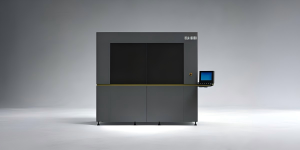
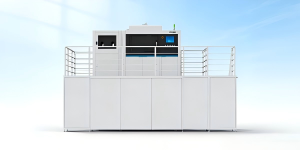
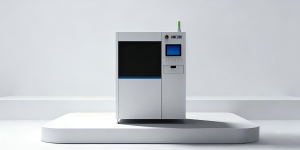
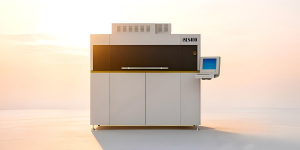
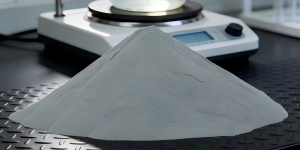
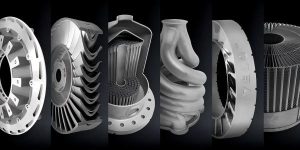
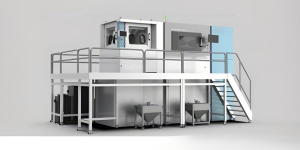
With the maturation of additive manufacturing technology, 3D printing has been deeply integrated into high-end industrial sectors such as aerospace, automotive, medical devices, and precision tooling. In the aerospace industry, it is utilized to manufacture lightweight topology-optimized structures and complex fuel nozzles, significantly reducing component weight and improving fuel efficiency. In automotive R&D, 3D printing accelerates prototype validation and customized part production, drastically shortening time-to-market for new vehicles. In the medical field, the precise fabrication of personalized implants and surgical guides offers patients superior treatment outcomes. Meanwhile, in the tooling sector, the implementation of conformal cooling channels effectively enhances injection molding efficiency and product yield. These applications impose stringent industrial-grade requirements on equipment stability, material consistency, and post-processing standardization. To address these market demands, Forgecise provides comprehensive industrial-grade 3D printing solutions. The company not only supplies high-performance, highly stable industrial 3D printers but also offers professional post-processing equipment to ensure finished parts meet end-use standards. Furthermore, Forgecise specializes in powder materials, providing processing and customization services for both metal and non-metal powders to cater to the diverse performance requirements of various processes. Additionally, based on clients’ specific production scenarios and capacity planning, Forgecise delivers one-stop planning and custom equipment services—ranging from production line layout to bespoke equipment design—empowering enterprises to build efficient, flexible, and sustainable additive manufacturing production systems.

3D Printing in Aerospace
3D printing is revolutionizing the aerospace industry by enabling the production of highly complex and lightweight components. It is extensively used to manufacture intricate engine parts, structural brackets, and custom tooling that traditional methods cannot easily achieve. This advanced manufacturing process allows for optimized, organic designs that significantly reduce overall aircraft weight, ultimately improving fuel efficiency and payload capacity. Furthermore, 3D printing accelerates rapid prototyping, allowing engineers to quickly test and refine new designs without expensive tooling. It also streamlines supply chains by facilitating on-demand manufacturing, which reduces inventory costs and minimizes material waste. By consolidating multiple parts into a single 3D-printed unit, aerospace companies can enhance structural integrity while cutting down assembly time and long-term production expenses.

3D Printing in Automotive
3D printing is revolutionizing the automotive industry, primarily through rapid prototyping and the manufacturing of functional parts. It drastically shortens development cycles, allowing designers to quickly test and refine complex vehicle components without expensive tooling. Beyond prototyping, automakers increasingly use additive manufacturing to produce lightweight, high-performance end-use parts, such as engine components and battery housings, which improve fuel efficiency and safety. The technology also enables mass customization, allowing manufacturers to offer personalized interiors and bespoke accessories without high costs. Additionally, 3D printing streamlines supply chains by producing custom jigs, fixtures, and on-demand replacement parts for older vehicles. Ultimately, it reduces material waste and accelerates innovation in modern car manufacturing.

3D Printing in Robotics
3D printing is fundamentally transforming the field of robotics by enabling the creation of complex, customized components that traditional manufacturing cannot achieve. It facilitates rapid prototyping, significantly reducing development time and costs while allowing engineers to quickly iterate on innovative designs. A major application is the production of lightweight yet strong structural parts, such as quadcopter frames and robotic limbs. Furthermore, advanced multi-material printing allows for the integration of rigid and soft materials, paving the way for soft robotics and customized grippers. The technology also supports the direct embedding of sensors and actuators into the robot’s body. Ultimately, 3D printing accelerates innovation, enhances adaptability, and makes the development of specialized robotic systems more accessible and efficient.
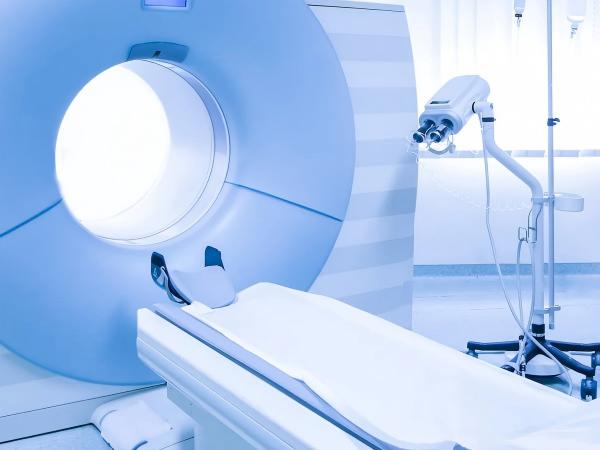
3D Printing in Medical
3D printing is revolutionizing modern medicine by enabling highly personalized patient care. One of its primary applications is the creation of custom anatomical models from patient scans, which surgeons use for precise pre-surgical planning and patient education. Additionally, the technology is widely used to manufacture patient-specific implants and prosthetics that perfectly match individual anatomies, significantly improving surgical outcomes and recovery times. Another groundbreaking frontier is bioprinting, where living cells are layered to create tissue scaffolds for regenerative medicine and drug testing. Furthermore, 3D printing facilitates the production of customized pharmaceuticals with tailored dosages. Ultimately, this technology enhances precision, reduces costs, and drives innovation in healthcare.
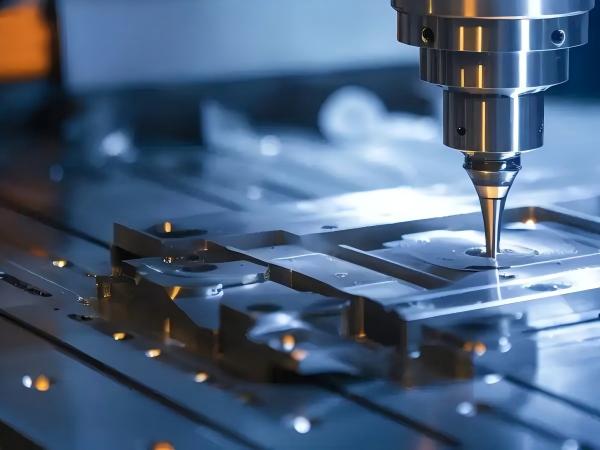
3D Printing in Mold Manufacturing
Additive manufacturing has emerged as a transformative force in the mold-making industry, primarily by accelerating prototyping and enabling low-volume production. Unlike conventional subtractive methods, 3D printing allows engineers to directly fabricate molds with intricate internal geometries, such as conformal cooling channels. These advanced pathways optimize heat dissipation, significantly reducing cycle times and enhancing the overall quality of injection-molded parts. Furthermore, the technology provides exceptional design flexibility, facilitating rapid design iterations and the creation of complex textures without expensive tooling. While metal 3D printing is utilized for high-durability production molds, polymer-based printing offers a highly economical solution for rapid validation and short-run manufacturing. Ultimately, integrating 3D printing streamlines the entire tooling lifecycle, minimizing upfront costs and expediting time-to-market for manufacturers.
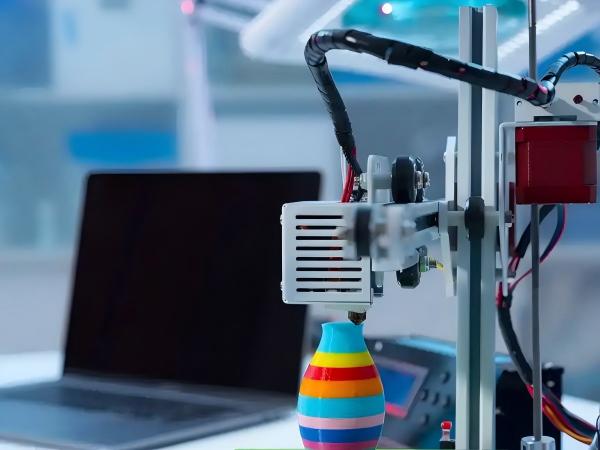
3D Printing in Academic Research
3D printing has become an indispensable tool in academic research, driving innovation across diverse scientific disciplines. In the natural sciences, it enables the rapid prototyping of custom laboratory equipment and complex anatomical models for medical study. Engineering researchers utilize it to test intricate designs and functional prototypes cost-effectively. Furthermore, archaeology and paleontology benefit from the non-invasive replication of fragile artifacts and fossils, allowing for detailed analysis without risking damage to originals. This technology democratizes access to advanced manufacturing, empowering students and faculty to visualize abstract concepts, iterate designs quickly, and conduct experiments that were previously impossible, thereby accelerating the pace of discovery and enhancing educational outcomes.
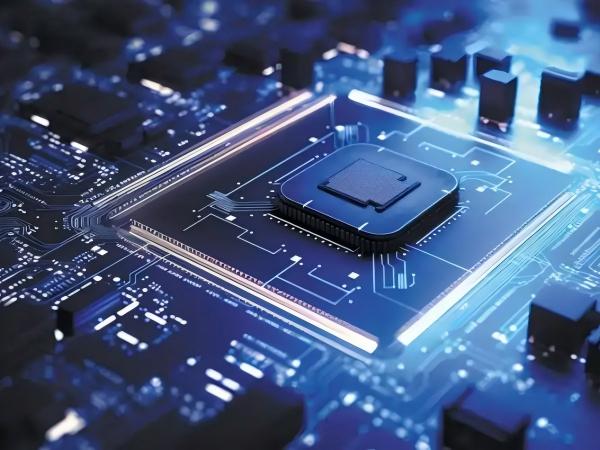
3D Printing in Electronics
3D printing is transforming electronics manufacturing by enabling the direct fabrication of functional circuits and integrated devices. It allows for the deposition of conductive inks and dielectric materials to create complex interconnects, antennas, and sensors on non-planar surfaces, which is impossible with traditional PCB methods. This technology facilitates the rapid prototyping of wearable electronics, flexible circuits, and embedded systems, significantly reducing assembly steps. By merging structural and electronic components into a single printing process, it accelerates innovation in IoT devices and customized hardware, offering unprecedented design freedom and miniaturization capabilities.

3D Printing in Cultural & Creative
3D printing is revolutionizing the cultural and creative industries by unlocking unprecedented design freedom and personalization. Artists and designers utilize it to create intricate sculptures, avant-garde fashion, and bespoke jewelry with complex geometries impossible to achieve traditionally. In the entertainment sector, it accelerates the production of highly detailed film props, theatrical sets, and IP merchandise. Furthermore, the technology plays a vital role in cultural heritage preservation, allowing museums to accurately replicate and restore fragile historical artifacts for educational display. By enabling rapid prototyping and on-demand manufacturing, 3D printing empowers creators to bring imaginative concepts to life efficiently, bridging the gap between digital innovation and artistic expression.
Why Forgecise Outstanding
Forgecise stands out as the premier partner for industrial innovation by integrating custom material science, precision manufacturing, bespoke equipment engineering, into a solution to the customer
What You Get
By partnering with us, you gain access to a fully integrated additive manufacturing ecosystem that delivers tailored materials, precision parts, bespoke equipment, expert guidance all under one roof.