





3D Printing in Aerospace

3D Printing in Aerospace applications

Additive Manufacturing (AM), commonly known as 3D printing, has evolved from a rapid prototyping tool into a critical production method for the aerospace industry. As the sector’s earliest and most advanced adopter of AM, aerospace leverages this technology to overcome the limitations of traditional subtractive manufacturing, addressing geometric complexity, lightweighting demands, and supply chain resilience. Today, 3D printing is integral to engine hot-section components, airframe structures, satellite systems, and cabin interiors, driving a paradigm shift in next-generation aircraft design and manufacturing.

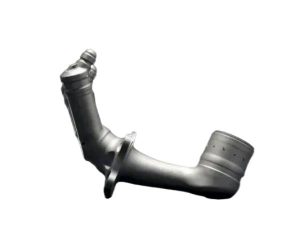
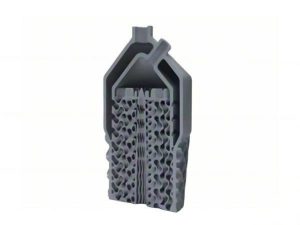
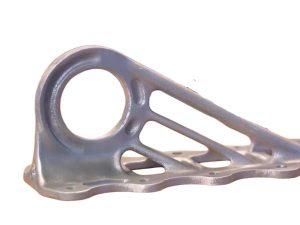
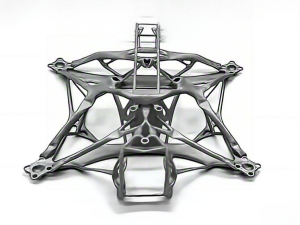
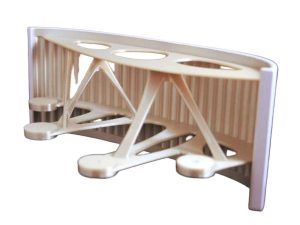
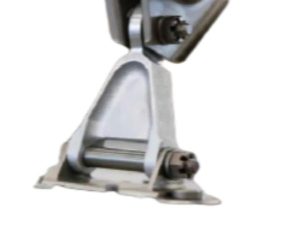
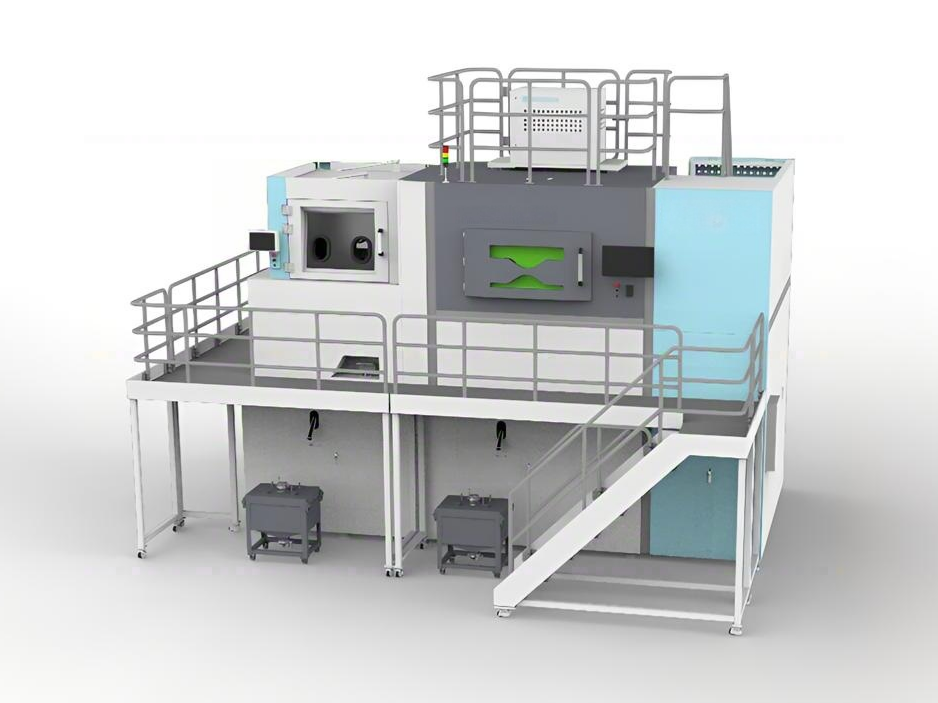
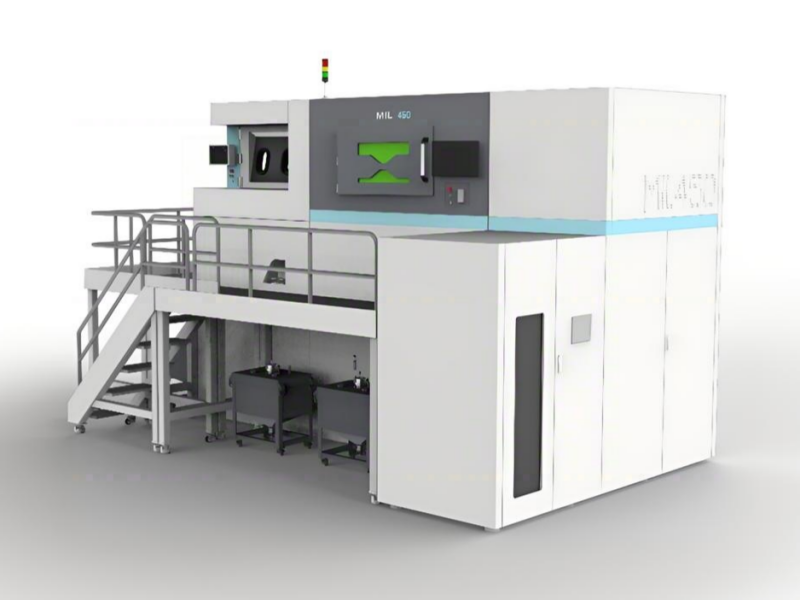
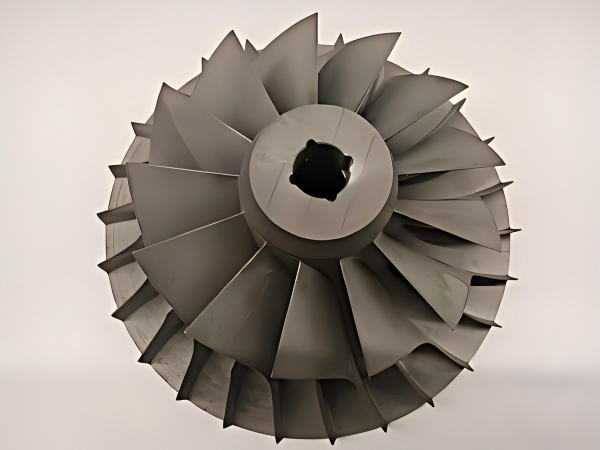
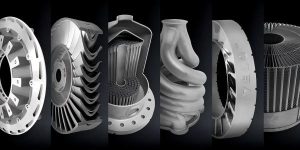
The highest-value applications lie in propulsion systems, where technologies like Selective Laser Melting (SLM) enable the production of fuel nozzles, turbine blades, and combustion liners. For example, integrated 3D-printed fuel nozzles consolidate 20 welded parts into a single component, reducing weight by 25% and increasing durability fivefold. In airframe design, generative design combined with AM creates bionic, topology-optimized structures—such as cabin partitions that are over 30% lighter than conventional designs while maintaining strength, alongside titanium brackets and fittings that significantly cut structural mass. In space exploration, AM manufactures rocket thrust chambers, satellite antenna supports, and fluid lines, with emerging companies even 3D-printing entire rockets to accelerate development cycles. Additionally, AM transforms Maintenance, Repair, and Overhaul (MRO) by enabling on-demand production and digital inventories for obsolete or urgent spare parts, eliminating costly tooling and mitigating supply chain disruptions.

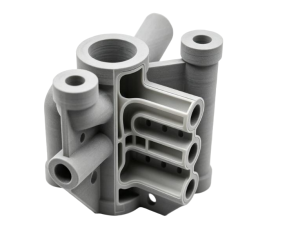
The core advantages of 3D printing in aerospace are fourfold. First, it achieves extreme lightweighting through lattice structures, hollow designs, and topology optimization, delivering 30–70% weight reduction without compromising mechanical performance, directly boosting fuel efficiency and payload capacity. Second, unmatched design freedom allows part consolidation, merging dozens of assembled components into monolithic structures to reduce assembly errors, fasteners, and failure points. Third, near-net-shape manufacturing slashes material waste from up to 90% in traditional titanium machining to under 20%, aligning with sustainable aviation goals. Finally, AM enables agile development and supply chain resilience, compressing R&D timelines from years to months and supporting distributed manufacturing to reduce reliance on centralized supply chains.

Common Applications Parts Design

Turbine blades and engine components

Rapid Prototyping & Tooling

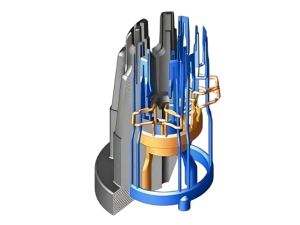
Complex Fuel Nozzles

Cabin Interior Components

Conformal Cooling Channels

On-Demand Spare Parts

Key Benefits

Significant Weight Reduction

Design Freedom for Complex Geometries

Part Consolidation

Reduced Lead Time and Inventory Costs

Aerospace MRO – (Maintenance, Repair, and Overhaul)

Additive manufacturing revolutionizes aerospace maintenance by enabling the on-demand production of obsolete, out-of-production, or damaged parts, thereby extending aircraft lifespan and drastically reducing downtime.

Legacy Spare Parts

Repair Blade

Rapid Tooling
3D Printing Powder in Aerospace

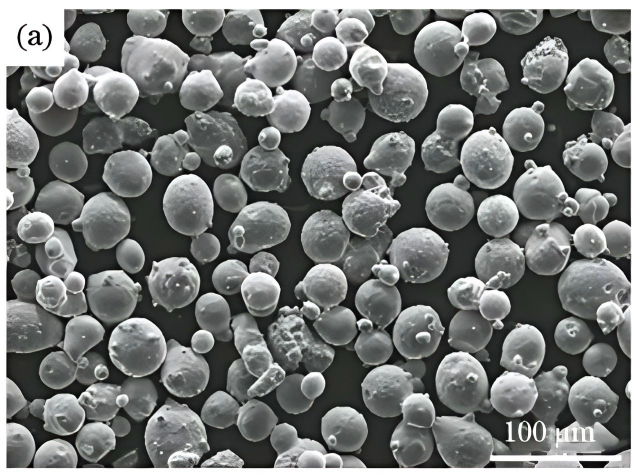
In aerospace additive manufacturing, metal powder selection is governed by a critical balance among service temperature, process maturity, and airworthiness certification. Titanium alloys (e.g., Ti-6Al-4V) serve as the benchmark for airframe structures and compressor components due to their high specific strength and corrosion resistance; nickel-based superalloys (e.g., Inconel 718, CM247LC) dominate engine hot-section parts such as fuel nozzles and turbine blades owing to their superior high-temperature strength and creep resistance; aluminum alloys (e.g., AlSi10Mg, Scalmalloy) are widely adopted for heat exchangers, UAVs, and secondary lightweight structures thanks to their low density and excellent printability; while specialty alloys like cobalt-chromium and maraging steels address niche requirements for wear-resistant seals and ultra-high-strength tooling, respectively. All aerospace-grade powders must meet stringent standards for sphericity, oxygen content, and particle size distribution, with material development increasingly trending toward higher temperature capability, greater weight reduction via novel alloys, and sustainable powder recycling.

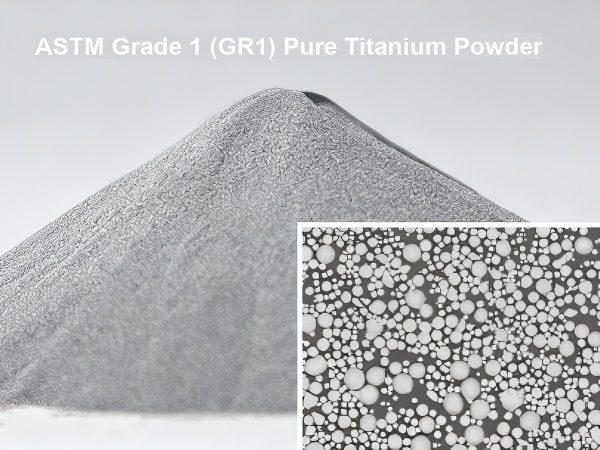
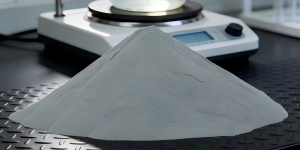
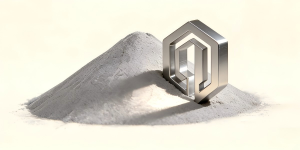
ASTM Grade 1 (GR1) Pure Titanium Powder for 3D Printing

Titanium and Titanium Alloy Powders

Titanium and titanium alloy powders represent the most widely used structural material system in aerospace additive manufacturing, with Ti-6Al-4V (Grade 5/23) serving as the benchmark that dominates critical components such as airframe load-bearing structures, landing gear, and compressor blades due to its high specific strength, excellent corrosion resistance, and mature processing technology. Meanwhile, TiAl intermetallic compounds bridge the gap for medium-to-high temperature lightweight rotating parts with their lower density and service capability of 600–750°C, replacing certain nickel-based alloys to achieve significant weight reduction. Both powder categories must meet stringent aerospace-grade standards (sphericity >95%, oxygen content <500 ppm, particle size 15–53 μm), with material selection fundamentally balancing mechanical performance, processability, and airworthiness certification maturity, while future development continues to advance toward higher temperature tolerance, improved toughness, and sustainable recycling.

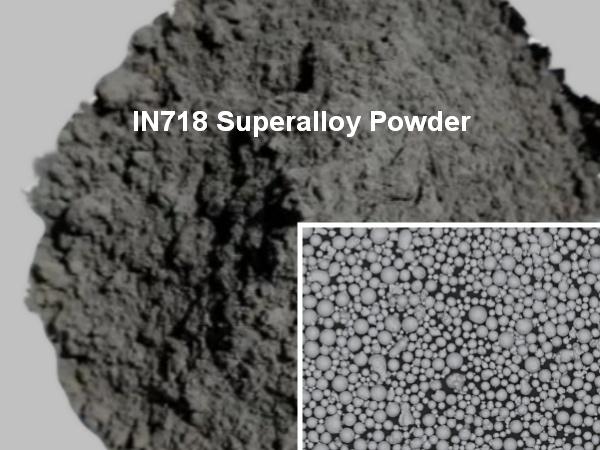
IN718 Superalloy Powder

Nickel-Based Superalloy Powders

Nickel-based superalloy powders represent the most thermally capable structural material system in aerospace additive manufacturing, typified by alloys such as Inconel 718, Inconel 625, and CM247LC. Leveraging their exceptional high-temperature strength, creep resistance, and oxidation/corrosion resistance at 600–1000°C, these powders dominate the AM production and repair of critical hot-section components including turbine blades, combustion chambers, guide vanes, and exhaust nozzles. Characterized by complex manufacturing processes and high costs, these powders demand stringent control over sphericity, oxygen content, and microstructural uniformity to meet airworthiness standards. Material selection fundamentally hinges on balancing high-temperature mechanical performance, susceptibility to printing-induced cracking, and compatibility with post-process heat treatment regimes. Enabling composition customization to support the lightweighting and high-performance requirements.

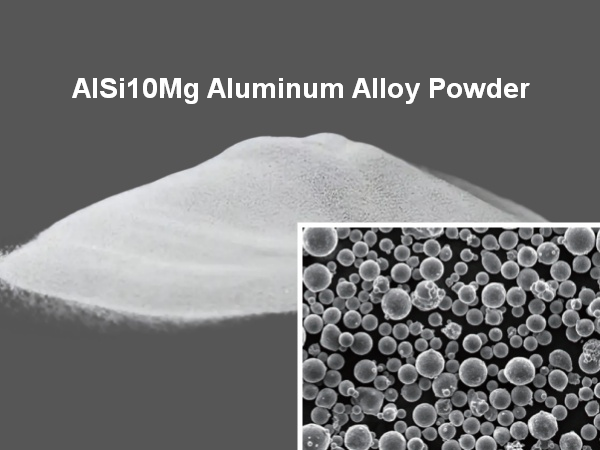
AlSi10Mg Aluminum Alloy Powder for SLM 3D Printing Forgecise

Aluminum Alloy Powders

Aluminum alloy powders constitute a pivotal metallic material system for structural lightweighting in aerospace additive manufacturing, represented by alloys such as AlSi10Mg, Al-Si-Mg series, and emerging high-strength aluminum-lithium alloys. Characterized by low density, high specific strength, excellent thermal conductivity, and good formability, they are extensively employed in the AM fabrication of non-primary or secondary load-bearing components including aircraft brackets, heat exchangers, UAV structural part. However, these powders are prone to oxidation and moisture absorption while exhibiting high laser reflectivity, necessitating inert atmosphere protection during production and storage; furthermore, the printing process is susceptible to porosity, hot cracking, and residual stresses, requiring mitigation through composition optimization, process parameter tuning, and post-process heat treatment. Although limited in operating temperature (typically below 200°C), aluminum alloy powders remain among the most widely used metal powders in aerospace AM due to their significant weight-saving benefits and cost advantages.

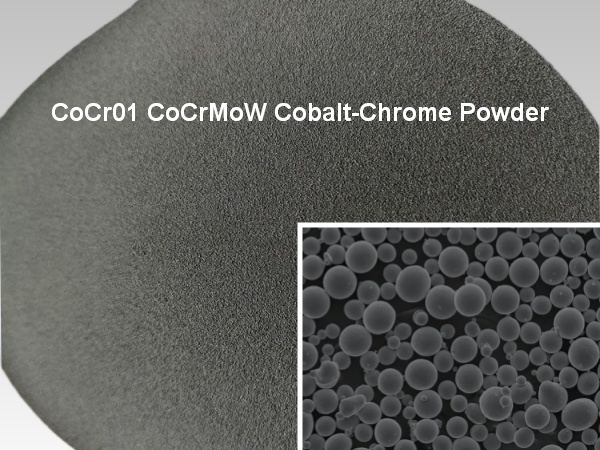
CoCr01 CoCrMoW Cobalt-Chrome Powder

Cobalt-Chromium Alloy

CoCrMo (Cobalt-Chromium-Molybdenum) alloy powder is a critical high-temperature metallic material in aerospace additive manufacturing, distinguished by its exceptional heat resistance, wear resistance, corrosion resistance, and mechanical stability under extreme conditions. It is primarily employed in the fabrication of aero-engine hot-section components, including turbine blades, nozzle guide vanes, combustor liners, and exhaust system parts, where it must withstand prolonged exposure to high temperatures, thermal cycling, and aggressive combustion environments. This powder presents significant processing challenges due to its high melting point, strong tendency for elemental segregation, and susceptibility to cracking during rapid solidification; therefore, strict inert atmosphere control, optimized laser parameters, and post-processing treatments are essential to eliminate porosity, refine microstructure, and guarantee fatigue and creep performance. Although limited by high density and cost, CoCrMo remains indispensable for specific high-wear and moderate-temperature aerospace applications.

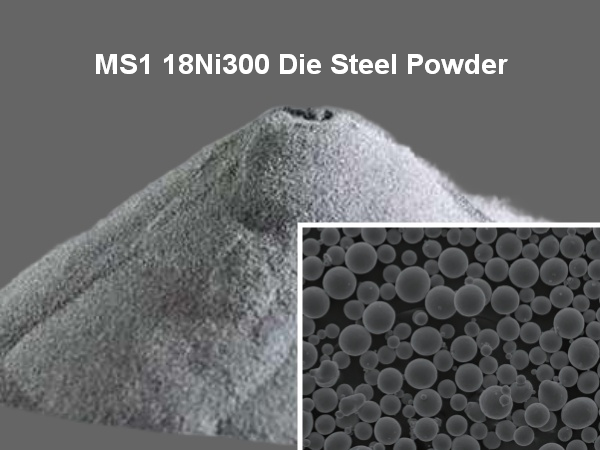
MS1 18Ni300 Die Steel Powder

Maraging Steel

Maraging steel powder is a critical metallic material in aerospace additive manufacturing for fabricating ultra-high-strength, high-toughness precision components, distinguished by its extremely low carbon content, exceptional strength-toughness balance, and superior dimensional stability. It is widely employed in fatigue-critical and fracture-sensitive aviation parts such as landing gear load-bearing elements, engine mounting brackets, fasteners, missile casings, and spacecraft structural connectors. This alloy offers a unique processing advantage: the as-printed microstructure consists of soft low-carbon martensite with minimal residual stress and controllable distortion, which subsequently achieves tensile strengths of 1800–2400 MPa while retaining good ductility after aging at 480–500 °C, significantly outperforming conventional high-strength steels. Although it exhibits inferior high-temperature performance compared to nickel-based superalloys and lower corrosion resistance than stainless steels, and is sensitive to heat treatment parameters.

Application Cases

Forgecise empowers the aerospace industry to extend aircraft lifespan and reduce costs by using advanced Additive Manufacturing for producing obsolete spare parts, executing complex hybrid repairs, we streamline your MRO operations and minimize downtime.

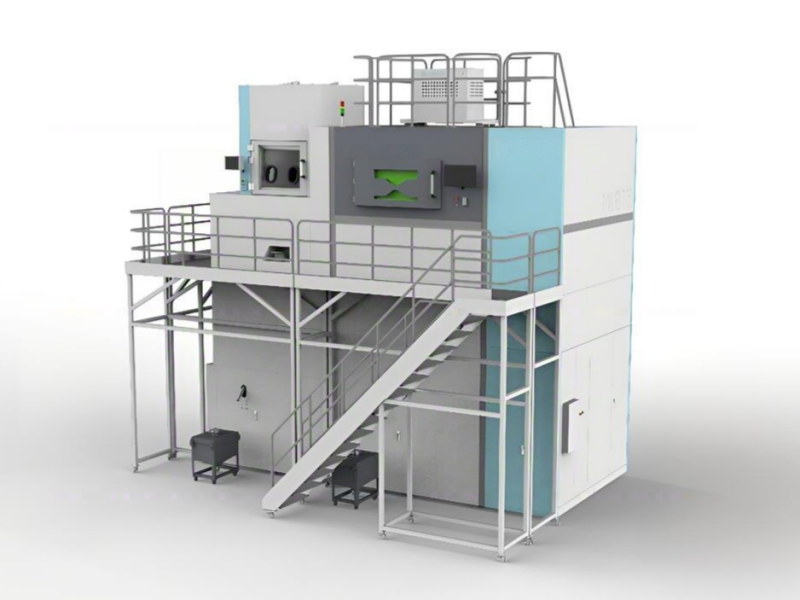
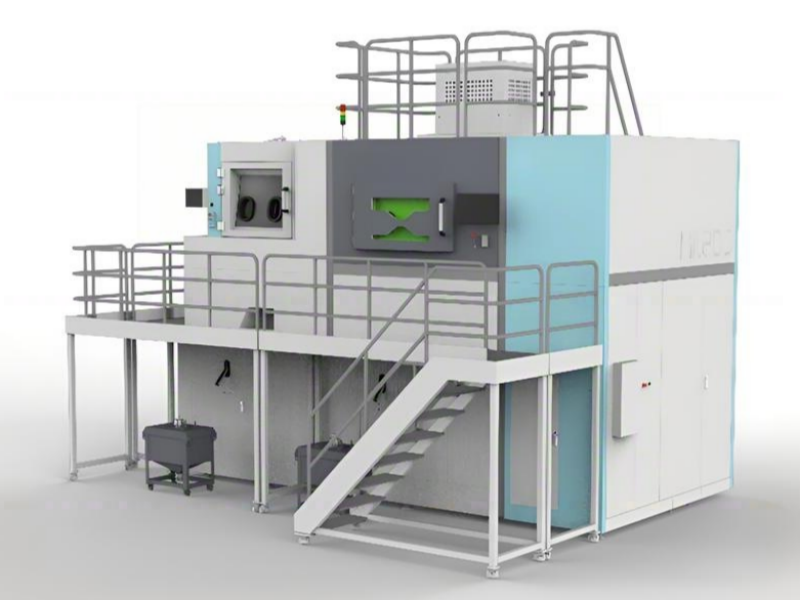
Forgecise: Integrated Industrial AM for Aerospace Production

Forgecise delivers a closed-loop industrial additive manufacturing ecosystem engineered specifically for the stringent demands of aerospace production. Unlike fragmented service providers, we integrate four mission-critical capabilities under one quality management system to eliminate handoff risks and ensure end-to-end traceability for flight-ready components.

Ready to Transform Your MRO Operations?

Contact us to discover how our Additive Manufacturing solutions

This field is required.