



Why Forgecise Outstanding
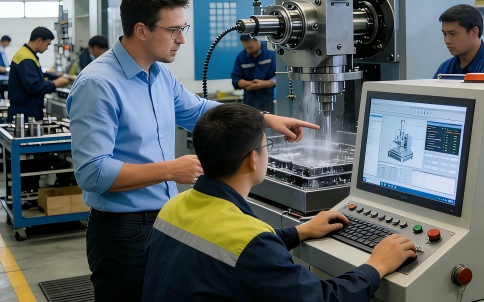
Forgecise stands out as the premier partner for industrial innovation by integrating custom material science, precision manufacturing, bespoke equipment engineering, into a solution to the customer
What You Get
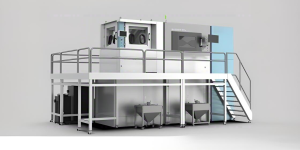
By partnering with us, you gain access to a fully integrated additive manufacturing ecosystem that delivers tailored materials, precision parts, bespoke equipment, expert guidance all under one roof.
Metal 3D Printing Services We Provide
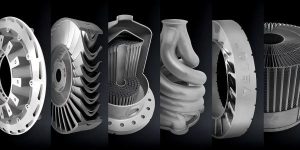
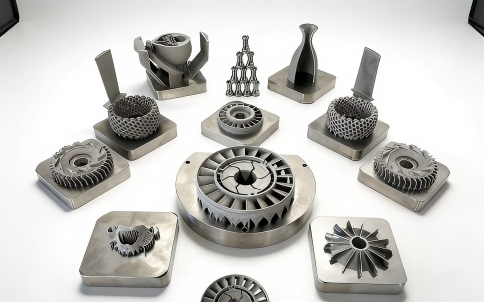
Forgecise runs metal additive manufacturing as a production service, not a demonstration. Work is quoted per part against the drawing, the alloy and the inspection requirement, and the process route is chosen to suit the geometry rather than forced onto one machine.
| Process | How it works | Where it fits |
|---|---|---|
| Laser powder bed fusion (LPBF / SLM / DMLS) | A laser melts each layer from a metal powder bed | Complex internal channels, thin walls and high detail in titanium, stainless, aluminium and nickel alloys |
| Electron beam melting (EBM) | An electron beam melts each layer in vacuum at elevated temperature | Thicker sections and parts where residual stress in titanium is the main constraint |
| Binder jetting | Binder is printed into the powder bed, then the part is sintered | Larger batches where surface finish matters more than fine internal detail |
| Post-processing | Support removal, powder removal, heat treatment, machining and surface finishing | Any part that has to meet a dimensional or surface specification after the build |
Materials We Process
| Material | Typical service use |
|---|---|
| AlSi10Mg | Lightweight brackets, housings, heat-transfer parts |
| Scalmalloy | Higher-strength aluminium parts where weight saving is the driver |
| 316L stainless steel | Corrosion-resistant parts, manifolds, general industrial components |
| 17-4 PH stainless steel | Parts needing higher strength plus corrosion resistance |
| Ti-6Al-4V | Aerospace structure, medical implants, lightweight load-bearing parts |
| Inconel 718 / 625 | High-temperature parts, turbine and exhaust hardware |
| CoCr | Medical and dental components, wear-resistant parts |
| CuCrZr | Thermal management parts where copper conductivity is needed |
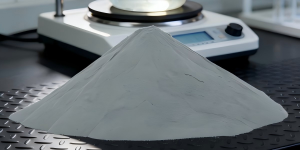
Material availability and the acceptable particle size range are confirmed per enquiry, because they depend on the alloy and the process your part needs. If your drawing calls for a specific standard, say which one in the message.
What to Send for a Services Quote
Five items are enough for a first review. Without them the reply can only be general, which costs you a round trip.
- The part drawing or STEP file, plus the build orientation if it is already fixed
- The alloy, and any standard or specification the material has to meet
- Expected quantity, and whether this is a one-off or repeat production
- Delivery country and the date you are working toward
- Whether you need inspection records, material certificates or test coupons
How a Part Moves Through Our Service
- Drawing review. We check whether the part suits additive manufacturing and flag features that will need support, machining allowance or a design change.
- Quote. You get the process route, the material, the post-processing steps and the price for the quantity you asked about.
- Build preparation. Orientation, support strategy and nesting are fixed before the machine runs – changing them afterwards is expensive.
- Printing. The part is built, then depowdered and stress-relieved according to the alloy.
- Post-processing. Support removal, heat treatment, machining and surface finishing as the drawing requires.
- Inspection and dispatch. Dimensional checks and any agreed NDT are completed, then the part ships with the documentation you asked for.
Frequently Asked Questions About Our 3D Printing Services
What metal 3D printing services does Forgecise provide?
We quote metal additive manufacturing as a production service: laser powder bed fusion, electron beam melting and binder jetting, followed by support removal, powder removal, heat treatment, machining, surface finishing and inspection. Parts are quoted against the drawing and the alloy rather than ordered from a catalogue.
What should I include in a service enquiry?
Send the drawing or STEP file, the alloy and any standard it must meet, the expected quantity, the delivery country and the date you are working toward. If you need inspection records, material certificates or test coupons, say so in the same message – it changes the quote and the process route.
Which materials can you process?
Aluminium alloys including AlSi10Mg and Scalmalloy, stainless steels including 316L and 17-4 PH, Ti-6Al-4V, nickel alloys including Inconel 718 and 625, CoCr and CuCrZr. Availability and the acceptable particle size range are confirmed per enquiry, because both depend on the alloy and the process your part needs.
Can you handle post-processing and inspection?
Yes. Support removal, depowdering, heat treatment including HIP where it is specified, machining, surface finishing and dimensional inspection are part of the service, not add-ons you have to arrange elsewhere. Non-destructive testing is quoted according to the method your specification calls for.
Do you support repeat production after a first build?
Repeat orders are quoted against the approved build and material, so the process route does not have to be re-established each time. Tell us at the enquiry stage if the part is expected to run repeatedly, because that affects how the first article is documented.