



| Chemical Composition wt.% | Fe | C | Si | Mn | Cr | Ni | Mo |
| Bal. | ≤0.03 | ≤1.0 | ≤2.0 | 16.0-18.0 | 10.0-14.0 | 2-3 | |
| P | S | O | N | / | / | / | |
| ≤0.02 | ≤0.02 | ≤0.08 | ≤0.15 | / | / | / | |
| Physical Properties | Particle Size Range/μm | Sphericity | Apparent Density g/cm³ | Tap Density g/cm³ | Flowability s/50g | ||
| D10 | D50 | D90 | |||||
| ≥ 15 | 30-40 | ≤60 | ≥0.9 | ≥4.0 | ≥4.5 | ≤20 | |
| Mechanical Properties | Status | Tensile Strength /MPa | Yield Strength /MPa | Elongation /% | |||
| As-Deposited | ≥580 | ≥480 | ≥40.0 | ||||
| Heat-Treated | ≥600 | ≥380 | ≥40.0 | ||||
> Please note: Specifications are subject to change without notice. Contact a Forgecise representative for the most current technical data.
1. 316L Stainless Steel Powder – Product Description
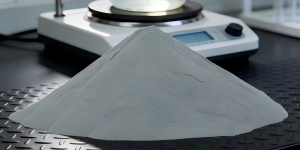
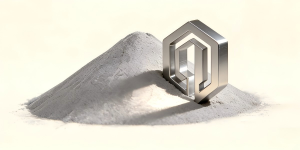
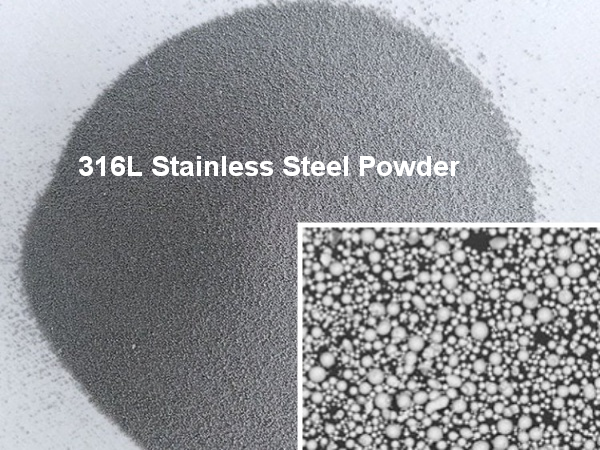
316L Stainless Steel Powder is a premium molybdenum-bearing austenitic stainless steel powder designed for high-performance applications. Based on the technical parameters, its key advantages include:
- Superior Corrosion Resistance: The addition of Molybdenum (2-3%) significantly enhances resistance to pitting and crevice corrosion in chloride environments compared to 304 stainless steel.
- Excellent Mechanical Properties: It offers high tensile strength (≥580 MPa as-deposited, ≥600 MPa heat-treated) and exceptional ductility (Elongation ≥40%), ensuring durability and toughness in final parts.
- Optimized for Additive Manufacturing: The powder features high sphericity (≥0.9), excellent flowability (≤20 s/50g), and a controlled particle size distribution (D50: 30-40 μm), which ensures smooth powder spreading and high packing density during the printing process.
2. Application in Additive Manufacturing
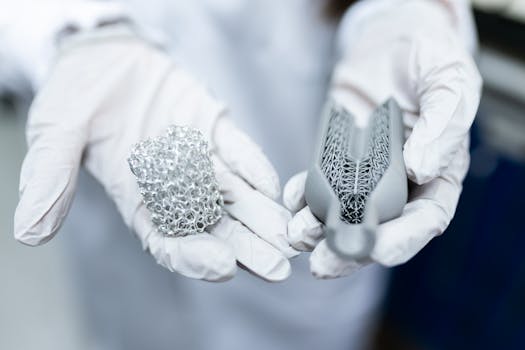
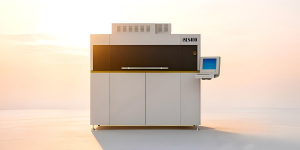
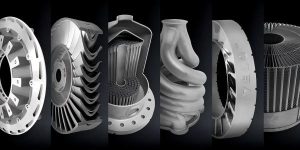
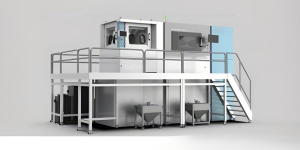
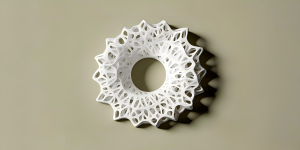
Specifically designed for Selective Laser Melting (SLM) processes, 316L powder enables the production of complex, high-precision components with minimal porosity. Its low carbon content (≤0.03%) prevents carbide precipitation during the rapid heating and cooling cycles of laser melting, maintaining the material’s corrosion resistance. This makes it an ideal choice for manufacturing functional end-use parts in demanding industries such as aerospace, medical devices, chemical processing, and food processing.
3. What is 316L Stainless Steel Powder?
316L Stainless Steel Powder is an ultra-low carbon austenitic stainless steel powder widely used in metal Additive Manufacturing (3D printing) and Metal Injection Molding (MIM).
The “L” stands for “Low Carbon,” meaning its carbon content is strictly controlled below 0.03%. This characteristic significantly reduces carbide precipitation during welding or printing, thereby endowing the material with exceptional corrosion resistance and weldability.
Here is a detailed breakdown of 316L stainless steel powder:
Core Features
- Excellent Corrosion Resistance: Thanks to the addition of Molybdenum (Mo) (about 2-3%), 316L offers superior resistance to pitting and crevice corrosion compared to standard 304/316 stainless steels, especially in chloride environments (such as seawater and de-icing salts).
- Good Biocompatibility: It is non-toxic and resistant to body fluids, making it an ideal material for medical implants (such as orthopedic implants) and food processing equipment.
- Superior Formability: In 3D printing, 316L powder exhibits excellent flowability and achieves high density after forming. Its low susceptibility to hot cracking makes it perfect for manufacturing complex geometric structures.
- Non-magnetic: In its solution-treated state, it is typically non-magnetic (austenitic structure).
Typical Chemical Composition (wt.%)
| Element | Content Range (%) | Function |
|---|---|---|
| Iron (Fe) | Balance | Base element |
| Chromium (Cr) | 16.0 – 18.0 | Provides fundamental corrosion resistance (forms a passive film) |
| Nickel (Ni) | 10.0 – 14.0 | Stabilizes the austenitic structure and enhances toughness |
| Molybdenum (Mo) | 2.0 – 3.0 | Key element, significantly boosts pitting resistance |
| Carbon (C) | ≤ 0.03 | Low carbon, prevents intergranular corrosion and aids weldability |
| Manganese (Mn) | ≤ 2.0 | Assists in deoxidation and increases strength |
Major Applications
- Metal 3D Printing (SLM/DMLS): Used to manufacture complex corrosion-resistant components such as aerospace parts, marine accessories, and chemical valves.
- Metal Injection Molding (MIM): Used for mass-producing small precision parts like watch cases, mobile phone SIM trays, and medical device components.
- Laser Cladding: Used to repair or enhance the corrosion and wear resistance of ordinary steel surfaces.
316L vs 316 vs 17-4PH
To help you distinguish them better, here is a simple comparison table:
| Feature | 316L | 316 | 17-4PH |
|---|---|---|---|
| Carbon Content | Ultra-low (<0.03%) | Medium (<0.08%) | Low |
| Key Advantage | Corrosion resistance, Weldability | General versatility | Ultra-high strength, Hardness |
| Heat Treatment | Usually not hardened | Usually not hardened | Requires aging treatment for high strength |
| Typical Applications | Marine environments, Medical, Chemical | General industry | Aerospace structural parts, Molds |
Summary:
If you need to manufacture parts for use in harsh corrosive environments (such as marine or chemical plants), or require medical-grade safety materials, 316L is the top choice. If you prioritize hardness and strength (for example, making cutting tools or load-bearing structural parts), you might want to consider 17-4PH or martensitic stainless steels.
4. Customization Services by Forgecise
At Forgecise, we specialize in providing customized metal powder solutions to meet diverse industrial needs. Beyond standard 316L, we offer a wide range of stainless steel powder grades (including 17-4PH, 304, 420, etc.) with tailored particle size distributions and chemical compositions. Whether for R&D or mass production, our advanced atomization technology ensures consistent quality and performance for your specific additive manufacturing requirements.