







| Category | Parameter | Value / Range |
|---|---|---|
| Typical Applications | Suitable for manufacturing high-temperature structural parts, e.g., aero-engine combustion chambers | — |
| Applicable Processes | SLM (Selective Laser Melting) | — |
| Chemical Composition (wt.%) | C | 0.05–0.15 |
| Cr | 20.0–24.0 | |
| Co | ≤5.0 | |
| Mo | 1.0–3.0 | |
| W | 13.0–15.0 | |
| Fe | ≤3.0 | |
| Ni | Bal. (balance) | |
| B | ≤0.015 | |
| S | ≤0.015 | |
| Si | 0.25–0.75 | |
| Mn | 0.30–1.0 | |
| P | ≤0.03 | |
| La | 0.005–0.05 | |
| Al | 0.2–0.5 | |
| Cu | ≤0.5 | |
| Ti | ≤0.1 | |
| O | ≤0.02 | |
| N | ≤0.02 | |
| Physical Properties | Particle Size D10 (μm) | ≥15 |
| Particle Size D50 (μm) | 30–40 | |
| Particle Size D90 (μm) | ≤60 | |
| Sphericity | ≥0.9 | |
| Apparent Density (g/cm³) | ≥4.4 | |
| Tap Density (g/cm³) | ≥5.0 | |
| Flowability (s/50g) | ≤18 | |
| Mechanical Properties (Heat-Treated) | Test Temperature: Room Temp. | — |
| Tensile Strength (MPa) | ≥800 | |
| Yield Strength (MPa) | ≥400 | |
| Elongation (%) | ≥30.0 | |
| Test Temperature: 900°C | — | |
| Tensile Strength (MPa) | ≥230 | |
| Yield Strength (MPa) | ≥180 |
1. Advantages and Features of This Haynes 230 Superalloy Powder
1.1 Optimized for Industrial Applications
High-Temperature Performance Focus: Engineered specifically for demanding industrial environments, meeting stringent requirements for high-temperature structural components such as aero-engine combustion chambers and other critical aerospace applications.
Proven Industrial Track Record: The Haynes 230 composition has a long history of successful use in extreme temperature environments, demonstrating excellent oxidation resistance and structural stability at elevated temperatures up to 900°C.
1.2 Excellent SLM Processability
High Flowability & Density: With exceptional flowability of ≤18 s/50g, apparent density ≥4.4 g/cm³, and tap density ≥5.0 g/cm³, the powder ensures uniform spreading during the SLM process, minimizing defects and resulting in high-density printed parts.
Controlled Particle Size Distribution: The optimized D50 range of 30–40 μm (with D10 ≥15 μm and D90 ≤60 μm) is ideal for achieving fine-feature resolution in SLM, enabling the production of complex high-temperature components with intricate geometries.
High Sphericity (≥0.9): Ensures consistent powder bed packing and stable melt pool dynamics, critical for repeatable mechanical properties and dimensional accuracy in additively manufactured high-temperature parts.
1.3 Robust Mechanical Performance
Exceptional High-Temperature Strength: Maintains impressive mechanical properties even at elevated temperatures, with tensile strength ≥230 MPa and yield strength ≥180 MPa at 900°C, crucial for components operating in extreme thermal environments.
Outstanding Room Temperature Properties: Delivers high tensile strength (≥800 MPa), excellent yield strength (≥400 MPa), and remarkable ductility (≥30.0% elongation) at room temperature, ensuring structural integrity across operating conditions.
Superior Oxidation Resistance: The synergistic combination of Cr, W, and Mo provides exceptional resistance to oxidation and carburization at high temperatures, extending component service life in aggressive environments.
1.4 Stable Physical Properties
Consistent Thermal Stability: The balanced alloy composition ensures dimensional stability and minimal thermal expansion during high-temperature service, critical for precision components in aerospace applications.
Controlled Microstructure: The precise control of grain structure and phase distribution through optimized powder characteristics ensures predictable thermal and mechanical behavior throughout the component’s lifecycle.
1.5 High Purity & Compositional Control
Ultra-Low Interstitial Impurities: Strict limits on oxygen (<0.02%), nitrogen (<0.02%), sulfur (<0.015%), and phosphorus (<0.03%) minimize inclusions and defects in printed parts, enhancing high-temperature performance and fatigue resistance.
Balanced Alloying Elements: The precise Cr (20.0–24.0%), W (13.0–15.0%), and Mo (1.0–3.0%) content ensures optimal high-temperature strength and oxidation resistance. Harmful elements like B, S, and P are strictly controlled to minimize detrimental effects on weldability and ductility.
2. Haynes 230 Superalloy Powder Material Overview
Haynes 230 Superalloy Powder is a nickel-chromium-tungsten-molybdenum alloy powder specifically designed for Selective Laser Melting (SLM) additive manufacturing processes. Classified as a high-performance superalloy, this material adheres to international standards for high-temperature structural applications. Through precise compositional control and advanced powder preparation techniques, it ensures that printed components meet rigorous industrial requirements for mechanical properties and thermal stability, serving as a foundational material for demanding aerospace and energy sector manufacturing.
2.1 Chemical Composition Characteristics
The alloy uses nickel as the base (balance), with chromium content controlled at 20.0–24.0 wt.% to form a dense, protective chromium oxide film, providing excellent oxidation resistance at elevated temperatures. Tungsten (13.0–15.0 wt.%) and molybdenum (1.0–3.0 wt.%) contribute to solid solution strengthening, significantly enhancing high-temperature strength and creep resistance. Carbon is carefully controlled at 0.05–0.15 wt.% to optimize carbide formation for grain boundary strengthening. Silicon (0.25–0.75 wt.%) and manganese (0.30–1.0 wt.%) aid in deoxidation and microstructural control. Trace elements including lanthanum (0.005–0.05 wt.%) provide grain refinement benefits. Harmful impurities are strictly controlled: boron, sulfur, and phosphorus are all maintained at minimal levels, and interstitial elements oxygen and nitrogen are kept below 0.02%, ensuring the density and high-temperature performance of printed parts.
2.2 Powder Characteristics
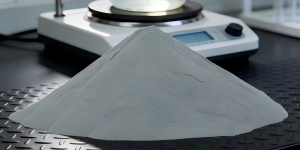
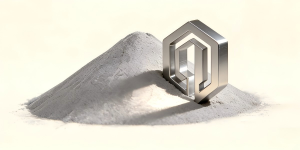
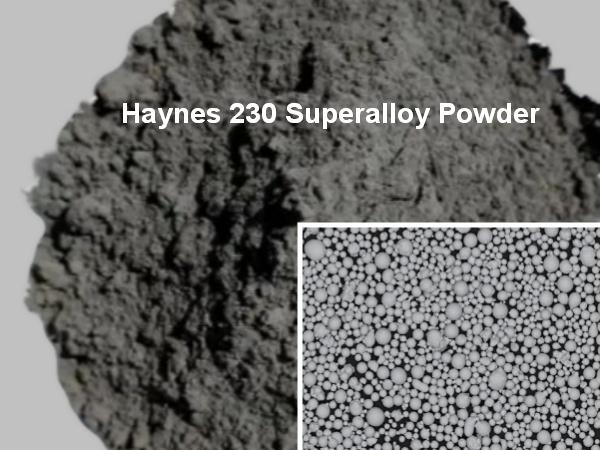
Haynes 230 powder features a highly spherical morphology (sphericity ≥0.9) with a particle size distribution optimized for SLM processing: D10 ≥15 μm, D50 = 30–40 μm, and D90 ≤60 μm, ensuring uniform powder spreading and fine feature resolution. It exhibits an apparent density of ≥4.4 g/cm³, tap density of ≥5.0 g/cm³, and exceptional flowability of ≤18 s/50g, demonstrating superior flow and packing behavior that effectively reduces defects during spreading, laying the physical foundation for high-density, high-quality printed components capable of withstanding extreme thermal environments.
3. Technical Advantages
The core advantage of Haynes 230 powder lies in its “process-performance-application” integration for high-temperature industrial components. Its optimized particle characteristics guarantee process stability in SLM, enabling the production of complex geometries that would be impossible with traditional manufacturing methods. The classic Ni-Cr-W-Mo chemistry delivers exceptional high-temperature strength, outstanding oxidation resistance, and superior thermal stability, making it a premier material for critical aerospace and energy applications. Its combination of high strength, excellent ductility, and remarkable thermal performance makes it particularly advantageous for components that must withstand extreme thermal cycling and mechanical stress over extended service periods in demanding environments.
4. SLM Process Parameter Recommendations
For SLM fabrication using Haynes 230 powder, a recommended processing window includes laser power of 200–350 W, scanning speed of 700–1100 mm/s, layer thickness of 20–40 μm, and hatch spacing of 80–120 μm. Substrate preheating to 100–200°C is often used to reduce residual stress and minimize thermal gradients. High-purity argon protection must be maintained throughout the process, keeping chamber oxygen levels below 100 ppm to prevent oxidation of reactive elements. A stripe or chessboard scanning strategy with interlayer rotation is advised to homogenize heat accumulation and minimize distortion. Post-printing stress relief annealing is typically required to optimize mechanical properties and dimensional stability.
5. Post-Processing Procedures
Post-processing of Haynes 230 printed parts begins with stress relief annealing at 1100–1200°C under vacuum or inert atmosphere to eliminate residual stresses and optimize microstructure. For critical high-temperature components, solution annealing followed by controlled cooling may be employed to achieve the desired grain structure and phase distribution. Subsequent surface treatments include machining, grinding, and polishing to achieve the final dimensions and surface finish required for high-performance applications. Throughout the process, atmospheric purity must be controlled to prevent surface oxidation and maintain the alloy’s exceptional high-temperature properties. Hot isostatic pressing (HIP) may be considered for components requiring maximum density and fatigue resistance.
6. Performance Specifications
In the heat-treated condition, Haynes 230 alloy demonstrates exceptional mechanical properties across temperature ranges: at room temperature, tensile strength ≥800 MPa, yield strength ≥400 MPa, and elongation ≥30.0%; at 900°C, tensile strength ≥230 MPa and yield strength ≥180 MPa. Its outstanding oxidation resistance in high-temperature environments and proven thermal stability ensure long-term reliability and functionality in extreme service conditions, meeting relevant international standards for high-temperature superalloys. The material maintains excellent creep resistance and thermal fatigue performance, making it suitable for components subjected to prolonged exposure to elevated temperatures.
7. Application Areas
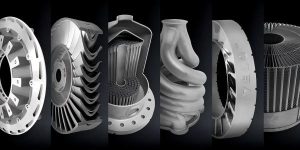
Haynes 230 powder is primarily applied in aerospace and energy sectors for the direct SLM fabrication of customized, high-temperature structural components. Key applications include aero-engine combustion chambers, turbine components, exhaust systems, and heat treatment fixtures. It is also used for industrial furnace components, chemical processing equipment, and other applications requiring exceptional high-temperature strength and oxidation resistance. Leveraging its excellent thermal stability, mechanical strength, and oxidation resistance, it is a key material in the additive manufacturing of high-performance, long-life components for the most demanding industrial environments. Forgecise customization delivers Haynes 230 powder, a spherical nickel-chromium-tungsten superalloy powder engineered for exceptional high-temperature strength and oxidation resistance, making it the premier SLM superalloy powder choice for aerospace AM materials and critical combustion chamber powder applications in demanding high-temperature alloy powder environments.
8. Comparison with Similar Powders
Compared to Inconel 718, Haynes 230 offers superior oxidation resistance and higher temperature capability, though with slightly lower room temperature strength. Versus Hastelloy X, Haynes 230 provides better high-temperature strength and thermal stability, making it more suitable for components operating above 800°C. Compared to traditional wrought superalloys, the SLM-processed Haynes 230 offers design freedom for complex geometries while maintaining comparable high-temperature performance, though post-processing requirements may be more stringent to achieve optimal properties.
9. Precautions
Haynes 230 powder contains nickel and other reactive elements; full personal protective equipment (PPE) must be worn during handling, and operations should be conducted within closed systems—open exposure is strictly prohibited. Powder must be stored in a dry, inert environment to prevent moisture absorption and oxidation. Before reuse, sieving and testing for property changes are mandatory to ensure consistent print quality. Waste powder must be disposed of as hazardous waste per regulations. Mixing powders from different batches is strictly forbidden to maintain compositional consistency and predictable processing behavior.
10. Summary
Haynes 230 Superalloy Powder is a high-performance nickel-based superalloy powder optimized for SLM additive manufacturing of extreme environment components. Its well-established chemistry, excellent powder characteristics, and reliable process adaptability give it a leading position in high-temperature industrial applications. This material delivers a powerful combination of exceptional high-temperature strength, outstanding oxidation resistance, and proven long-term thermal stability, making it an indispensable material for manufacturing critical, high-performance components that demand precision, reliability, and extreme environment capability.
11. Customization Services by Forgecise
Forgecise delivers comprehensive superalloy powder customization solutions, spanning the complete spectrum from standard high-temperature formulations to customer-specific high-performance nickel-based superalloys. We support mainstream superalloy grades including Haynes 230, Inconel series, and Hastelloy variants, with the capability to precisely tailor chemical composition, particle size distribution, sphericity, oxygen/nitrogen content, and thermal expansion coefficient to match your exact industrial and manufacturing requirements. Our superalloy powders are optimized for demanding additive manufacturing processes including SLM and EBM, ensuring consistent printability, high density, superior high-temperature mechanical properties, and reliable performance in your final aerospace, energy, and industrial components.