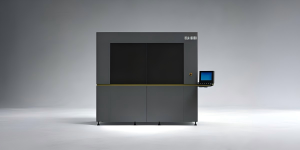
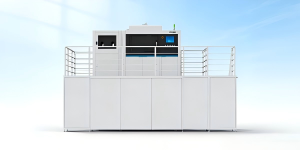
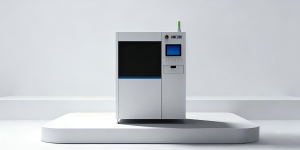
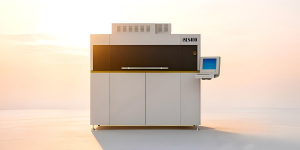






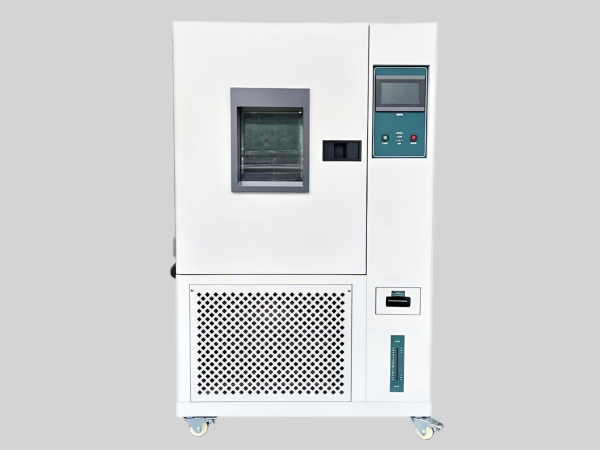
| Equipment Model | BZ500A |
| Rated Power | 15 KW |
| Input Voltage | 380V, 3-Phase 5-Wire, 50Hz |
| Processing Temperature | 80-100℃ (Fully Automatic Constant Temperature Control) |
| Polishing Duration | 30-120s/piece (Customizable based on workpiece precision) |
| Tank Capacity | 540 L |
| Equipment Dimensions (Main Unit) | 1920 × 1465 × 2100 mm |
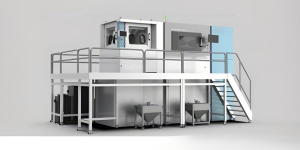
| Rectifier Power Supply Dimensions | 1070 × 700 × 1700 mm |
| Processed Roughness | Ra 0.01~0.2μm (Mirror Effect) |
| Compatible Materials | Stainless Steel, Titanium Alloy, Cobalt-Chromium-Molybdenum, Copper Alloy, Aluminum Alloy, Gold/Silver, Zinc Alloy, and all other conductive metals |
| Control System | Intelligent Controller + Touch Screen Smart Control, Auto-detection, Overload Protection |
| Key Features | No Hydrogen Embrittlement, No Dead Spot Polishing, No Loss of Dimensional Accuracy, Eco-friendly & Pollution-free |
Plasma Polishing Machine Product Introduction
I. Product Overview
This plasma polishing machine is a new type of precision metal surface treatment equipment based on the principle of plasma electrochemistry. Distinct from traditional mechanical polishing, grinding, and electrolytic polishing processes, it utilizes a high-voltage electric field to excite plasma in a neutral, eco-friendly electrolyte. This process precisely strips and levels microscopic protrusions, burrs, and oxide layers on the surface of metal workpieces, achieving integrated processing effects including mirror polishing, deburring, rust and oil removal, and surface modification.
The equipment eliminates common pain points associated with traditional polishing, such as high consumable wear, uneven surfaces, susceptibility to deformation, and hydrogen embrittlement risks. It features core advantages including high precision, no dead spots, low damage, environmental friendliness, energy efficiency, and a high degree of automation. It is suitable for the fine surface treatment of workpieces with various complex structures (inner walls, micro-holes, irregular curved surfaces, narrow crevices, etc.). Equipped with an intelligent control system, the machine offers easy operation, stable performance, and exceptional processing consistency. It is compatible with over ten types of conductive metals, including stainless steel, copper alloys, aluminum alloys, titanium alloys, and zinc alloys, making it a core precision processing device for high-end manufacturing sectors such as precision hardware, medical devices, sanitary ware and jewelry, and aerospace.
II. Core Functions
(1) Precision Mirror Polishing Function
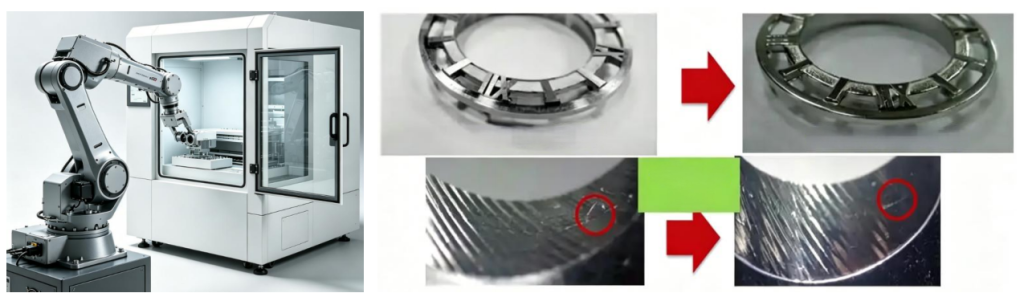
Through the microscopic ion bombardment of plasma, the surface texture of the workpiece is uniformly refined, optimizing the metal surface roughness (Ra) to 0.01~0.2μm and easily achieving a mirror-level polish. The polishing process is gentle and does not compromise the original dimensional accuracy or overall structure of the workpiece. It leaves no mechanical grinding scratches or polishing marks. After polishing, the surface flatness and brightness are significantly enhanced, while the oxidation and corrosion resistance of the metal surface is improved.
(2) Fully Automatic Deburring Function
Targeting difficult-to-treat areas such as edge burrs, micro-hole burrs, crevice residues, and sharp edges remaining after machining, this function achieves comprehensive deburring without dead spots. It can precisely perform deburring, filleting, and chamfering for micro-apertures, complex irregular structures, and hidden internal cavities. This solves the problem of unreachable burrs that traditional manual or mechanical polishing cannot handle, ensuring uniform processing accuracy with no residual burrs, meeting the needs of high-precision component manufacturing.
(3) Intelligent Automated Control Function
The equipment supports automatic loading and unloading via robotic integration and features an intelligent control system with a high-definition touch screen HMI. It allows for visual parameter adjustment, enabling users to customize core parameters such as three-stage polishing duration, processing current, temperature, and liquid level to suit different materials and precision requirements. Equipped with automatic liquid level detection, constant temperature control, overload protection, and fault alarms, the equipment operates stably and enables standardized batch processing, significantly reducing reliance on manual labor.
(4) Eco-friendly and Low-consumption Processing Function
Using a low-concentration neutral eco-friendly electrolyte free from strong acids or alkalis, the process generates no dust, exhaust gas, or heavy metal pollution. Wastewater treatment is simple with low discharge volumes, complying with industrial environmental production standards. Furthermore, it prevents material embrittlement and deformation, making it suitable for high-safety processing scenarios such as medical devices and precision components.
III. Core Product Parameters
The parameters represent the industry-standard model. Non-standard models can be customized according to customer workpiece dimensions and capacity requirements.
IV. Application Areas
(1) Medical Device Industry
Suitable for processing medical-grade titanium alloy, cobalt-chromium-molybdenum, and stainless steel components, such as dentures, orthopedic implants, surgical instruments, minimally invasive instruments, and medical precision parts. The electrolyte meets medical-grade standards; processing involves no hydrogen embrittlement or metal residue, resulting in high surface finish and excellent biocompatibility. It fully complies with strict hygiene and safety standards for medical devices, effectively enhancing product corrosion resistance and operational safety.
(2) Precision Hardware and Mold Industry
Used for polishing and deburring precision stamped parts, turned parts, micro-hardware accessories, mold irregular cavities, and micro-hole components. It resolves polishing challenges in narrow crevices, deep holes, and irregular curved surfaces. Processed parts exhibit high dimensional consistency with no deformation or scratches, significantly improving yield rates and assembly precision for precision hardware products.
(3) Sanitary Ware and Kitchenware Industry
Applicable for mirror polishing of stainless steel faucets, showerheads, bathroom accessories, high-end kitchenware, and drinkware. Replacing traditional manual polishing and mechanical grinding, it produces uniformly bright surfaces free of orange peel effects and sand holes, while enhancing rust and stain resistance to meet the aesthetic and quality demands of high-end sanitary and kitchen products.
(4) Jewelry and Watchmaking Industry
Widely used for fine polishing of watch cases, watchbands, jewelry, eyeglass frames, and precious metal ornaments. It performs mirror polishing on gold, silver, titanium alloy, stainless steel, and zinc alloy accessories, removing surface defects and fine burrs to enhance metallic luster without damaging delicate structures or intricate textures.
(5) Aerospace and Automotive Parts Industry
Applied in surface finishing for aerospace precision components, engine parts, hydraulic fittings, automotive precision hardware, and new energy vehicle components. For high-strength, high-precision metal assemblies, it achieves non-destructive deburring and polishing modification, enhancing wear resistance, stability, and service life to meet the rigorous requirements of high-end equipment manufacturing.
(6) Electronics and Telecommunications Industry
Suitable for polishing and deburring electronic precision terminals, connectors, micro-metal shrapnel, and communication equipment metal parts. It removes residual burrs and oxide layers to ensure assembly precision and conductivity, thereby improving the stability and lifespan of electronic products.
V. Summery
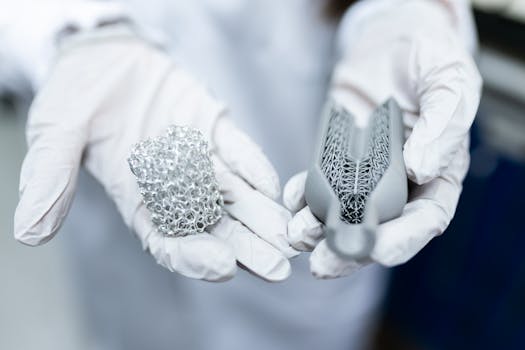
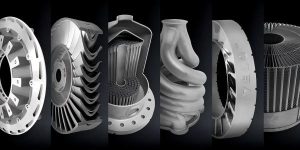
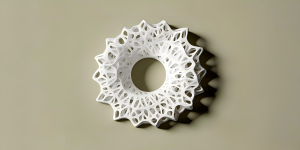
The plasma polishing machine is specifically engineered as a dedicated 3D metal printing post-processing solution to overcome the unique surface challenges of additive manufacturing. Unlike conventional methods that struggle with complex AM geometries, this plasma polishing machine utilizes plasma electrochemical technology to achieve uniform metal AM surface finishing, effectively removing support structure marks, sintered powder residue, and stair-stepping effects without altering critical dimensions. It excels at 3D printed part deburring in areas inaccessible to mechanical tools, making it ideal for lattice structure polishing and internal channel polishing in fluidics and heat exchangers. Compatible with common AM materials like titanium and cobalt-chrome alloys (titanium alloy 3D print polishing), the BZ500A provides an eco-friendly, automated alternative to manual finishing, ensuring high-surface quality and biocompatibility for medical implants, aerospace components, and other mission-critical additively manufactured parts.