






Back to 3D Printing in Aerospace
Published: August 17, 2026
Last Updated: August 17, 2026
Author: Felix Lee, CEO at Forgecise
Expertise: Advanced Manufacturing | Thermal Engineering | Additive Manufacturing Applications
Table of Contents
About the Author
Felix Lee is the CEO at Forgecise, where he focuses on advanced manufacturing technologies and engineering solutions for next-generation industrial applications. His work explores how additive manufacturing, optimized structures, and new materials can help solve difficult engineering challenges in thermal management, lightweight systems, and high-performance components.
Quick Answer: What Are Ultra-Thin-Wall Heat Exchangers?
Ultra-thin-wall heat exchangers are advanced cooling systems that use extremely thin metal walls and complex internal structures to transfer heat faster while reducing size and weight. Using TPMS designs and metal additive manufacturing, engineers can create fluid channels and cooling architectures that traditional machining and brazing methods cannot produce.
TL;DR
- Ultra-thin-wall heat exchangers help solve growing cooling problems in AI servers, aerospace systems, electric vehicles, and motorsport.
- TPMS structures such as Gyroid, Schwarz Diamond, and Schwarz P improve heat transfer by increasing surface area and improving fluid movement.
- Flow ADMS uses computer-based design methods to reduce pressure loss while keeping strong thermal performance.
- Laser Powder Bed Fusion allows engineers to build extremely thin walls and complex internal channels as one solid component.
- Companies including Conflux Technology, PrintSky, and PWR Advanced Cooling Technology are already applying these ideas in real products.
Why Are Traditional Heat Exchangers Reaching Their Limits?
Modern engineering systems are generating more heat in smaller spaces.
This is happening across many industries:
- Artificial intelligence data centers
- Electric power systems
- Aerospace propulsion
- High-performance vehicles
- Motorsport engines
The challenge has changed.
Engineers are no longer only asking:
“How can we remove heat?”
They are asking:
“How can we remove more heat from less space without adding weight or using too much energy?”
Traditional cooling systems are reaching their physical limits.
The Challenge With Traditional Micro-Channel Designs
Micro-channel heat exchangers have been used for years because smaller channels create more surface area.
More surface area usually means better heat transfer.
However, smaller channels create another problem: higher resistance.
When channel hydraulic diameter approaches or falls below about 1 mm, fluid behavior changes.
The effects become stronger:
- Wall friction increases
- Pumping requirements rise
- Thermal boundary layers become harder to manage
The thermal boundary layer is the thin layer of fluid near the wall that quickly reaches the wall temperature.
Once this layer becomes stable, it slows heat transfer between the fluid and the wall.
So engineers face a difficult balance:
Smaller channels improve heat transfer.
But smaller channels also increase pressure loss.
Why Traditional Fin Structures Also Have Limits
Offset strip fins are common in compact heat exchangers because they create turbulence and increase surface area.
But when these structures become smaller and thicker, problems appear.
The fluid begins creating:
- Recirculation zones
- Stagnant areas
- Higher friction
The pressure increase can become larger than the heat transfer benefit.
This means adding more structure does not always create a better cooling system.
The solution requires a different type of geometry.
How Do TPMS Heat Exchangers Improve Thermal Performance?
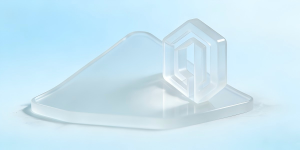
Triply Periodic Minimal Surface (TPMS) heat exchangers use continuous mathematical surfaces that repeat in three dimensions. These structures create separate fluid networks with extremely high surface area, allowing better heat transfer inside a compact space.
Common TPMS designs include:
- Gyroid
- Schwarz Diamond
- Schwarz P
Unlike straight channels, TPMS structures create curved and connected pathways.
The fluid does not simply travel forward.
It continuously changes direction.
How TPMS Controls Heat Movement
TPMS structures improve thermal performance in several ways.
Larger Heat Transfer Area
The complex surface geometry creates much more contact area between hot and cold fluids.
This allows more heat to move across the separating wall.
Better Fluid Mixing
Curved pathways disturb the thermal boundary layer.
Instead of allowing a warm layer to build near the wall, the geometry continuously moves fresh fluid into contact with the surface.
More Even Temperature Distribution
Traditional channels often create hot and cold zones.
TPMS structures spread heat more evenly throughout the component.
This is especially valuable for:
- AI server cooling
- High-power electronics
- Aerospace systems
- Battery thermal management
How Do TPMS Structures Separate Two Fluids?
One of the most useful features of TPMS designs is their ability to create two separate but connected flow networks.
For example:
- Hot engine fluid moves through one side
- Cooling fluid moves through the other side
- A very thin metal wall separates them
The entire structure can be printed as one component.
There are:
- No brazed joints
- No stacked plates
- No traditional seals between layers
This reduces possible failure points.
How Much Better Are TPMS Heat Exchangers?
Testing and simulations show that TPMS heat exchangers can outperform traditional designs.
Compared with conventional Printed Circuit Heat Exchangers:
- Overall thermal performance improvement can reach approximately 15% to 100%
- Nusselt number improvement can reach approximately 16% to 120%
The reason is not simply more surface area.
The real advantage comes from controlling fluid movement.
A high-performance heat exchanger is not just a metal structure.
It is a carefully designed flow system.
Why Is Flow ADMS the Next Step Beyond Traditional TPMS?
Traditional TPMS designs solve many problems, but they still have limitations.
A Gyroid structure provides excellent heat transfer.
However, its repeating pattern forces fluid through the same complex path everywhere.
This creates unnecessary pressure loss.
This is where Flow ADMS enters.
What Is Flow ADMS?
Flow ADMS (Adaptive Density Minimal Surfaces) uses computer-based optimization to adjust internal geometry according to fluid behavior.
Instead of using one repeated pattern, the structure changes based on flow requirements.
The design process uses:
- Computational fluid dynamics (CFD)
- Vector-field control
- Local geometry adjustment
- Flow path optimization
Why Does Flow ADMS Reduce Pressure Loss?
A traditional Gyroid structure is similar to building the same road layout everywhere.
Flow ADMS is closer to designing roads based on actual traffic.
The structure can guide fluid through easier paths while keeping a large heat transfer area.
Testing shows:
Flow ADMS can reduce pressure drop by around 20–30% compared with standard Gyroid structures.
This matters because lower pressure loss means:
- Less pump energy
- Better system efficiency
- Easier integration into larger cooling systems
Why Is Metal Additive Manufacturing Required for TPMS Heat Exchangers?
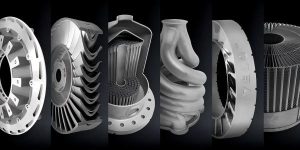
Ultra-thin-wall TPMS heat exchangers cannot be produced reliably with traditional manufacturing because their internal structures are too complex. Metal additive manufacturing allows engineers to create complete three-dimensional fluid networks with extremely thin walls, no brazed joints, and fewer failure points.
The design freedom is the main reason additive manufacturing has become important for advanced thermal systems.
A digital model can now include:
- Curved internal channels
- Multiple fluid paths
- Ultra-thin separating walls
- Lightweight lattice structures
The manufacturing process finally matches what engineers can design.
Why CNC Machining and Brazing Have Limits
Traditional heat exchangers are often made by:
- Cutting or forming metal sheets
- Creating channels
- Stacking multiple layers
- Joining parts through brazing
This approach works well for many applications.
However, it creates problems when engineers need extreme performance.
The CNC Machining Problem
CNC machining removes material with cutting tools.
The limitation is access.
A cutting tool must physically reach the area it needs to machine.
TPMS structures contain complex internal surfaces that curve through three dimensions.
Many areas cannot be reached with conventional tools.
The result:
The design may exist on a computer, but it cannot be manufactured using traditional methods.
The Brazing Problem
Brazing allows multiple metal pieces to become one component.
However, each joint creates another possible failure location.
Problems include:
- Thermal stress
- Warping during furnace processing
- Small leaks
- Fatigue failure over time
In critical systems, a small leak can create serious problems.
For example:
A coolant leak inside a high-voltage electronics system could damage the entire system.
Aerospace applications face similar concerns because failures occur under vibration, pressure changes, and extreme temperatures.
How Does Laser Powder Bed Fusion Create Advanced Heat Exchangers?
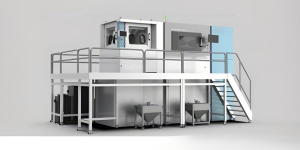
Laser Powder Bed Fusion (LPBF) has become one of the main technologies for producing advanced additive heat exchangers.
The process works by:
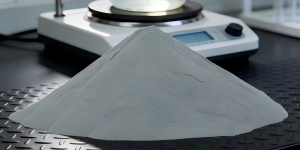
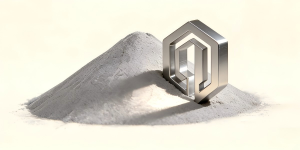
- Spreading a thin layer of metal powder
- Melting selected areas with a laser
- Adding another powder layer
- Repeating the process until the part is complete
The final component is created as one solid structure.
There are no assembled layers.
There are no brazed connections.
There are no internal joints.
How Thin Can Additive Heat Exchanger Walls Become?
Modern metal additive manufacturing continues to push dimensional limits.
Current capabilities include:
- Around 0.3 mm wall thickness for reliable production
- Around 0.15 mm as an advanced manufacturing frontier
- Future targets near 0.05 mm
At these sizes, manufacturing control becomes extremely important.
A small defect can create:
- Leakage between fluid channels
- Reduced strength
- Lower fatigue resistance
This is why printing technology and inspection methods must develop together.
Which Machines Support Ultra-Thin-Wall Heat Exchanger Manufacturing?
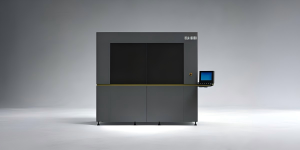
Velo3D Sapphire
The Velo3D Sapphire system addresses one of the biggest challenges in metal additive manufacturing: internal support structures.
Traditional 3D printing often requires supports inside complex designs.
Removing those supports from narrow channels can be difficult.
The Sapphire system provides:
- Approximately 200:1 height-to-thickness build capability
- Support-free printing at angles as low as 10 degrees
- Better control of complex internal passages
This makes it suitable for advanced thermal components.
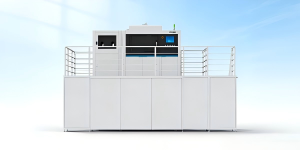
AddUp FormUp 350
The AddUp FormUp 350 platform focuses on industrial metal additive production.
Its capabilities include:
- Fine powder control
- Advanced recoating systems
- High-resolution printing
The system has been used to produce very thin internal fins, including structures around:
0.15 mm thickness
while maintaining leak-free performance.
Which Materials Are Used for Ultra-Thin-Wall Heat Exchangers?
Material selection determines whether an additive heat exchanger can survive extreme heat, pressure, vibration, and repeated thermal cycles. Different industries choose different materials based on their operating conditions.
Inconel 718: Aerospace Thermal Systems
Inconel 718 is widely used in aerospace because it offers:
- High-temperature strength
- Corrosion resistance
- Good fatigue performance
The disadvantage is weight.
Compared with aluminum:
- It is heavier
- It transfers heat less efficiently
However, additive manufacturing changes this balance.
Because engineers can create extremely thin structures, they reduce the amount of material needed.
A thin Inconel 718 heat exchanger can deliver high-temperature performance while keeping weight under control.
Aheadd CP1: Advanced Aluminum for Motorsport and Computing
Aluminum remains attractive because it offers:
- Low weight
- Good thermal conductivity
Traditional aluminum additive materials such as:
- AlSi10Mg
- F357
have limitations.
They often require:
- Solution treatment
- Rapid cooling
- Additional heat processing
These steps can create distortion in ultra-thin structures.
Why Aheadd CP1 Is Different
Constellium developed Aheadd CP1 specifically for laser powder bed fusion.
Its advantages include:
- No solution quenching requirement
- Simple aging process
- Better dimensional stability
- Good weldability
A typical aging process uses:
- Approximately 400°C for four hours
Additional benefits:
- Stable operation up to around 300°C
- Compatible with 50–100 micron printing layers
- Approved by FIA for Formula 1 applications
Are Polymer and Ceramic TPMS Structures Possible?
Yes.
Although metals dominate high-temperature cooling systems, TPMS concepts are expanding into other materials.
Polymer TPMS Structures
Advanced resin systems can create complex geometries for:
- Prototype cooling systems
- Lightweight applications
- Testing components
Some materials provide:
- Around 0.08 mm printing accuracy
- Heat resistance up to approximately 268°C
Ceramic TPMS Structures
Researchers are also testing ceramic TPMS designs.
One approach combines:
- Clay
- Sawdust
- Fungal mycelium
After firing:
- Organic materials disappear
- Porous ceramic structures remain
These structures can absorb and distribute water, creating passive evaporative cooling systems.
This shows that TPMS is not only a metal manufacturing concept.
It is a broader method for controlling heat and fluid movement.
How Are Companies Using Additive Heat Exchangers Today?
Ultra-thin-wall additive heat exchangers are already being used in automotive, aerospace, and motorsport projects. These applications show how advanced geometry can reduce weight, improve packaging, and solve thermal problems that traditional designs cannot handle.
Automotive Example: Donkervoort and Conflux Technology
Donkervoort worked with Conflux Technology to develop a water-charge air cooler for the P24 RS supercar.
The engineering goals were:
- Improve cooling performance
- Reduce weight
- Fit the cooling system into a limited engine space
The solution used advanced additive manufacturing.
The result:
- Additive cooler weight: about 1.4 kg
- Traditional air-to-air cooler: about 16 kg
This created around:
91% weight reduction
The smaller design also allowed:
- Cooler placement closer to the engine
- Intake path reduction by about two-thirds
- Better vehicle packaging
- Faster throttle response
Aerospace Example: PrintSky HEWAM Project
Aerospace systems require cooling components that are:
- Lightweight
- Strong
- Reliable under vibration
- Resistant to temperature changes
The PrintSky HEWAM project developed an additive heat exchanger for helicopter applications.
The project used:
- AddUp FormUp 350
- Inconel 718
The final component achieved:
- 0.5 mm outer walls
- 0.35 mm internal fins
- 0.2 mm external fins
The complete curved heat exchanger was printed as one component.
This type of shape would be extremely difficult using traditional manufacturing.
Motorsport Example: PWR Advanced Cooling Technology
Formula 1 teams operate under extreme thermal and packaging limits.
Every component must balance:
- Weight
- Cooling ability
- Reliability
- Space limitations
PWR Advanced Cooling Technology uses additive manufacturing with Velo3D systems to create complex cooling components.
The combination of:
- Support-free printing
- Advanced internal channels
- Aheadd CP1 aluminum
allows lightweight cooling solutions for high-performance racing environments.
What Are the Main Manufacturing Challenges?
Powder Removal
Unused powder can become trapped inside complex TPMS channels.
Manufacturers use:
- Multi-axis movement
- Vibration
- Acoustic resonance
to loosen and remove trapped particles.
Internal Inspection
Because engineers cannot see inside the finished part, advanced testing is required.
Industrial CT scanning checks:
- Internal walls
- Porosity
- Channel quality
Another method, Particle Induced Gamma-ray Emission (PIGE), can detect certain elements at very low levels.
For example:
- Fluorine detection around 40 parts per million
This helps verify material cleanliness and processing quality.
What Is the Future of Additive Thermal Management?
The next stage of thermal engineering will combine:
- Artificial intelligence
- Additive manufacturing
- Advanced materials
- Computational design
AI tools can analyze thousands of possible designs using:
- CFD data
- Thermal simulations
- Manufacturing rules
Engineers can move from manual testing toward faster computer-guided design.
AI-Designed Cooling Systems
Future workflows may look like this:
- Engineers define cooling requirements
- AI generates possible structures
- CFD evaluates performance
- Manufacturing software checks printability
- The final component is produced
This can reduce development time from months to much shorter cycles.
Modular Production Systems
The industry is also moving toward larger production volumes.
Future factories may use:
- Dedicated additive manufacturing cells
- Automated inspection systems
- Production lines designed around thermal components
This could support tens of thousands of advanced cooling units each year.
Frequently Asked Questions
What are ultra-thin-wall heat exchangers?
Short answer:
Ultra-thin-wall heat exchangers are lightweight cooling systems that use very thin metal walls and advanced internal structures to move heat faster in smaller spaces.
These systems often use TPMS designs and metal additive manufacturing because traditional machining and brazing cannot create the required internal geometry.
Why are TPMS structures used in heat exchangers?
Short answer:
TPMS structures improve heat transfer by increasing surface area and controlling fluid movement.
Structures such as Gyroid and Schwarz Diamond create continuous channels that disturb thermal boundary layers, improve mixing, and provide more even temperature distribution inside compact systems.
How does metal 3D printing improve heat exchanger design?
Short answer:
Metal 3D printing allows engineers to build complex cooling structures as one component.
Laser Powder Bed Fusion can produce thin walls, internal channels, and lightweight geometries that cannot be created through traditional manufacturing methods.
What industries use additive heat exchangers?
Short answer:
Aerospace, automotive, motorsport, and high-performance computing industries use additive heat exchangers.
These industries need cooling systems that are smaller, lighter, and able to handle higher heat loads.
What is Flow ADMS?
Short answer:
Flow ADMS is an optimized TPMS design approach that adjusts internal geometry according to fluid behavior.
It uses CFD and vector-based design methods to reduce pressure loss while maintaining strong heat transfer performance.
Recommended External References
- Google Search Central — AI Search Features and Helpful Content Guidelines
- Velo3D — Metal Additive Manufacturing Technology
- AddUp — Industrial Metal Additive Manufacturing
- Constellium — Aheadd CP1 Aluminum Alloy
- FIA Technical Regulations