






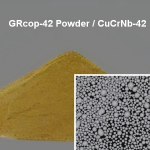
| Category | Item / Parameter | Value / Specification |
|---|---|---|
| Chemical Composition (wt.%) | Cu (Copper) | Bal. (Balance) |
| Cr (Chromium) | 3.1 – 3.4 | |
| Nb (Niobium) | 2.7 – 3.0 | |
| Fe (Iron) | < 0.005 | |
| Si (Silicon) | < 0.01 | |
| Al (Aluminum) | < 0.01 | |
| O (Oxygen) | ≤ 0.04 | |
| Physical Properties | Particle Size Range (D10) | ≥ 15 μm |
| Particle Size Range (D50) | 30 – 40 μm | |
| Particle Size Range (D90) | ≤ 60 μm | |
| Sphericity | ≥ 0.90 | |
| Apparent Density | ≥ 4.3 g/cm³ | |
| Tap Density | ≥ 5.0 g/cm³ | |
| Flowability | ≤ 25 s/50g | |
| Mechanical Properties | Test Temperature | Room Temperature |
| Condition | Heat-Treated | |
| Tensile Strength | ≥ 350 MPa | |
| Yield Strength | ≥ 180 MPa | |
| Elongation | ≥ 30.0 % | |
| Thermal Conductivity | ≥ 330 W/(m·K) | |
| Electrical Conductivity | ≥ 85% IACS |
1. Analysis of the GRcop-42 Powder for SLM (copper-chromium-niobium alloy)
1.1 High Purity and Precise Alloy Composition
- High-Purity Matrix: Based on copper, the content of impurity elements is strictly controlled. The levels of iron, silicon, and aluminum are extremely low (all less than 0.01%), and the oxygen content is controlled to ≤0.04%, which helps ensure the material’s electrical conductivity and ductility.
- Specific Alloying: It contains precise proportions of chromium and niobium, which are the key strengthening phases for the material to achieve high strength and high conductivity.
1.2 Excellent Physical Morphology, Ideal for Additive Manufacturing
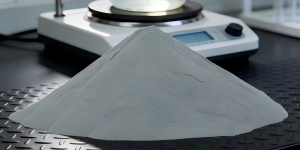
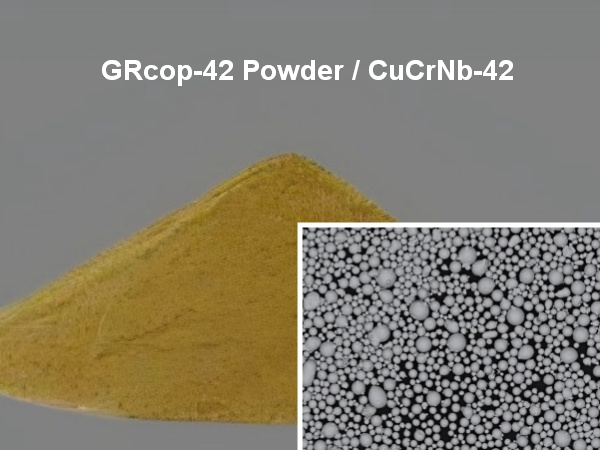
- Narrow Particle Size Distribution: The D50 is distributed between 30-40 μm, with D10 ≥15 μm and D90 ≤60 μm. This narrow distribution of fine powder is highly suitable for fine printing processes like SLM, facilitating uniform powder spreading.
- High Sphericity: Sphericity ≥0.90 indicates that the particles are nearly perfect spheres, which significantly improves powder flowability.
- Excellent Flowability: With a Hall flow rate of ≤25 s/50g and high tap density, the powder is less likely to clog during printing and has a high packing density, which is conducive to forming dense parts.
1.3 Exceptional Mechanical and Thermal Properties (Heat-Treated Condition)
Good Ductility: Elongation ≥30.0%, indicating that the material is not only strong but also tough and resistant to brittle fracture, making it suitable for components subjected to complex stresses.
High Strength and High Conductivity: This is the most prominent feature of the material. In the heat-treated condition at room temperature, it achieves both ultra-high tensile strength (≥350 MPa) and extremely high electrical conductivity (≥85% IACS) simultaneously. Strength and conductivity are typically contradictory in metals, but GRcop-42 overcomes this limitation.
Outstanding Thermal Conductivity: Thermal conductivity ≥330 W/(m·K), making it highly suitable for applications requiring efficient heat dissipation (e.g., heat exchangers, mold cooling channels).
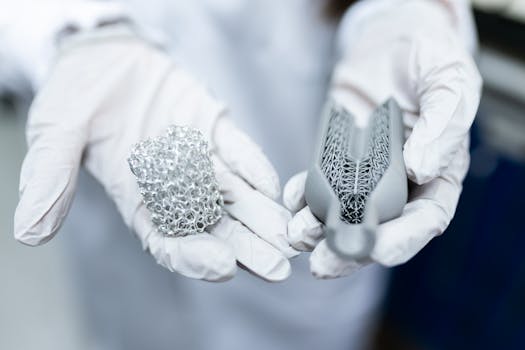
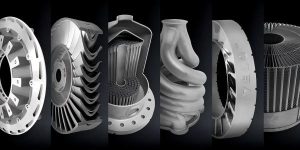
GRcop-42 for SLM is a high-performance copper alloy powder specifically designed for the Laser Powder Bed Fusion (LPBF/SLM) process. Its core advantage lies in its simultaneous high strength, high thermal conductivity, and high electrical conductivity, making it an ideal material for manufacturing extreme-condition components such as rocket engine combustion chambers and heat exchangers. This material was developed under the leadership of the National Aeronautics and Space Administration (NASA). The designation “GRCop-42” represents its atomic percentage composition of Cu-4at%Cr-2at%Nb, which translates to a copper matrix with approximately 3.1-3.4 wt.% chromium and 2.7-3.0 wt.% niobium added.
2. What is GRcop-42 Powder for SLM
GRcop-42 for SLM belongs to the copper-chromium-niobium ternary alloy system. It is an additive manufacturing-specific material developed for reusable launch vehicle thrust chamber assemblies. Through precise control of Cr and Nb content, it forms a stable Cr₂Nb intermetallic compound strengthening phase. This significantly enhances the material’s strength and high-temperature stability without sacrificing the high thermal and electrical conductivity of the copper matrix. The material is particularly suitable for critical aerospace components subjected to high heat flux, high pressure, and cyclic thermal loads.
2.1 Chemical Composition Characteristics
- Primary Element: Copper (Cu) serves as the matrix, with the balance (Bal.) making up the remainder.
- Strengthening Elements: Chromium (Cr) content is strictly controlled at 3.1-3.4 wt.%, and Niobium (Nb) content is 2.7-3.0 wt.%. These two elements have extremely low solubility in copper and primarily form the Cr₂Nb intermetallic compound, which has a melting point as high as 1730℃ and excellent thermal stability. This is the key to the material’s high strength.
- Impurity Control: Iron (Fe) content is extremely low (<0.005 wt.%) because iron significantly damages copper’s thermal conductivity; Silicon (Si) and Aluminum (Al) contents are both <0.01 wt.%; Oxygen (O) content is ≤0.04 wt.%, ensuring the material’s high purity and excellent electrical conductivity. Studies have found that when the iron content increases from 200ppm to 250ppm, the thermal conductivity drops significantly, hence the extremely strict control over iron.
2.2 Powder Characteristics
- Particle Size Distribution: D10 ≥15 μm, D50 30-40 μm, D90 ≤60 μm. This narrow distribution of fine powder is highly suitable for the SLM process, ensuring uniform powder spreading and reducing printing defects.
- Sphericity: ≥0.90, indicating that the particles are close to perfect spheres, providing excellent flowability.
- Flowability: Hall flow rate ≤25 s/50g, combined with a high tap density (≥5.0 g/cm³), ensures that the powder flows smoothly during printing and packs densely, which is conducive to forming high-quality parts.
2.3 Technical Advantages
The greatest technical advantage of GRcop-42 for SLM is that it breaks the traditional bottleneck of copper alloys where “strength and thermal conductivity cannot be achieved simultaneously.” Its Cr₂Nb strengthening phase remains stable at high temperatures and has a thermal expansion coefficient close to that of the copper matrix, enabling effective resistance to thermal fatigue. Meanwhile, since Cr and Nb primarily exist in the second phase, the copper matrix remains in a nearly pure copper state, resulting in excellent thermal and electrical conductivity that far exceeds traditional copper alloys. Furthermore, this material exhibits good formability in the SLM process, maintaining a density of over 99.2% even at relatively large layer thicknesses.
3. SLM Process Parameter Recommendations
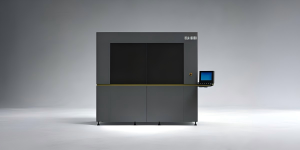
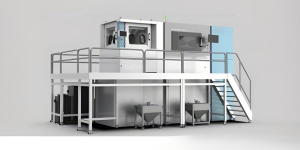
When printing using equipment such as the EOS M400-4 or Concept Laser M2, it is recommended to use an optimized proprietary parameter set. For example, appropriately increasing laser power and scanning speed to match copper’s high reflectivity and high thermal conductivity, while controlling the layer thickness between 0.03mm and 0.05mm to balance efficiency and quality; the printing order of inner and outer contours affects the final surface quality and needs to be determined through experiments for the best strategy; for large components, special attention should be paid to controlling the process in restart areas to avoid a sharp increase in porosity due to oxidation or improper parameters.
4. Post-Processing Techniques
After printing is complete, heat treatment is usually required to eliminate residual stresses and optimize the microstructure. For GRcop-42, the recommended heat treatment regime involves solution treatment and aging treatment under an inert atmosphere to promote the precipitation and uniform distribution of the Cr₂Nb phase. It is worth noting that some advanced processes can avoid the Hot Isostatic Pressing (HIP) step by optimizing printing parameters and post-processing workflows, thereby reducing production costs and time. However, it should be noted that HIP cannot repair surface-connected open large pores, so a low defect rate during the printing stage is crucial.
5. Performance Indicators (Heat-Treated Condition)
- Mechanical Properties: At room temperature, tensile strength ≥350 MPa, yield strength ≥180 MPa, and elongation ≥30.0%, demonstrating an excellent match of strength and plasticity.
- Thermal Properties: Thermal conductivity ≥330 W/(m·K), far exceeding traditional high-strength copper alloys.
- Electrical Properties: Electrical conductivity ≥85% IACS, meeting the needs of high-conductivity applications.
- Density: Parts printed with optimized processes can achieve a density of 99.94% or higher.
6. Comparison with Other Copper Alloy Powders
- Compared to CuSn10 (Tin Bronze): GRcop-42 has much higher strength and thermal conductivity than CuSn10. CuSn10 is mainly used for wear-resistant and corrosion-resistant occasions, while GRcop-42 is designed for aerospace applications requiring high heat flux and high strength.
- Compared to GRCop-84: GRCop-84 has higher Cr and Nb content (Cu-8at%Cr-4at%Nb), resulting in higher strength but greater processing difficulty and higher cost. GRCop-42 offers better process adaptability and cost-effectiveness while maintaining sufficient strength, making it more suitable for large-scale production.
- Compared to Pure Copper Powder: Although pure copper has excellent thermal and electrical conductivity, its strength is too low to withstand the extreme conditions of rocket engines. GRcop-42 achieves a comprehensive performance leap through micro-alloying.
7. Precautions for GRcop-42 Powder
- Powder Storage: Must be stored in a dry, inert atmosphere to prevent moisture absorption and oxidation, as excessive oxygen content will severely affect material properties.
- Printing Environment: Must be carried out under high-purity argon or nitrogen protection to avoid oxidation.
- Process Monitoring: Real-time monitoring of optical component cleanliness is required to prevent powder from contaminating laser lenses; for critical parts, it is recommended to print full-height specimens in the same batch and verify the quality of restart areas through metallographic or mechanical testing.
- Defect Tolerance: Research indicates that as long as a standardized restart process is adopted (including chamber purging, powder bed leveling, and single-layer laser remelting), L-PBF GRCop-42 components can tolerate printing interruptions, but strict monitoring is necessary to avoid performance loss.
8. Summary
GRcop-42 for SLM is a revolutionary high-performance copper alloy powder that perfectly integrates high strength, high thermal conductivity, high electrical conductivity, and good adaptability to additive manufacturing. Its precise chemical composition design, excellent powder physical characteristics, and verified process window make it an irreplaceable key material in the aerospace field. With continuous optimization of processes and gradual reduction of costs, GRcop-42 is expected to find wider application in more high-end manufacturing sectors.
9. Customization Services by Forgecise
Forgecise delivers comprehensive copper alloy powder customization solutions, spanning the complete spectrum from standard formulations to customer-specific high-performance copper-based alloys. We support mainstream copper alloy grades including CuSn10, CuAl10Fe3, CuNi30, Pure Copper (Cu≥99.9%), and CuCrZr, with the capability to precisely tailor chemical composition, particle size distribution, sphericity, and oxygen content to match your exact application requirements. Our copper alloy powders are optimized for demanding additive manufacturing processes including SLM, DED, BJT, and EBM, ensuring consistent printability, high density, and superior mechanical properties in your final components.
From wear-resistant to high-conductivity for heat exchangers and electrodes, Forgecise provides the material expertise and manufacturing flexibility to meet your unique copper alloy powder needs.