






| Category | Parameter | Unit | Value / Range |
|---|---|---|---|
| Chemical Composition (wt.%) | Fe (Iron) | wt.% | Bal. (Balance) |
| C (Carbon) | wt.% | 0.32–0.45 | |
| Cr (Chromium) | wt.% | 4.75–5.50 | |
| Mo (Molybdenum) | wt.% | 1.10–1.75 | |
| V (Vanadium) | wt.% | 0.80–1.20 | |
| Si (Silicon) | wt.% | 0.80–1.20 | |
| Mn (Manganese) | wt.% | 0.20–0.50 | |
| P (Phosphorus) | wt.% | ≤0.030 | |
| S (Sulfur) | wt.% | ≤0.030 | |
| O (Oxygen) | wt.% | ≤0.05 | |
| N (Nitrogen) | wt.% | ≤0.10 | |
| Physical Properties | Particle Size D10 | μm | ≥15 |
| Particle Size D50 | μm | 15–45 | |
| Particle Size D90 | μm | ≤53 | |
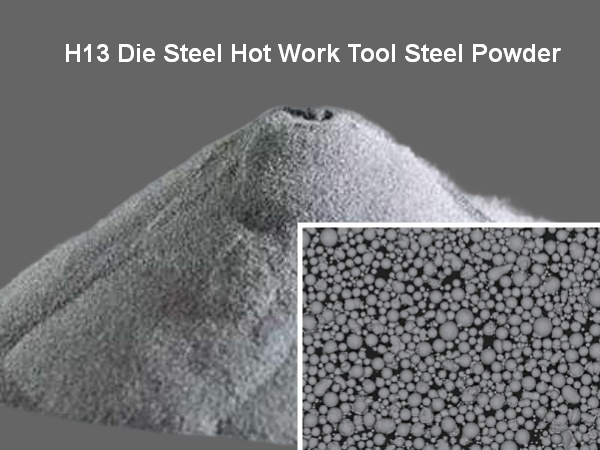
| Sphericity | — | ≥0.95 | |
| Apparent Density | g/cm³ | ≥4.2 | |
| Tap Density | g/cm³ | ≥4.8 | |
| Flowability | s/50g | ≤15 | |
| Mechanical Properties | Condition | — | Property Value |
| As-Deposited | Rockwell Hardness | 38–42 HRC | |
| Yield Strength | ≥1000 MPa | ||
| Elongation | ≥10.0% | ||
| Heat-Treated | Rockwell Hardness | 48–52 HRC | |
| Yield Strength | ≥1300 MPa | ||
| Elongation | ≥8.0% |
1. Key Advantages of H13 Die Steel Powder for SLM
High Thermal Stability: As a hot work tool steel, H13 maintains excellent strength and hardness even at high temperatures (up to 540°C), making it particularly suitable for mold applications requiring resistance to rapid heating and cooling cycles.
Excellent Thermal Crack Resistance: H13 steel possesses outstanding thermal fatigue resistance, preventing thermal crack formation under repeated thermal cycling, significantly extending mold service life.
Good Hardenability: Achieves uniform hardness distribution even in larger cross-sections, with minimal heat treatment distortion, facilitating subsequent precision machining.
High Wear Resistance: Contains alloying elements such as chromium, molybdenum, and vanadium that form hard carbides, providing excellent wear resistance for high-wear applications.
Chemical Composition Characteristics:
- Carbon (C): 0.32~0.45% – Provides hardness foundation
- Chromium (Cr): 4.75~5.50% – Enhances hardenability and corrosion resistance
- Molybdenum (Mo): 1.10~1.75% – Improves hot strength and resistance to temper softening
- Vanadium (V): 0.80~1.20% – Forms hard carbides, enhancing wear resistance
- Silicon (Si): 0.80~1.20% – Increases strength and elasticity
2. Applications of H13 Die Steel Powder in Additive Manufacturing
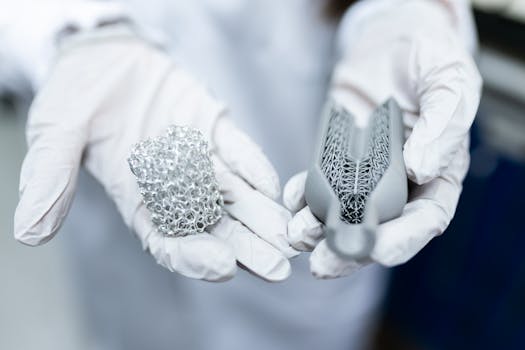
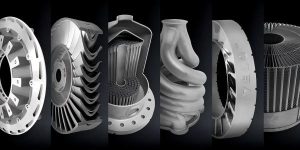
H13 die steel powder is specifically engineered for Selective Laser Melting (SLM) processes, achieving efficient manufacturing of complex mold structures through optimized powder morphology and particle size distribution.
Core Application Scenarios:
- Die Casting Molds: Particularly suitable for aluminum and copper alloy die casting mold production, with recommended hardness range of 42-46 HRC, capable of withstanding impact and corrosion from high-temperature molten metal.
- Hot Extrusion Dies: Performs excellently in high-temperature, high-pressure metal extrusion processes, such as aluminum profiles and copper tubing extrusion dies.
- Forging Dies: Suitable for forging dies subjected to high impact loads, such as automotive component forging dies.
- Plastic Molds: While primarily used for hot work molds, it can also be applied to certain high-temperature plastic molding applications.
- Mold Repair and Remanufacturing: Enables precise localized additive repair of worn or damaged molds, restoring geometric accuracy and mechanical properties.
Process Characteristics:
- Powder sphericity ≥90%, excellent flowability
- Typical particle size distribution: 15-45μm or 15-53μm
- High density of formed parts, fine and uniform grain structure
- Capable of achieving complex internal cooling channel structures
3. What is H13 Die Steel Powder for SLM?
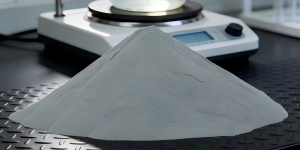
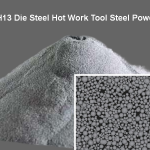
H13 die steel powder is a hot work tool steel powder material specifically developed for metal 3D printing technologies, particularly Selective Laser Melting (SLM) processes.
In simple terms, it combines the excellent properties of traditional H13 hot work tool steel with modern additive manufacturing technology, enabling rapid prototyping and customized production of complex mold structures. In the field of 3D printed tool steels, H13 is hailed as the “hot work mold expert.”
Compared to traditional manufacturing processes, H13 molds produced via SLM technology offer the following characteristics:
- Short production cycle: Eliminates multiple traditional mold processing steps
- High material utilization: Approaching 100% material efficiency
- High design freedom: Enables complex geometric structures difficult to manufacture with traditional processes
- Optimized internal cooling channels: Allows conformal cooling channel design, significantly improving mold cooling efficiency
Typical Physical Properties:
- Density: Approximately 7.8 g/cm³
- Powder morphology: High sphericity (≥90%)
- Median particle size (D50): 15-45μm
4. Similar Materials to H13 Die Steel Powder
Materials with performance characteristics similar to H13 die steel powder mainly include:
| Material Type | Representative Grade | Core Characteristics | Application Scenarios |
|---|---|---|---|
| Martensitic Aging Steel | MS1 (18Ni300) | Ultra-high strength (≥1900MPa), high toughness | High-strength structural components, conformal cooling molds |
| Corrosion-Resistant Tool Steel | Corrax | Excellent corrosion resistance, good polishability | Food/chemical molds, high-precision mirror-finish molds |
| Precipitation Hardening Steel | CX Die Steel | High strength + excellent corrosion resistance | Corrosion-resistant injection molds, medical device molds |
| Hot Work Tool Steel | Dievar, ADC3 | Higher thermal stability | High-temperature die casting molds, hot forging molds |
Selection Recommendations:
- For maximum thermal stability and thermal fatigue resistance: Choose H13 die steel powder, particularly suitable for high-temperature applications such as die casting and hot extrusion.
- For ultimate strength and toughness: Choose MS1 (18Ni300), but note its relatively poor corrosion resistance.
- For corrosion resistance and polishability: Choose Corrax, suitable for molds requiring extremely high surface quality in food and medical applications.
- For balance of strength and corrosion resistance: Choose CX die steel powder, an ideal choice for corrosive environments.
Summary: H13 die steel powder for SLM is an important material in hot work mold manufacturing, particularly suitable for mold applications requiring resistance to high temperatures and high wear conditions, playing a crucial role in die casting, hot extrusion, forging, and other processes.
H13 die steel powder is a premium hot work tool steel specifically engineered for selective laser melting (SLM) applications in metal additive manufacturing. This high-performance SLM powder enables the production of complex die casting molds, hot extrusion dies, and forging dies through advanced metal 3D printing techniques. The powder metallurgy process ensures exceptional thermal fatigue resistance and thermal stability, making it ideal for demanding mold manufacturing applications where wear resistant steel properties are critical. With optimized flow characteristics and high sphericity, this H13 powder allows for the creation of intricate conformal cooling channels that significantly enhance thermal management in tool steel powder components. As a leading SLM materials solution, this additive manufacturing powder delivers superior mechanical properties and dimensional accuracy for next-generation hot work tool steel applications in the metal 3D printing industry.
5. Customization Services by Forgecise
Forgecise provides comprehensive die steel powder customization solutions, covering the full range of products from standard maraging grades to customer-specific high-performance formulations. We support mainstream die steel grades such as MS1 (18Ni300/1.2709), CX, H13, and 42CrMo4, and can precisely adjust composition, particle size distribution, and sphericity according to your specific application requirements. Whether it is small-batch samples for R&D (starting from 1kg) or ton-level orders for mass production, we ensure high purity, low oxygen content, and excellent flowability of our powders, meeting the rigorous requirements of various additive manufacturing processes including SLM, DED, and BJT.