





| Section | Item | Value / Specification |
|---|---|---|
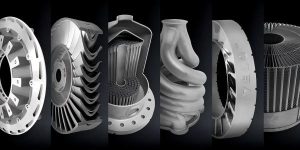
| Typical Applications | Description | Suitable for manufacturing discs, rings, blades, shafts, fasteners, elastic elements, sheet metal structures, casings, and other parts. |
| Applicable Processes | Process | SLM, LSF (Laser Solid Forming) |
| Chemical Composition (wt.%) | C | ≤ 0.08 |
| Cr | 17.0–21.0 | |
| Ni | 50.0–55.0 | |
| Co | ≤ 1.0 | |
| Mo | 2.8–3.3 | |
| Fe | Bal. | |
| Al | 0.2–0.8 | |
| Ti | 0.65–1.15 | |
| Nb | 4.75–5.50 | |
| Mn | ≤ 0.35 | |
| P | ≤ 0.015 | |
| S | ≤ 0.015 | |
| B | ≤ 0.006 | |
| Si | ≤ 0.35 | |
| Mg | ≤ 0.01 | |
| Cu | ≤ 0.3 | |
| O | ≤ 0.02 | |
| N | ≤ 0.02 | |
| Note: “/” indicates not specified or not applicable. | ||
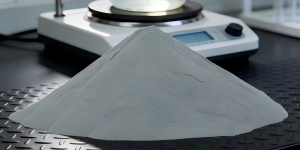
| Physical Properties (Powder) | D10 (μm) | ≥ 15 |
| D50 (μm) | 30–40 | |
| D90 (μm) | ≤ 60 | |
| Sphericity | ≥ 0.9 | |
| Apparent Density (g/cm³) | ≥ 4.4 | |
| Tap Density (g/cm³) | ≥ 5.0 | |
| Flowability (s/50g) | ≤ 18 | |
| Mechanical Properties (Heat-Treated + Aged) | Test Temperature | Tensile Strength (MPa) |
| Room Temperature (Tensile) | ≥ 1300 | |
| 650°C (Tensile) | ≥ 1000 | |
| 650°C (Stress Rupture) | Initial Stress: 690 MPa |
1. Advantages and Features of This IN718 Superalloy Powder
1.1 Optimized for Industrial Applications
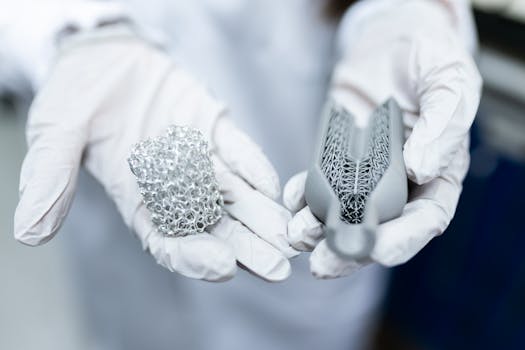
IN718 superalloy powder is specifically engineered for demanding industrial applications across aerospace, energy, and high-performance engineering sectors. Its versatile composition and powder characteristics make it ideal for manufacturing critical components such as discs, rings, blades, shafts, fasteners, elastic elements, sheet metal structures, and casings through SLM technology. The powder’s robust performance ensures reliable operation in extreme environments, from jet engine components to oil and gas equipment.
1.2 Excellent SLM Processability
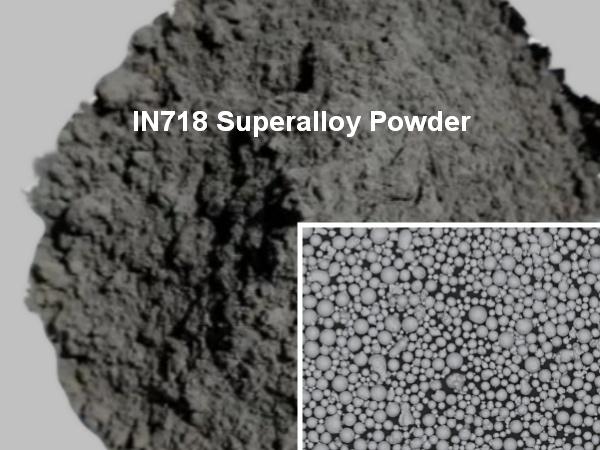
IN718 powder exhibits exceptional flowability (≤18 s/50g) and high sphericity (≥0.9), which are critical parameters for consistent powder spreading and layer uniformity in SLM processes. The optimized particle size distribution (D10 ≥15 μm, D50 30–40 μm, D90 ≤60 μm) ensures excellent packing density and minimizes porosity in printed parts, resulting in superior surface finish and dimensional accuracy. These characteristics enable reliable production of complex geometries with minimal defects.
1.3 Robust Mechanical Performance
IN718 powder delivers outstanding mechanical properties both at room temperature and elevated temperatures. After heat treatment and aging, parts achieve exceptional tensile strength of ≥1300 MPa and yield strength of ≥1100 MPa at room temperature. At 650°C, the material maintains impressive performance with tensile strength ≥1000 MPa and yield strength ≥900 MPa. The stress rupture test at 650°C demonstrates durability with ≥30 hours duration under 690 MPa initial stress, making it suitable for long-term high-temperature applications.
1.4 Stable Physical Properties
The powder demonstrates consistent physical characteristics with apparent density ≥4.4 g/cm³ and tap density ≥5.0 g/cm³, ensuring reliable powder bed formation and predictable melt pool behavior during SLM processing. These stable properties contribute to repeatable manufacturing outcomes and reduced process variability, essential for industrial-scale production.
1.5 High Purity & Compositional Control
Manufactured with stringent quality control, IN718 powder maintains tight compositional tolerances with minimal impurity levels. Critical strengthening elements are precisely controlled within specified ranges, while harmful impurities such as sulfur (≤0.015%), phosphorus (≤0.015%), boron (≤0.006%), and oxygen (≤0.02%) are kept to exceptionally low levels, ensuring optimal material performance and corrosion resistance.
2. IN718 Superalloy Powder Overview
2.1 Chemical Composition Characteristics
IN718 is a nickel-iron-based superalloy with the following key compositional features:
| Element | Content (wt.%) | Function |
|---|---|---|
| Nickel (Ni) | 50.0–55.0 | Primary base element providing solid solution strengthening and high-temperature stability |
| Iron (Fe) | Balance | Base element contributing to cost-effectiveness and magnetic properties |
| Chromium (Cr) | 17.0–21.0 | Provides excellent oxidation and corrosion resistance |
| Niobium (Nb) | 4.75–5.50 | Forms strengthening γ” phase (Ni₃Nb) and γ’ phase (Ni₃(Al,Ti)) |
| Molybdenum (Mo) | 2.8–3.3 | Enhances solid solution strengthening and high-temperature strength |
| Titanium (Ti) | 0.65–1.15 | Contributes to γ’ phase formation for age hardening |
| Aluminum (Al) | 0.2–0.8 | Forms γ’ phase for precipitation strengthening |
| Carbon (C) | ≤0.08 | Forms carbides for grain boundary strengthening |
| Silicon (Si) | ≤0.35 | Improves oxidation resistance and deoxidation |
| Manganese (Mn) | ≤0.35 | Deoxidizer and improves hot workability |
| Cobalt (Co) | ≤1.0 | Enhances high-temperature strength |
| Copper (Cu) | ≤0.3 | Improves corrosion resistance |
| Boron (B) | ≤0.006 | Grain boundary strengthener |
| Magnesium (Mg) | ≤0.01 | Deoxidizer and improves castability |
| Phosphorus (P) | ≤0.015 | Controlled impurity |
| Sulfur (S) | ≤0.015 | Controlled impurity |
| Oxygen (O) | ≤0.02 | Controlled impurity |
| Nitrogen (N) | ≤0.02 | Controlled impurity |
This balanced composition provides exceptional strength, corrosion resistance, and weldability, making it one of the most widely used superalloys in additive manufacturing.
2.2 Powder Characteristics
The powder is engineered with specific physical properties optimized for SLM processing:
| Parameter | Specification | Significance |
|---|---|---|
| Particle Size D10 | ≥15 μm | Ensures adequate powder flow and prevents excessive fine particles |
| Particle Size D50 | 30–40 μm | Optimal median size for SLM layer thickness and melt pool control |
| Particle Size D90 | ≤60 μm | Limits oversized particles that could cause surface defects |
| Sphericity | ≥0.9 | Excellent spherical shape for consistent powder spreading |
| Apparent Density | ≥4.4 g/cm³ | Ensures proper powder bed formation and layer uniformity |
| Tap Density | ≥5.0 g/cm³ | High packing density reduces porosity in printed parts |
| Flowability | ≤18 s/50g | Superior flow characteristics for reliable powder delivery |
3. Technical Advantages
IN718 powder offers several distinct technical advantages for SLM applications:
- Exceptional Strength-to-Weight Ratio: High strength combined with moderate density makes it ideal for weight-sensitive applications
- Superior Age-Hardenability: Precipitation hardening through γ’ and γ” phases provides outstanding mechanical properties
- Excellent Corrosion Resistance: Chromium content provides resistance to oxidation and various corrosive environments
- Good Weldability: Low carbon content and balanced composition enable excellent weldability without post-weld heat treatment
- High-Temperature Capability: Maintains mechanical integrity up to 650°C, suitable for turbine and engine components
- Creep and Stress Rupture Resistance: Nb and Mo additions enhance resistance to deformation under sustained loads
- Fatigue Resistance: Excellent resistance to cyclic loading, critical for rotating components
- Fabrication Flexibility: Compatible with both SLM and LSF (Laser Solid Forming) processes
4. SLM Process Parameter Recommendations
Based on the powder characteristics, the following SLM process parameters are recommended:
Laser Parameters:
- Laser Power: 200–350 W (depending on layer thickness and geometry complexity)
- Scan Speed: 800–1400 mm/s
- Hatch Spacing: 80–110 μm
- Layer Thickness: 30–50 μm (aligned with D50 particle size)
- Laser Spot Size: 80–120 μm
Build Environment:
- Atmosphere: Argon or nitrogen with oxygen content <50 ppm
- Build Plate Temperature: 80–120°C (to reduce residual stresses)
- Preheat Temperature: Optional, 150–200°C for large components
Scan Strategy:
- Pattern: Chessboard or stripe pattern with 67° rotation between layers
- Contour Scanning: 2–3 passes with reduced power (60–80% of bulk power) for improved surface finish
- Island Size: 5×5 mm to 10×10 mm for stress distribution
- Support Structures: Required for overhangs >45°, optimized for easy removal and minimal contact area
Process Monitoring:
- Melt Pool Monitoring: Real-time thermal imaging for defect detection
- Layer Inspection: In-situ camera monitoring for powder spreading quality
- Atmosphere Control: Continuous oxygen monitoring during build
5. Post-Processing Procedures
Stress Relief:
- Temperature: 600–650°C
- Duration: 1–2 hours
- Cooling: Furnace cool to minimize residual stresses
- Purpose: Reduce internal stresses from rapid solidification
Solution Heat Treatment:
- Temperature: 950–980°C
- Duration: 1 hour
- Cooling: Rapid air quench or water quench
- Purpose: Dissolve secondary phases and homogenize microstructure
Aging Treatment (Two-Step Process):
- First Aging:
- Temperature: 715–725°C
- Duration: 8 hours
- Cooling: Furnace cool to 620°C at 50°C/hour
- Second Aging:
- Temperature: 620°C
- Duration: 8 hours
- Cooling: Air cool
- Purpose: Precipitate γ’ and γ” strengthening phases
Surface Finishing:
- Support Removal: Mechanical removal followed by abrasive blasting (Al₂O₃, 80–120 grit)
- Surface Treatment Options:
- Electropolishing for critical aerospace components
- Chemical etching for surface defect removal
- Shot peening for fatigue life improvement
- Hot Isostatic Pressing (HIP) for internal defect elimination
Inspection and Testing:
- Non-Destructive Testing (NDT):
- X-ray computed tomography (CT) for internal defects
- Ultrasonic testing for bulk integrity
- Dye penetrant testing for surface defects
- Mechanical Testing:
- Tensile testing at room temperature and elevated temperatures
- Fatigue testing for cyclic loading applications
- Hardness testing (Rockwell C scale)
6. Performance Specifications
Mechanical Properties (After Heat Treatment + Aging):
| Test Condition | Tensile Strength (MPa) | Yield Strength (MPa) | Elongation (%) |
|---|---|---|---|
| Room Temperature (Tensile) | ≥1300 | ≥1100 | ≥15.0 |
| 650°C (Tensile) | ≥1000 | ≥900 | ≥12.0 |
| 650°C (Stress Rupture) | Initial Stress: 690 MPa | Duration: ≥30 h | Elongation: ≥5.0 |
Physical Properties:
- Density: ~8.19 g/cm³ (theoretical)
- Melting Range: 1260–1336°C
- Thermal Expansion: 13.0 × 10⁻⁶/°C (20–100°C)
- Thermal Conductivity: ~11.4 W/m·K at 100°C
- Specific Heat Capacity: ~435 J/kg·K at 20°C
- Electrical Resistivity: ~1.28 μΩ·m at 20°C
Environmental Resistance:
- Oxidation Resistance: Excellent up to 700°C
- Corrosion Resistance: Good resistance to seawater, acids, and various industrial chemicals
- Stress Corrosion Cracking: Resistant in chloride environments
7. Application Areas
IN718 powder is particularly well-suited for the following applications:
Aerospace:
- Turbine discs and blades
- Compressor components
- Engine casings and housings
- Fasteners and structural brackets
- Landing gear components
- Rocket engine parts
Energy:
- Gas turbine components
- Steam turbine blades
- Nuclear reactor components
- Oil and gas downhole tools
- Heat exchanger parts
- Power generation equipment
Industrial:
- High-pressure valves and fittings
- Chemical processing equipment
- Marine propulsion components
- Tooling and molds
- Automotive racing components
- Medical implant components (biocompatible grade)
8. Comparison with Similar Powders
vs. Haynes 188:
| Parameter | IN718 | Haynes 188 | Advantage |
|---|---|---|---|
| Base Element | Ni-Fe | Co | IN718: Lower cost, better availability |
| Max Service Temp | 650°C | 980°C | Haynes 188: Superior for extreme temperatures |
| Room Temp Strength | ≥1300 MPa | ≥850 MPa | IN718: Higher strength at ambient conditions |
| High Temp Strength | ≥1000 MPa @ 650°C | ≥190 MPa @ 980°C | Application-dependent |
| Oxidation Resistance | Good up to 700°C | Excellent up to 1095°C | Haynes 188: Superior oxidation resistance |
| Cost | Moderate | High | IN718: More cost-effective |
| Best For | General aerospace, moderate temperatures | Extreme temperature applications |
vs. Inconel 625:
| Parameter | IN718 | Inconel 625 | Advantage |
|---|---|---|---|
| Strengthening Mechanism | Precipitation hardening | Solid solution | IN718: Higher strength after aging |
| Niobium Content | 4.75–5.50% | 3.15–4.15% | IN718: More γ” phase formation |
| Molybdenum Content | 2.8–3.3% | 8.0–10.0% | Inconel 625: Better corrosion resistance |
| Room Temp Strength | ≥1300 MPa | ~830 MPa (as-built) | IN718: Significantly stronger |
| Weldability | Excellent | Excellent | Comparable |
| Corrosion Resistance | Good | Excellent | Inconel 625: Superior in harsh environments |
| Best For | High-strength structural components | Corrosive environments, chemical processing |
vs. Ti-6Al-4V:
| Parameter | IN718 | Ti-6Al-4V | Advantage |
|---|---|---|---|
| Density | ~8.19 g/cm³ | ~4.43 g/cm³ | Ti-6Al-4V: Much lighter |
| Max Service Temp | 650°C | 400°C | IN718: Higher temperature capability |
| Strength | ≥1300 MPa | ~900–1100 MPa | IN718: Higher strength |
| Corrosion Resistance | Good | Excellent | Ti-6Al-4V: Superior in many environments |
| Cost | Moderate | High | IN718: Generally more cost-effective |
| Biocompatibility | Good | Excellent | Ti-6Al-4V: Preferred for medical implants |
| Best For | High-temp aerospace, strength-critical | Weight-sensitive, medical, marine |
9. Precautions
Handling and Storage:
- Storage Conditions: Store in sealed containers under dry, inert atmosphere (argon or nitrogen)
- Humidity Control: Maintain relative humidity <40% to prevent moisture absorption
- Temperature: Store at room temperature (15–25°C), avoid extreme temperature fluctuations
- Shelf Life: Typically 12 months from manufacture date when stored properly
- PPE Requirements: Use appropriate personal protective equipment including:
- Nitrile gloves
- N95 respirator or better
- Safety glasses
- Lab coat or protective clothing
Processing Safety:
- Ventilation: Ensure proper ventilation in SLM facility with HEPA filtration
- Atmosphere Monitoring: Continuously monitor oxygen levels in build chamber (<50 ppm recommended)
- Fire Prevention: Implement fire prevention measures for metal powder handling:
- Class D fire extinguishers readily available
- No open flames or sparks in powder handling areas
- Grounding of all equipment to prevent static discharge
- Powder Recovery: Use dedicated powder recovery systems with explosion-proof design
- Waste Disposal: Follow local regulations for metal powder waste disposal
Quality Control:
- Powder Characterization: Regular testing of:
- Particle size distribution (every 5 builds or monthly)
- Flowability measurements
- Chemical composition verification
- Oxygen and nitrogen content
- Powder Reuse: Monitor powder reuse cycles (typically 3–5 builds maximum)
- Sieve powder between builds (45–63 μm mesh recommended)
- Blend fresh powder (10–20%) with reused powder
- Discard powder showing degradation in flowability or chemistry
- Contamination Control:
- Dedicated equipment for different alloy systems
- Strict cleaning protocols between material changes
- Regular inspection of powder delivery systems
- Traceability: Maintain detailed build records including:
- Powder batch numbers
- Process parameters
- Heat treatment cycles
- Inspection results
10. Summary
IN718 superalloy powder represents one of the most versatile and widely used materials in additive manufacturing, particularly for Selective Laser Melting applications. Its optimized powder characteristics, including excellent flowability (≤18 s/50g), high sphericity (≥0.9), and controlled particle size distribution (D50: 30–40 μm), ensure reliable SLM processing with minimal defects and consistent mechanical properties.
The alloy’s nickel-iron base composition, strategically enhanced with chromium, niobium, molybdenum, titanium, and aluminum, delivers exceptional mechanical performance. After proper heat treatment and aging, IN718 achieves outstanding tensile strength of ≥1300 MPa and yield strength of ≥1100 MPa at room temperature, while maintaining impressive high-temperature capabilities with ≥1000 MPa tensile strength at 650°C. The stress rupture performance of ≥30 hours at 650°C under 690 MPa initial stress demonstrates its suitability for long-term elevated temperature applications.
IN718’s balanced composition provides excellent corrosion resistance, good weldability, and superior age-hardenability through γ’ and γ” phase precipitation. These properties make it ideal for demanding applications across aerospace (turbine components, engine parts), energy (gas turbines, nuclear components), industrial (high-pressure equipment, chemical processing), and defense sectors.
The powder’s compatibility with both SLM and LSF processes, combined with well-established post-processing protocols including solution heat treatment and two-step aging, enables the production of complex, high-performance components that meet stringent industry standards. While Haynes 188 offers superior performance at extreme temperatures (>700°C) and Inconel 625 provides better corrosion resistance, IN718 remains the material of choice for applications requiring the optimal balance of strength, temperature capability, cost-effectiveness, and process reliability.
With proper handling, processing, and quality control measures, IN718 superalloy powder enables manufacturers to leverage additive manufacturing for producing components with geometries and performance characteristics unattainable through traditional manufacturing methods, driving innovation across multiple high-tech industries.
11. Customization Services by Forgecise
Forgecise delivers comprehensive superalloy powder customization solutions, spanning the complete spectrum from standard high-temperature formulations to customer-specific high-performance nickel-based superalloys. We support mainstream superalloy grades including Haynes 230, Inconel series, and Hastelloy variants, with the capability to precisely tailor chemical composition, particle size distribution, sphericity, oxygen/nitrogen content, and thermal expansion coefficient to match your exact industrial and manufacturing requirements. Our superalloy powders are optimized for demanding additive manufacturing processes including SLM and EBM, ensuring consistent printability, high density, superior high-temperature mechanical properties, and reliable performance in your final aerospace, energy, and industrial components.