




Release Date: 2026-04-19
Paul Li
CTO | Author18 years experience in the Research and Development of 3D printing equipment and additive manufacturing processes, empowering the efficient intelligent manufacturing of complex parts.
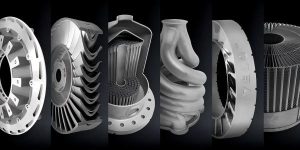
In the world of modern high-end equipment, there exists a class of components that appear ordinary yet embody extraordinary engineering wisdom. These parts may be large in size, twisted in shape, and hollow inside like a honeycomb; they must be as light as possible while remaining as stable as a mountain; their surfaces must be smooth as a mirror, while their interiors are filled with micron-level precision trusses. Traditional manufacturing methods often struggle with such components: casting is prone to shrinkage cavities, forging struggles with complex curved surfaces, machining risks cutting through thin walls, and welding or assembly introduces stress concentrations and potential failure points.
Today, a technology known as metal additive manufacturing—commonly referred to as 3D metal printing—is quietly rewriting this dilemma. Instead of relying on molds, cutting tools, or welding torches, it uses a high-energy laser beam to “draw” complete three-dimensional entities layer by layer on a bed of metal powder. Taking a typical example—a titanium alloy mirror backplate from a large optical system—we invite you to explore this magical journey from powder to precision metal component.
The Design Philosophy: A Bio-inspired Structural Masterpiece
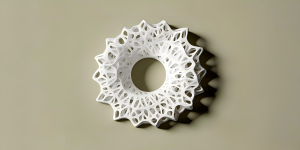
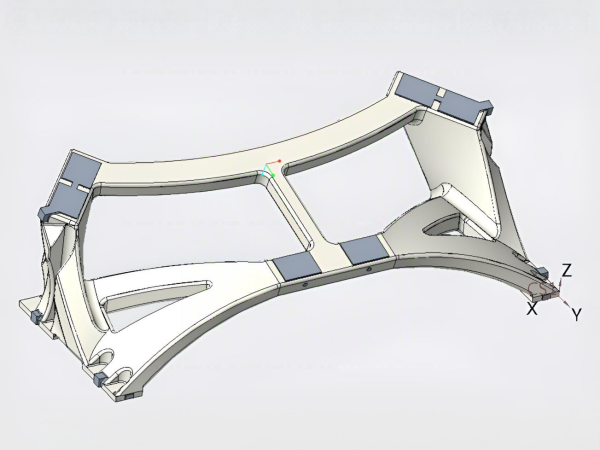
This mirror backplate belongs to the category of large, thin-walled, irregular structures. Its design philosophy integrates biomimicry with advanced computational mechanics. The outer layer consists of an extremely thin metal skin that provides overall rigidity and mounting interfaces, while the interior is filled with a honeycomb-like lattice skeleton composed of countless tiny rod-like structures arranged in a regular pattern. This structural inspiration comes from nature—bones or plant vascular bundles—achieving maximum strength and stability with minimal material. Through computer topology optimization, engineers can make the lattice denser in high-stress areas and sparser in low-stress regions, truly achieving “material allocation on demand,” reducing weight without sacrificing performance.
Such complex enclosed cavity structures are nearly impossible to achieve with traditional processes. However, 3D metal printing accomplishes it in one step. The entire manufacturing process is not simply “stacking metal” but rather a highly coordinated digital closed-loop workflow.
The Digital Preparation: From Concept to Printable Model
The journey begins with intelligent preprocessing of the original design model. Engineers must repair any geometric defects, add necessary support structures to prevent collapse during printing, and design specialized powder removal channels to ensure that internal powder can be thoroughly cleared after printing is complete. Before actual printing begins, virtual simulations predict thermal deformation, residual stress, and potential defects. This allows engineers to optimize laser scanning paths and process parameters in advance, significantly reducing trial-and-error costs and ensuring first-time success.
The Printing Process: Layer by Layer Precision
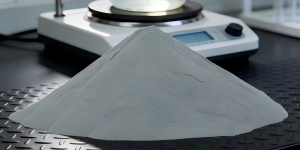
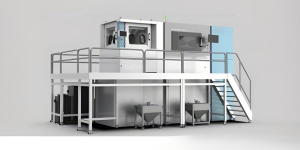
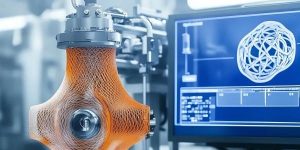
During actual printing, the equipment evenly spreads an extremely fine layer of metal powder onto the build platform. A high-power laser then precisely melts the powder according to preset paths, causing it to instantly melt and solidify into dense metal. After each layer is completed, the platform descends slightly, fresh powder is spread, and the melting process repeats. This cycle continues until the entire component is formed. Because metal contracts during cooling, engineers must apply directional dimensional compensation to the digital model in advance, ensuring that the final product’s geometric accuracy meets requirements.
Quality Assurance: Rigorous Verification Before Delivery
Completion of printing does not mean the task is finished. The real challenge lies in verification—determining whether this component is truly reliable. To this end, it undergoes rigorous testing procedures: three-dimensional scanning compares the actual shape against the theoretical model to confirm dimensional accuracy; X-ray or ultrasonic testing identifies any internal voids, cracks, or other hidden defects; weight verification assesses whether structural density meets standards; and finally, critical surfaces undergo post-processing such as sandblasting and polishing to satisfy usage requirements. Only when all indicators pass inspection is the component considered deliverable, meaning it has met the stringent standards of high-reliability fields such as aerospace and precision instrumentation.
A Paradigm Shift: Redefining the Relationship Between Design and Manufacturing
The value of 3D metal printing extends far beyond the ability to create complex shapes. It fundamentally transforms the relationship between design and manufacturing. In the past, engineers were often constrained by “what can be made,” forced to compromise on performance. Today, they can focus on “what is optimal,” boldly adopting advanced concepts such as topology optimization, biomimetic structures, and functional integration. Integrated forming eliminates welds and connectors, not only reducing weight but also significantly enhancing structural integrity and fatigue life. More importantly, design modifications no longer require remolding or adjusting tooling—simply updating the digital model allows for rapid printing of new versions, dramatically accelerating research and development iterations.
The Future Outlook: From Laboratory to Industrial Scale
As material systems continue to expand, printing efficiency improves, and intelligent monitoring technologies mature, 3D metal printing is moving from laboratory settings to large-scale engineering applications. In the future, an increasing number of core components critical to national development and frontier exploration—from aircraft engine blades and artificial joints to deep-sea submersible pressure hulls and key parts of fusion energy devices—will be precisely shaped by a laser beam and a container of metal powder.
Conclusion: A New Manufacturing Philosophy
That mirror backplate rests quietly on the testing platform, its surface gleaming with the distinctive luster of metal. It has no rivets, no welds, yet its interior contains thousands of tiny yet robust mechanical units. Its birth did not rely on hammers and lathes, but rather on algorithms, energy, and a profound understanding of material essence. 3D metal printing is not merely a new tool but a new manufacturing philosophy: using digital models as blueprints, energy as cutting tools, and materials as language to directly translate humanity’s pursuit of lightness, strength, and precision into tangible metal reality. When technology becomes sufficiently refined, miracles are no longer legends—they are simply well-executed designs.
About Forgecise
Forgecise is an innovator in additive manufacturing technology, dedicated to providing high-performance metal 3D printing materials, equipment, and process solutions for the mold manufacturing, energy power, and other industrial sectors.