




Release Date: 2026-04-19
Paul Li
CTO | Author18 years experience in the Research and Development of 3D printing equipment and additive manufacturing processes, empowering the efficient intelligent manufacturing of complex parts.
This article describes the end-to-end manufacturing process of a custom window frame produced via metal additive manufacturing (AM), based on a real-world case from an aerospace-related application. The part is a triangular structural frame, designed to meet MIL-815 requirements and fabricated from titanium alloy (e.g., Ti-6Al-4V, also known as TC4 or TA15). The goal was to achieve high stiffness, low weight, and precise dimensional accuracy—challenges difficult to meet with traditional methods such as machining from solid billet or welding sheet metal assemblies.
1. Initial Design and Challenges
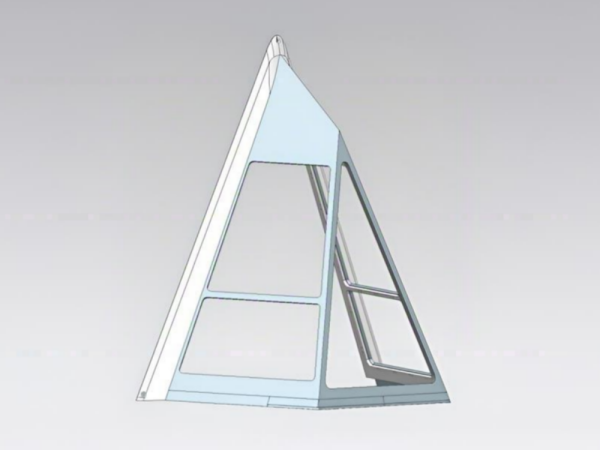
The original CAD model (referred to as the “raw cold plate model”) represented the functional geometry: a triangular outer profile with internal ribs, mounting interfaces, and cutouts for windows or sensors. However, this design was not directly printable. Key issues included:
- Overhanging features without support would sag or collapse during printing;
- Thick-to-thin transitions at the base caused high thermal stress and risked cracking;
- Internal channels and thin walls were prone to distortion due to residual stresses accumulated over many layers;
- No provisions for powder removal or post-processing access.
2. Digital Optimization for Additive Manufacturing
To enable successful printing, the model underwent three key digital modifications:
- Excess Material Removal and Draft Adjustment: Non-functional bulk material was removed, especially near edges and junctions. Fillets and gentle tapers were added to reduce stress concentration and improve surface quality after support removal.
- Internal Flow and Structural Reinforcement: The internal rib layout was reconfigured to improve load distribution. In areas identified as high-stress zones (e.g., base-to-flange junctions), lattice-reinforced struts were introduced—not to increase mass, but to enhance local stiffness and mitigate thermal deformation.
- Support Structure Integration: Algorithmically generated support structures were added where needed—particularly under overhangs and thin-walled sections. These supports were designed for minimal contact area and easy breakaway, reducing post-processing effort and surface damage.
A simulation of the build process (thermal-mechanical finite element analysis) was performed to predict deformation and validate the revised support and ribbing strategy. The simulation showed reduced peak displacement and more uniform stress distribution compared to the original design.
3. Printing Process and Material Selection
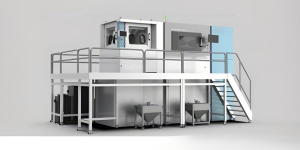
The optimized model was sliced into layers and sent to a laser powder bed fusion (LPBF) system. Two versions were printed in parallel:
- One in 316L stainless steel (for cost-sensitive or corrosion-resistant applications);
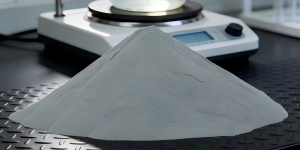
- One in Ti-6Al-4V (for higher strength-to-weight ratio and elevated-temperature performance).
Both used standard process parameters for their respective materials: layer thickness ~30–50 µm, laser power and scan speed calibrated for full density (>99.5% relative density confirmed by Archimedes measurement).
Print time per part was approximately 20–25 hours, depending on orientation and support density. Build plates were preheated to reduce thermal gradients, and inert gas (argon) was maintained throughout to prevent oxidation.
4. Post-Processing and Quality Verification
After printing, parts underwent the following steps:
- Support removal (mechanical breaking and light grinding);
- Sandblasting for surface smoothing and oxide removal;
- Hot isostatic pressing (HIP), optional but applied here to eliminate micro-porosity and relieve residual stress;
- CNC finishing of critical sealing surfaces and mounting holes to ensure dimensional compliance;
- Dimensional inspection via CMM (coordinate measuring machine); total deviation within ±0.1 mm across main features;
- Non-destructive testing (X-ray CT and ultrasonic inspection) confirmed absence of cracks, lack-of-fusion defects, or internal voids;
- Functional testing: vacuum sealing verification and mechanical load testing (static and cyclic) met specification limits.
Two qualified parts were delivered—one for immediate assembly, one as a backup—both satisfying customer requirements for fit, form, and function.
5. Lessons and Advantages of the AM Approach
This case demonstrates several practical advantages of metal 3D printing for custom structural components:
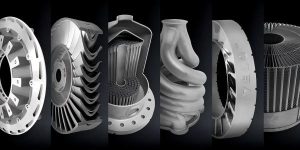
- Complex internal geometries (e.g., integrated stiffeners, hollow chambers) can be realized in a single step, eliminating assembly and associated failure modes.
- Design iterations are fast: from problem identification to corrected print took less than one week.
- Material efficiency is high—net shape printing reduces raw material use by >70% compared to subtractive methods.
- Multi-material capability allows rapid evaluation of alternative alloys for performance trade-offs (e.g., weight vs. corrosion resistance).
- Digital traceability ensures that every change is documented and reproducible.
It should be noted that success depends on close integration of design, simulation, and process knowledge—not just equipment capability.
Conclusion
The custom window frame described here is not an experimental prototype, but a production-ready component manufactured using industrial-grade metal AM. Its development followed a structured workflow: identify limitations in the initial design, apply AM-aware optimization, simulate and verify, print, and validate. This approach is now standard practice for high-value, low-volume parts in aerospace, defense, and medical device industries—where performance, reliability, and design freedom outweigh the need for ultra-high throughput.
3D metal printing does not replace all traditional manufacturing—but for parts like this window frame, it offers a more efficient, flexible, and technically capable path from concept to certified hardware.
About Forgecise
Forgecise is an innovator in additive manufacturing technology, dedicated to providing high-performance metal 3D printing materials, equipment, and process solutions for the mold manufacturing, energy power, and other industrial sectors.