



Back to 3D Printing in Aerospace
Written by: Felix Lee
Position: CEO at Forgecise
Expertise: Advanced Manufacturing, Industrial Technology, Aerospace Innovation
Published: August 2026
Last Updated: August 2026
Table of Contents
What Is a 3D Printed Fuel Nozzle?
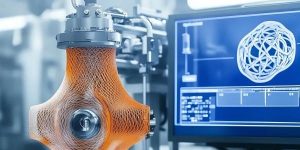
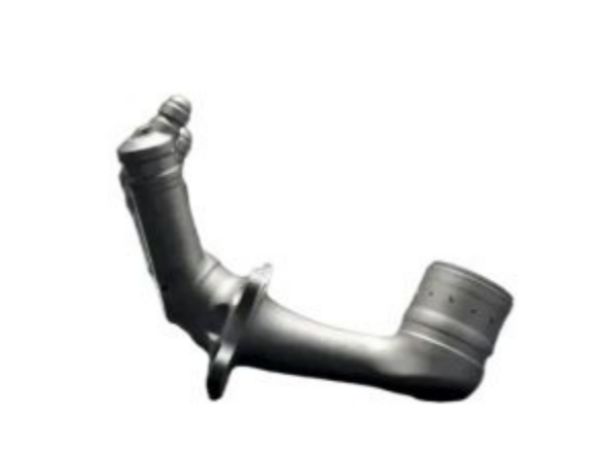
A 3D printed fuel nozzle is a jet engine component made with metal additive manufacturing instead of traditional machining, welding, and assembly. It combines complex internal fuel passages, cooling channels, and aerodynamic structures into one part. This design reduces weight, improves fuel-air mixing, and helps modern aircraft engines achieve higher efficiency.
Key Takeaways
- Traditional aerospace fuel nozzles were built from more than 20 separate parts connected through machining, brazing, and welding.
- Metal additive manufacturing allows engineers to create one solid component with internal structures that were impossible to produce before.
- GE Aerospace proved the technology at commercial scale through the CFM LEAP engine program.
- 3D printed fuel nozzles improved engine efficiency but also revealed new challenges, including fuel coking after shutdown.
- The Reverse Bleed System helped solve thermal issues while keeping the benefits of additive manufacturing.
How Did 3D Printing Change Aerospace Fuel Nozzle Manufacturing?
Aerospace fuel nozzle manufacturing changed when engineers moved from assembling many small parts to building one integrated component. This shift allowed designers to create better airflow paths, reduce weight, and remove many failure points caused by traditional manufacturing.
A fuel nozzle has a difficult job.
Inside a jet engine, it controls how fuel enters the combustion chamber and how fuel mixes with high-pressure air. The component must work under extreme heat, pressure, vibration, and repeated flight cycles.
For decades, manufacturers had to build fuel nozzles using multiple parts.
The traditional process included:
- CNC machining
- Casting
- Precision assembly
- Brazing
- Welding
A single fuel nozzle could contain more than 20 individual components.
These parts included:
- Fuel pipes
- Internal baffles
- Swirling elements
- Heat protection structures
- Multiple fuel circuits
The problem was not the skill of aerospace manufacturers.
The problem was the limits of the tools.
Machines could only cut where they could physically reach. Welders needed access points. Assemblies required connections.
These restrictions affected the final design.
Why Are Aerospace Companies Using 3D Printed Fuel Nozzles?
Aerospace companies use 3D printed fuel nozzles because additive manufacturing allows engineers to design components around engine performance instead of manufacturing restrictions.
A single-piece nozzle provides several benefits:
- Fewer parts
- Lower weight
- Fewer leakage risks
- Reduced assembly work
- More complex internal designs
A traditional nozzle might require many separate parts joined together.
A 3D printed nozzle grows as one structure.
This removes many internal joints where leaks could occur.
For aircraft engines, reliability matters as much as performance.
A small improvement in component design can influence thousands of flight cycles across a global aircraft fleet.
How Does Metal Additive Manufacturing Create Aerospace Fuel Nozzles?
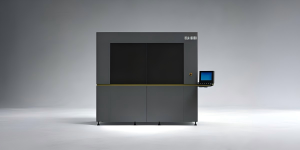
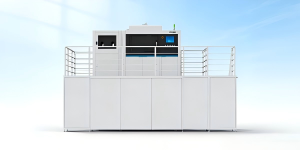
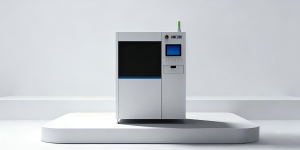
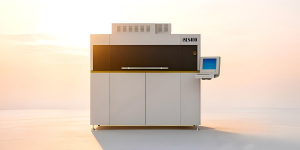
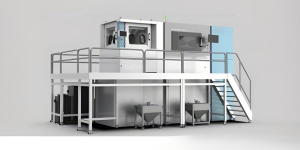
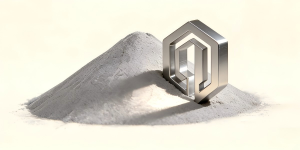
Metal additive manufacturing creates aerospace fuel nozzles by building the part layer by layer from metal powder. Technologies such as Selective Laser Melting allow manufacturers to create dense metal structures with complex internal channels.
The process begins with a digital CAD design.
Engineers create the required geometry, and the additive manufacturing machine builds the component by repeating several steps:
- A thin layer of metal powder is spread across the build area.
- A laser melts selected areas of the powder.
- The material solidifies into a metal layer.
- Additional layers are added until the complete nozzle is formed.
Why Is Selective Laser Melting Used for Fuel Nozzles?
Selective Laser Melting (SLM) is widely used for flight-critical fuel components because it fully melts the metal powder during processing.
This creates:
- Dense metal structures
- Lower internal porosity
- Better sealing performance
- Strong mechanical properties
Another process, Direct Metal Laser Sintering (DMLS), uses a different thermal approach.
Instead of completely melting the powder, it bonds particles together at lower temperatures.
Both methods are valuable in metal additive manufacturing, but fuel systems require extremely high density and reliability.
For high-pressure aerospace fuel components, SLM is better suited because the structure must resist leaks and fatigue over long operating periods.
What Materials Are Used for 3D Printed Aerospace Fuel Nozzles?
Aerospace fuel nozzles require materials that can handle high temperatures, mechanical stress, and repeated thermal cycling. Inconel 718 is one of the most common materials because it maintains strength in demanding engine environments.
The fuel nozzle operates close to the combustion zone.
It must survive:
- High temperatures
- Pressure changes
- Engine vibration
- Thousands of flight cycles
Why Is Inconel 718 Important?
Inconel 718 is a nickel-based superalloy commonly used in aerospace applications.
Its advantages include:
- High tensile strength
- Resistance to creep
- Good fatigue performance
- Stability at elevated temperatures
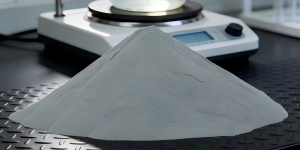
The metal powder used for printing must also meet strict standards.
Manufacturers require:
- Virgin-grade powder
- Consistent particle shape
- Low contamination risk
- Controlled storage conditions
Small changes in powder quality can affect the final component.
How Does 3D Printing Improve Fuel Mixing Inside Jet Engines?
3D printed fuel nozzles improve combustion by allowing engineers to create advanced internal airflow structures. These designs help control fuel spray, air movement, and flame stability.
One important feature is the swirler.
A swirler creates rotating airflow before combustion.
This rotation creates a controlled aerodynamic effect called vortex breakdown.
The result is a stable recirculation zone behind the nozzle.
This area helps keep the flame in the correct position.
Without proper flame control, engines can experience:
- Flame instability
- Flashback
- Lean blowout
Traditional manufacturing limited swirler designs because complex curves were difficult to machine.
Additive manufacturing allows:
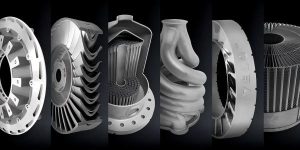
- Curved aerodynamic surfaces
- Integrated fuel channels
- Multi-stage flow paths
- More compact designs
How Are Internal Channels Made Inside 3D Printed Fuel Nozzles?
Internal channels are one of the biggest advantages of additive manufacturing, but they also create unique production challenges.
During printing, unused metal powder surrounds the component.
That powder can remain inside:
- Cooling channels
- Fuel passages
- Internal cavities
Engineers must design ways to remove it.
Powder Removal and Self-Supporting Designs
Designers use special channel shapes to reduce manufacturing problems.
Examples include:
Teardrop Channels
These shapes help avoid internal support structures and allow powder removal.
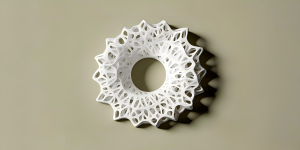
Gyroid Structures
These complex curved designs provide strength while supporting the printing process.
Engineers also consider printing angles.
Structures with large unsupported areas may require temporary supports, but removing supports from deep internal channels is often impossible.
Good additive design avoids this problem from the beginning.
Why Is Surface Finishing Important After 3D Printing?
A printed metal surface is not automatically smooth enough for aerospace fuel systems.
The layer-by-layer printing process can create surface roughness.
Typical printed surfaces may have roughness around:
5–10 micrometers
For fuel systems, this can affect:
- Flow consistency
- Pressure loss
- Spray quality
Manufacturers use post-processing methods such as:
- Abrasive finishing
- Shot blasting
- Chemical polishing
The goal is to reduce internal roughness below:
0.8 micrometers
This helps maintain accurate fuel delivery.
How Did GE Aerospace Bring 3D Printed Fuel Nozzles Into Commercial Aviation?
GE Aerospace showed that additive manufacturing could move from experimental production into commercial aircraft engines through the CFM LEAP engine program.
The LEAP engine became one of the most recognized examples of aerospace additive manufacturing.
GE Aerospace developed large-scale production capability at its Auburn, Alabama facility.
The company also invested in additive manufacturing equipment companies, including Concept Laser and Arcam, to strengthen control over the technology.
Why Was the LEAP Fuel Nozzle Important?
The LEAP fuel nozzle demonstrated that 3D printing could support commercial aviation requirements.
These engines power aircraft such as:
- Airbus A320neo
- Boeing 737 MAX
The project proved that additive manufacturing could deliver:
- Complex designs
- High production volume
- Aviation-grade reliability
The fuel nozzle moved from a laboratory concept into global airline operations.
What Problem Did LEAP 3D Printed Fuel Nozzles Face?
The biggest operational challenge was fuel coking. This problem happened because heat remained inside the engine after shutdown and caused fuel trapped inside small passages to form carbon deposits.
The issue was not that additive manufacturing failed.
The nozzle delivered major efficiency improvements.
However, modern engines operate closer to their performance limits, and small thermal effects can create new maintenance challenges.
How Does Fuel Coking Happen?
The process occurs mainly after engine shutdown.
The sequence:
- The aircraft lands.
- The engine shuts down.
- Cooling airflow decreases.
- Engine parts remain extremely hot.
- Heat moves back into the fuel nozzle.
- Fuel inside small passages breaks down.
- Carbon deposits form.
This is known as:
Heat soak-back.
Over time, deposits can restrict fuel flow and affect combustion performance.
How Does the Reverse Bleed System Solve Fuel Nozzle Problems?
The Reverse Bleed System solves fuel coking by cooling the engine after shutdown. Instead of redesigning the nozzle, engineers changed the airflow behavior of the engine system.
After shutdown, the system pushes cooling air backward through the engine core.
This reduces:
- Residual heat
- Fuel temperature
- Carbon deposit formation
The system was certified by aviation authorities including FAA and EASA.
It allowed airlines to continue using the performance benefits of 3D printed fuel nozzles while reducing maintenance problems.
What Are the Maintenance Challenges of 3D Printed Fuel Nozzles?
Advanced fuel nozzles still require specialized maintenance. The LEAP engine introduced new challenges for MRO teams working on aircraft in service.
Each engine contains:
19 fuel nozzles
Replacing them can require careful planning because technicians work around:
- Electrical systems
- Brackets
- Hydraulic lines
- High-temperature components
Why Are Fuel Nozzle Bolts Difficult to Remove?
The mounting hardware often uses heat-resistant materials such as Inconel.
Repeated heating and cooling cycles can cause:
- Seized bolts
- Thread damage
- Difficult removal
Maintenance teams may need:
- Carbide drilling tools
- Penetrating lubricants
- Specialized extraction methods
The experience of MRO teams shows that advanced engineering requires equally advanced maintenance skills.
What Is the Future of Aerospace Additive Manufacturing?
The future of aerospace additive manufacturing will focus on cleaner fuels, hydrogen propulsion, and AI-assisted engineering.
Market analysis from the report shows continued growth in aerospace fuel nozzle demand:
- 2025 market value: $1.25 billion
- 2026 projection: $1.36 billion
- 2034 forecast: $3.38 billion
- CAGR: 12.02%
Growth drivers include:
- Aircraft fleet expansion
- Emission regulations
- Defense applications
- New propulsion systems
How Will SAF and Hydrogen Change Fuel Nozzle Design?
Sustainable Aviation Fuel (SAF) and hydrogen propulsion will require new fuel nozzle designs.
Hydrogen creates unique challenges because it burns faster than traditional jet fuel.
Engineers must manage:
- Flashback risk
- Higher flame speed
- Different fuel behavior
Additive manufacturing provides the design freedom needed for these future systems.
AI tools can also help engineers create:
- Better cooling channels
- Improved combustion designs
- Optimized internal structures
Companies and research organizations such as GE Aerospace, NASA, and Woodward continue exploring these next-generation technologies.
Frequently Asked Questions About 3D Printed Fuel Nozzles
What is a 3D printed fuel nozzle?
Short answer:
A 3D printed fuel nozzle is a single-piece jet engine component made through metal additive manufacturing. It replaces traditional multi-part designs and allows complex internal channels that improve fuel control and combustion performance.
Unlike older manufacturing methods, additive manufacturing builds the nozzle directly from digital designs. This reduces assembly requirements and allows engineers to create structures that traditional machining cannot produce.
Why do aerospace companies use additive manufacturing?
Short answer:
Aerospace companies use additive manufacturing because it creates lighter, more complex components with fewer manufacturing limitations.
The technology helps engineers improve fuel efficiency, reduce part numbers, simplify production, and create designs optimized for modern aircraft engines.
Which aircraft use 3D printed fuel nozzles?
Short answer:
3D printed fuel nozzles became widely known through the CFM LEAP engine program used on aircraft including the Airbus A320neo and Boeing 737 MAX.
The program proved that metal additive manufacturing could support commercial aviation production.
Why did LEAP fuel nozzles experience coking?
Short answer:
LEAP fuel nozzles experienced coking because heat remained inside the engine after shutdown, causing trapped fuel to form carbon deposits.
The industry addressed this challenge with thermal management improvements such as the Reverse Bleed System.
What material is used for aerospace 3D printed fuel nozzles?
Short answer:
Inconel 718 is one of the main materials used because it provides high strength, heat resistance, and durability for aerospace engine conditions.
About Felix Lee, CEO at Forgecise
Felix Lee is the CEO of Forgecise, focusing on advanced manufacturing, industrial technology, and engineering innovation. His work examines how emerging manufacturing methods can help companies build more efficient and capable industrial systems.
Forgecise studies technologies that connect digital design, manufacturing processes, and real-world engineering applications.
Disclaimer:
This article is for educational and industry information purposes only. It does not represent engineering certification guidance, aircraft maintenance instructions, or regulatory approval advice.