








Written by Felix Lee
CEO at Forgecise
Last Updated: August 17, 2026
Table of Contents
About the Author
Felix Lee is the CEO at Forgecise, focusing on additive manufacturing strategy, industrial materials, and production optimization. His work involves helping companies understand how powder quality, material selection, and manufacturing processes affect the reliability and cost of industrial 3D printing.
His expertise covers:
- Additive Manufacturing (AM)
- Metal 3D printing materials
- Powder engineering
- Industrial production strategy
- AM supply chain development
What Is 3D Printing Powder Engineering?
Short answer:
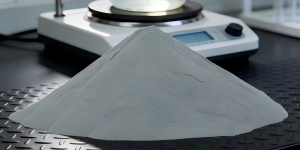
3D printing powder engineering is the process of designing and controlling powder properties such as particle shape, size distribution, flowability, and internal quality to improve additive manufacturing performance.
Industrial companies are learning that the printer is only one part of the production system. The powder inside the machine often decides whether a printed part succeeds or fails.
A high-quality printer cannot fully solve problems caused by poor powder.
If powder does not spread evenly, pack correctly, or melt consistently, manufacturers may experience:
- Porosity
- Weak mechanical performance
- Surface defects
- Production delays
- Higher costs
For aerospace, medical, automotive, and defense companies, powder quality has become a major part of AM success.
Quick Summary
- Industrial 3D printing has moved from prototyping toward full production.
- Powder morphology controls flowability, packing density, and melt stability.
- Spherical powders usually provide better printing consistency.
- Advanced methods such as plasma spheroidization create premium powders for demanding applications.
- Powder recycling is becoming an important part of future AM supply chains.
Industrial additive manufacturing has changed quickly.
Years ago, companies mainly asked:
“How fast can the machine print?”
Today, many manufacturers ask a different question:
“Can this process create thousands of identical parts with predictable quality?”
That question starts with the material.
Why Does 3D Printing Powder Matter in Industrial Manufacturing?
Short answer:
3D printing powder matters because it directly affects how smoothly a machine can build parts. Powder quality influences layer spreading, melting behavior, density, and final component strength.
The global additive manufacturing powder market continues to grow as companies adopt AM for production applications.
Major growth areas include:
- Aerospace components
- Medical implants
- Automotive lightweight parts
- Defense systems
- Industrial tooling
The market is driven by the need for:
- Stronger lightweight parts
- Customized designs
- Shorter supply chains
- Faster production changes
Which Powder Materials Are Used in Industrial AM?
Industrial AM uses three main powder categories:
| Powder Type | Main Applications |
|---|---|
| Metal Powder | Aerospace, automotive, medical implants, defense |
| Polymer Powder | Functional parts, UAVs, industrial components |
| Ceramic Powder | Dental parts, semiconductor equipment, heat-resistant applications |
Metal powders represent the largest industrial segment because they support high-performance applications.
Common materials include:
- Ti6Al4V titanium alloy
- AlSi10Mg aluminum alloy
- Inconel nickel alloys
- Stainless steel
How Does Powder Morphology Affect 3D Printing Quality?
Short answer:
Powder morphology describes particle shape, size distribution, surface condition, and internal structure. These factors control powder movement, packing behavior, and melting performance during printing.
In powder bed fusion (PBF), the machine spreads very thin powder layers across the build platform.
The powder must behave consistently.
Small differences between particles can create large production problems.
Why Are Spherical Powders Better?
Spherical particles usually provide:
- Lower friction
- Better flow
- More even spreading
- Higher packing density
During LPBF (Laser Powder Bed Fusion), the recoater needs to create a smooth powder layer.
Irregular particles may cause:
- Uneven layers
- Poor powder movement
- Recoater problems
This is why premium metal AM powders usually focus on high spherical quality.
What Are Satellite Particles?
Satellite particles are small particles attached to larger particles during atomization.
They can reduce powder performance by causing:
- More friction
- Lower flowability
- Poor packing
- Unstable printing behavior
Two powders may have similar particle size measurements but perform differently because their shapes are different.
Why Does Packing Density Matter?
Packing density determines how much material exists before melting.
A well-designed powder bed can reach around 50–60% of theoretical solid density.
Poor packing creates more empty spaces.
During laser melting, this can lead to:
- Uneven heat transfer
- Melt pool instability
- Gas pores
How Does Powder Morphology Create Printing Defects?
Poor powder quality can contribute to:
Keyhole Porosity
When laser energy becomes unstable, a deep vapor cavity forms.
When it collapses, gas can become trapped inside the metal.
The result:
- Internal pores
- Reduced fatigue strength
- Lower reliability
Balling
Poor powder flow can disturb molten metal movement.
This creates uneven tracks and lower surface quality.
Why Does Particle Size Distribution Matter?
Short answer:
Particle size distribution controls how particles pack together and how the powder behaves during printing. A balanced distribution can improve density and printing stability.
Common measurements include:
- D10
- D50
- D90
Many LPBF powders use particle ranges around 15–45 microns.
Some advanced applications use bimodal or multimodal powders.
How Do Bimodal Powders Improve Performance?
A bimodal powder combines:
- Larger particles
- Smaller particles
Smaller particles fill the spaces between larger particles.
Benefits include:
- Better packing
- Higher density
- Improved material use
Studies on Binder Jetting 316L stainless steel powders have shown that optimized particle mixtures can improve density and strength compared with standard powder distributions.
How Are Advanced 3D Printing Powders Manufactured?
Short answer:
Manufacturers use different powder production methods depending on performance needs, material type, and cost requirements. The main methods include gas atomization, water atomization, plasma spheroidization, and ultrasonic atomization.
Gas Atomization: The Standard Industrial Method
Gas atomization is widely used for metal AM powders.
The process breaks molten metal into droplets using high-speed inert gas.
Common methods include:
- VIGA
- EIGA
Advantages:
- Large production capacity
- Good spherical shape
- Suitable for titanium, aluminum, nickel, and steel alloys
Challenges:
- Satellite particles
- Possible gas entrapment
For many industrial applications, gas atomization remains the practical choice.
Water Atomization: Lower Cost Powder Production
Water atomization uses high-pressure water instead of gas.
Advantages:
- Lower cost
- High production efficiency
Challenges:
- Less spherical particles
- Lower flowability
Historically, water atomized powders were mainly used in traditional powder metallurgy.
However, improved printing parameters have shown that some water atomized stainless steel powders can achieve high density in AM applications.
Plasma Spheroidization: Premium Powder Processing
Short answer:
Plasma spheroidization improves powder quality by transforming irregular particles into highly spherical particles with better flow and fewer defects.
This technology is especially useful for:
- Aerospace materials
- Defense applications
- High-temperature metals
The process can use:
- Recycled powder
- Manufacturing scrap
- Irregular particles
The material passes through a high-temperature plasma zone.
The particles melt and reform into spheres.
Benefits:
- High sphericity
- Reduced satellites
- Lower internal defects
- Better printing consistency
Ultrasonic Atomization: Specialty Powder Production
Ultrasonic atomization uses high-frequency vibration to create powder droplets.
Advantages:
- Narrow particle size distribution
- Good spherical quality
- Low gas contamination
Current uses include:
- Research alloys
- Small production batches
- Specialty metals
How Do Different Materials Need Different Powder Strategies?
Short answer:
Different metals behave differently during printing, so each material requires specific powder control. Titanium, aluminum, copper, and tungsten each create different engineering challenges.
Titanium Ti6Al4V Powder
Titanium is widely used in:
- Aerospace
- Medical implants
- High-performance parts
The main challenge is chemical reactivity.
Titanium can absorb:
- Oxygen
- Nitrogen
High oxygen levels can make titanium brittle.
For critical applications, manufacturers need:
- High purity powder
- Good spherical shape
- Controlled processing conditions
Aluminum AlSi10Mg Powder
Aluminum provides lightweight performance but creates flow challenges.
Problems include:
- Low particle weight
- High reflectivity
- Particle sticking
Good spherical morphology helps aluminum powder spread more consistently.
Copper Powder
Copper is valuable for thermal and electrical applications.
However:
- It reflects laser energy
- It transfers heat quickly
This makes stable melting difficult.
Advanced powder strategies use mixed particle sizes to improve energy absorption and powder bed stability.
Tungsten Powder
Tungsten is used in:
- Semiconductor equipment
- Extreme-temperature applications
- Defense systems
Its high melting point creates major processing challenges.
Plasma spheroidized tungsten powder helps improve:
- Particle consistency
- Melt stability
- Manufacturing reliability
How Are Companies Using Powder Engineering Today?
Short answer:
Leading AM companies use advanced powder testing and production methods to reduce failures and improve production reliability.
ExOne and Desktop Metal
These companies showed why basic powder testing is not enough.
Two powders may have similar:
- D10
- D50
- D90
but behave differently during production.
Dynamic testing methods include:
- Basic Flowability Energy (BFE)
- Specific Energy (SE)
- Stability Index (SI)
These tests help predict recycling behavior and production stability.
3D Systems and 6K Additive
Advanced tungsten powder development supports demanding applications where:
- Low porosity
- High consistency
- Stable melting
are required.
This is especially important for aerospace and defense manufacturing.
Daido Steel
Daido Steel developed AM tooling materials designed for large components.
The focus includes:
- High powder flow
- Reduced thermal stress
- Crack prevention
This supports complex tooling designs with internal cooling channels.
Can 3D Printing Powder Be Recycled?
Short answer:
Yes, but recycling requires testing and processing. Simply grinding metal scrap into powder usually creates poor-quality particles that are not suitable for high-performance AM.
Manufacturers recycle:
- Unused powder
- Failed prints
- Support structures
- Metal waste
However, direct grinding creates:
- Rough particles
- Poor flow
- Unstable printing
Advanced recycling may use:
- Plasma spheroidization
- Powder blending
- Chemical testing
A closed-loop powder system can reduce waste and improve supply chain stability.
How Should Companies Choose AM Powder Suppliers?
Short answer:
Companies should evaluate powder performance instead of only comparing price per kilogram. A cheaper powder may create higher costs through failures and production delays.
Important evaluation factors:
- Particle morphology
- Size distribution
- Flowability testing
- Gas content
- Recycling performance
- Certification
- Supply consistency
Companies should also consider:
- BFE testing
- SE testing
- SI testing
These measurements provide a clearer picture of real production behavior.
What Is the Future of 3D Printing Powder Engineering?
Short answer:
Future AM powders will focus on recycling, smarter qualification, and materials designed for specific applications.
Key trends include:
Sustainable Powder Systems
Manufacturers will use more:
- Scrap recycling
- Closed-loop production
- Plasma processing
Smarter Powder Testing
AI and data analysis will help companies:
- Predict failures
- Improve material selection
- Optimize printing conditions
Application-Specific Powders
Future powders will be designed for:
- Aerospace fatigue performance
- Medical purity requirements
- Automotive cost control
- Defense durability
Frequently Asked Questions
What is 3D printing powder engineering?
Short answer:
It is the process of controlling powder properties to improve additive manufacturing results.
3D printing powder engineering covers particle shape, size, chemistry, flowability, and internal quality. These factors affect how powder spreads, melts, and becomes a finished component.
Why are spherical powders better for metal 3D printing?
Short answer:
Spherical powders flow and pack more evenly.
Their shape reduces friction between particles and helps create stable powder layers. This improves printing consistency and reduces defects caused by uneven spreading.
Is plasma spheroidization worth the cost?
Short answer:
For critical industries, it often can be.
Aerospace and defense manufacturers may accept higher powder costs because improved powder quality can reduce failures, defects, and qualification problems.
Can used AM powder be reused?
Short answer:
Yes, with proper control.
Used powder may require testing, blending, or advanced processing before reuse. Direct mechanical recycling usually creates particles that do not meet industrial AM requirements.
How do companies select a metal 3D printing powder supplier?
Short answer:
They look at reliability, not only price.
Important factors include powder quality, testing methods, certification, recycling capability, and supply consistency.
Final Expert Note
The future of industrial 3D printing will depend on more than faster machines.
It will depend on better materials.
Powder engineering has become a key part of additive manufacturing because every layer, every melt pool, and every finished component begins with the powder.
Companies that understand powder quality, testing, and supply strategy will be better prepared for the next stage of industrial AM.