




Back to 3D Printing in Aerospace
Written by: Felix Lee
CEO at Forgecise
Published: August 2026
Last Updated: August 2026
Table of Contents
Topic Areas:
- Industrial additive manufacturing
- Hydraulic engineering
- Metal 3D printing
- Advanced manufacturing systems
Quick Answer
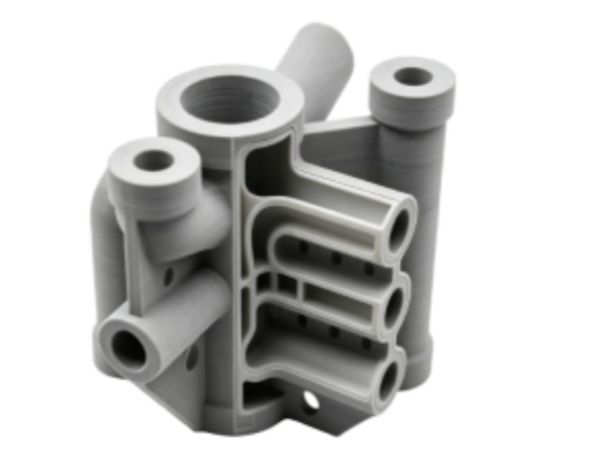
Additive manufacturing hydraulic manifolds are metal 3D printed fluid control components that allow engineers to create optimized internal channels, reduce weight, lower pressure loss, and improve system performance. Unlike traditional machined manifolds, they support complex designs for aerospace, industrial equipment, energy systems, and advanced manufacturing applications.
Key Takeaways
- Traditional CNC hydraulic manifolds are limited by straight drilled channels and sharp turns that create turbulence and pressure loss.
- Metal additive manufacturing allows engineers to build smooth internal flow paths using CFD and generative design.
- Materials such as 316L stainless steel and 17-4 PH can replace traditional aluminum designs while reducing total component weight.
- LPBF, Binder Jetting, and DED technologies support different production needs from prototypes to industrial manufacturing.
- Real-world applications now include naval systems, agricultural machinery, nuclear equipment, motorsports, and semiconductor cooling systems.
Why Are Traditional Hydraulic Manifolds Limited?
Traditional hydraulic manifolds depend on machining methods that were developed around the limits of cutting tools. Engineers start with a metal block and drill internal passages to connect pumps, valves, and actuators.
The problem is that fluid does not naturally move through straight lines and sharp corners.
A drill can create a hole.
It cannot create the ideal path for fluid flow.
The Hidden Cost of Straight Internal Channels
When hydraulic oil moves through a traditional manifold, it often encounters:
- 90-degree turns
- Sudden changes in direction
- Sharp intersections
- Additional sealing points
These changes create:
- Flow separation
- Local turbulence
- Pressure loss
- Extra heat generation
The hydraulic pump must work harder to maintain performance.
Over time, this increases energy use and operating costs.
Why Leakage Is a Common Failure Point
Traditional machining also creates another problem.
Because drill paths must enter from outside the manifold, manufacturers often need:
- Threaded plugs
- Expansion plugs
- Additional sealing hardware
These parts can become weak points during:
- High-pressure operation
- Temperature changes
- Long-term vibration
For industries such as aerospace, marine systems, oil and gas, and heavy machinery, even a small leakage risk can create expensive downtime.
How Does Additive Manufacturing Improve Hydraulic Flow?
Additive manufacturing improves hydraulic manifold design by removing the geometric limits of traditional machining. Engineers can create internal channels based on fluid behavior instead of tool access.
The result is a new approach:
Design the best fluid path first.
Manufacture it second.
Conformal Flow Channels
One of the biggest advantages of additive manufacturing hydraulic manifolds is the ability to create conformal internal channels.
These channels can include:
- Smooth curves
- Complex routing paths
- Optimized transitions
- Integrated cooling features
The geometry can follow the needs of the hydraulic system rather than the limitations of drilling equipment.
CFD Optimization for Better Performance
Before printing, engineers use Computational Fluid Dynamics (CFD) software to test fluid behavior digitally.
Common tools include:
- ANSYS Fluent
- SOLIDWORKS Flow Simulation
- Industrial AM simulation platforms
CFD helps engineers analyze:
- Pressure drop
- Flow velocity
- Turbulence
- Heat generation
- Fluid distribution
This reduces the need for repeated physical prototypes.
Measured Performance Improvements
Industrial redesign projects have shown measurable improvements.
Examples include:
- A redesigned directional spool valve manifold achieved about 25% lower pressure drop and around 2.5% higher average fluid velocity.
- Renishaw hydraulic manifold studies reported flow efficiency improvements of up to 60%.
Better fluid movement can also reduce:
- Hydraulic oil temperature
- Pump workload
- Component wear
How Does Generative Design Create Better Hydraulic Manifolds?
Generative design allows engineers to create hydraulic components using computer-generated solutions based on performance requirements.
Instead of manually drawing every passage, engineers provide:
- Flow requirements
- Pressure limits
- Available space
- Structural conditions
The software then explores possible designs.
Algorithm-Based Fluid Routing
Modern design systems treat internal channels like virtual pathways.
The software evaluates:
- Channel length
- Wall thickness
- Structural strength
- Separation between passages
- Manufacturing limitations
This creates designs that would be impossible with traditional drilling.
Design for Additive Manufacturing (DfAM)
Good AM design requires more than copying a traditional CAD model.
Engineers must consider printing limitations.
For example:
A horizontal circular tunnel may collapse during metal printing because the molten material has limited support.
To solve this, engineers use:
- Teardrop-shaped channels
- Diamond-shaped channels
- Self-supporting geometries
These designs follow additive manufacturing rules, including overhang control.
The goal is simple:
Create internal channels that print successfully without trapped support structures.
How Does Simulation Reduce Metal Printing Problems?
Metal additive manufacturing uses intense heat.
During LPBF, a laser melts metal powder layer by layer.
This creates thermal challenges:
- Residual stress
- Warping
- Dimensional changes
- Printing failure
For large hydraulic manifolds, these problems can affect final accuracy.
Predictive Thermal Simulation
Manufacturers use simulation tools to predict problems before production.
Examples include:
- COMSOL Multiphysics-based solutions
- ITRI AMSim applications
Engineers can adjust:
- Printing direction
- Support structures
- Manufacturing settings
- CAD geometry compensation
This helps the final component match the original engineering design.
Which Materials Are Used for Additive Manufacturing Hydraulic Manifolds?
Metal additive manufacturing gives engineers more material choices because optimized geometry reduces unnecessary weight.
AlSi10Mg Aluminum
Used when low weight is the main goal.
Common applications:
- Aerospace components
- Lightweight industrial systems
- Drone applications
316L Stainless Steel
316L provides:
- Strong corrosion resistance
- Good durability
- Thermal stability
Used in:
- Industrial hydraulics
- Marine systems
- Agricultural equipment
- Oil and gas systems
17-4 PH Stainless Steel
17-4 PH offers:
- High strength
- Good fatigue performance
- Pressure resistance
It is used for demanding applications such as nuclear and high-pressure systems.
A nuclear-related AM manifold made from 17-4 PH successfully passed proof pressure testing at 2,812 psig without leakage.
Titanium Ti6Al4V
Titanium provides:
- High strength-to-weight ratio
- Excellent aerospace performance
However, it requires:
- Controlled printing conditions
- Careful thermal management
- Advanced post-processing
High-Performance Polymers
Materials such as:
- PEEK
- Carbon Fiber Nylon (PA-CF)
are used for lower-pressure applications.
One industrial intake manifold project using PA-CF reduced:
- Development time from four weeks to 48 hours
- Weight by 38%
- Cost by 90% compared with aluminum manufacturing
Which Additive Manufacturing Technologies Are Used for Hydraulic Manifolds?
Different additive manufacturing technologies support different hydraulic applications. The right process depends on component size, production volume, material requirements, and performance targets.
The three main approaches used today are:
- Laser Powder Bed Fusion (LPBF)
- Binder Jetting
- Directed Energy Deposition (DED)
Each method solves different manufacturing challenges.
Laser Powder Bed Fusion (LPBF): High-Performance Hydraulic Components
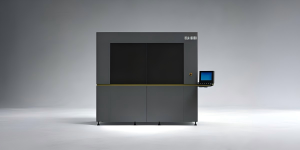
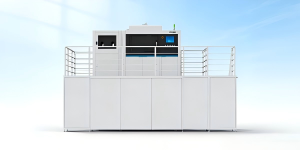
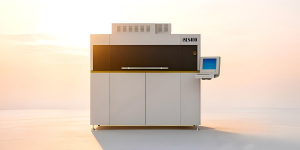
Laser Powder Bed Fusion is currently the most widely used metal AM technology for complex hydraulic manifolds.
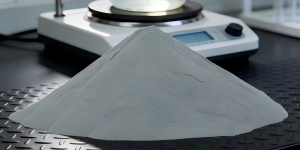
The process works by using a high-power laser to selectively melt areas of a metal powder bed layer by layer.
The final component can contain:
- Complex internal channels
- Lightweight structures
- Integrated components
- Optimized flow paths
Why LPBF Works Well for Hydraulic Manifolds
LPBF provides:
- High material density
- Excellent design freedom
- Strong mechanical performance
- Complex internal geometry
Leading industrial platforms include:
- EOS metal AM systems
- Nikon SLM Solutions
- Renishaw additive manufacturing platforms
LPBF is commonly used in:
- Aerospace systems
- Defense equipment
- Oil and gas applications
- High-value industrial machinery
Binder Jetting: Moving Toward High-Volume Production
Binder Jetting uses a different manufacturing approach.
Instead of melting metal powder with a laser, the system deposits a liquid binder onto layers of powder.
The process includes:
- Powder spreading
- Binder application
- Creation of a “green” part
- Furnace sintering
After sintering, the final metal component reaches its required strength and density.
Why Binder Jetting Matters
Binder Jetting is gaining attention because it can support larger production volumes.
The technology shares similarities with Metal Injection Molding (MIM), including:
- Fine metal powders
- Binder systems
- Sintering processes
This connection makes Binder Jetting attractive for manufacturers with existing MIM knowledge.
Industrial Example: Domin Fluid Power
Domin Fluid Power used HP Metal Jet technology to manufacture advanced hydraulic servovalves.
Compared with traditional manufacturing, the AM version achieved:
- 25% higher rated flow
- 20% lower leakage
- 25% smaller volume
- 85% lower weight
- 60% lower manufacturing cost
This example shows how metal AM can improve both hydraulic performance and production efficiency.
Directed Energy Deposition (DED): Large Parts and Hybrid Manufacturing
Directed Energy Deposition is designed for large components and repair applications.
The process deposits metal wire or powder directly into a laser-created melt pool.
DED systems often use:
- Robotic arms
- CNC platforms
- Laser deposition heads
Why DED Is Important for Hydraulic Systems
DED is useful for:
- Large hydraulic manifolds
- Industrial repair
- Custom production
One major advantage is hybrid manufacturing.
A manufacturer can:
- Print a near-net-shape component.
- Machine precision surfaces.
- Complete finishing operations in the same workflow.
This approach reduces:
- Manufacturing steps
- Fixture requirements
- Production delays
Large components that once required long casting lead times can be produced much faster using DED-based workflows.
What Are the Biggest Challenges in 3D Printed Hydraulic Manifolds?
Additive manufacturing removes many design limitations, but producing reliable hydraulic components requires strict post-processing and testing.
Printing the part is only one stage.
The final performance depends heavily on what happens after printing.
Challenge 1: Removing Trapped Powder From Internal Channels
Powder removal is one of the biggest challenges in metal AM hydraulic manufacturing.
During LPBF and Binder Jetting, unused powder remains inside internal channels.
Simple straight channels are easy to clean.
Complex curved passages are much harder.
Why Remaining Powder Creates Risks
If loose powder remains inside a manifold, it can enter the hydraulic system.
This may damage:
- Servo valves
- Hydraulic pumps
- Precision seals
- Actuators
For this reason, manual cleaning is often not enough.
Automated Depowdering Systems
Industrial manufacturers use automated systems that combine:
- Multi-axis rotation
- Vibration
- Ultrasonic energy
Companies such as Solukon have developed specialized equipment for removing trapped powder from complex AM parts.
The goal is to make sure internal passages are clean before the component enters service.
Challenge 2: Hot Isostatic Pressing (HIP)
Metal AM parts may contain small internal defects caused by the printing process.
Examples include:
- Gas pores
- Lack-of-fusion defects
- Internal stress areas
For hydraulic components operating under repeated pressure cycles, these defects can reduce fatigue life.
How HIP Improves Metal AM Parts
Hot Isostatic Pressing applies:
- High temperature
- High pressure
- Controlled gas atmosphere
Typical HIP conditions can approach:
- 950°C temperature
- More than 1,000 bar pressure
The process helps:
- Close internal pores
- Improve material consistency
- Increase fatigue resistance
Density can improve from around:
99.5%
to:
more than 99.9%
Challenge 3: Internal Surface Finishing
Metal AM creates complex channels, but printed surfaces may be rougher than traditional machined surfaces.
Internal roughness can create:
- Higher fluid friction
- Increased contamination risk
- Reduced flow performance
Abrasive Flow Machining (AFM)
A common solution is Abrasive Flow Machining, also called Extrude Honing.
The process pushes a thick abrasive material through internal passages.
The abrasive material acts like a flexible polishing tool.
It can reach:
- Curved channels
- Narrow passages
- Complex internal structures
Benefits include:
- Smoother surfaces
- Reduced particle release
- Better hydraulic performance
Why Hybrid Manufacturing Is the Practical Industrial Approach
Additive manufacturing is not replacing CNC machining.
The strongest industrial solutions combine both technologies.
AM provides:
- Complex internal geometry
- Weight reduction
- Design freedom
CNC provides:
- Tight dimensional accuracy
- Smooth sealing surfaces
- Precision valve interfaces
Typical Production Workflow
A common industrial process is:
- Print the manifold with extra material on critical areas.
- Complete stress relief and HIP treatment.
- Machine valve ports and sealing surfaces.
- Finish internal channels.
- Perform testing and inspection.
This approach is used because hydraulic systems require extremely accurate sealing areas.
The future is not:
AM versus CNC.
It is:
AM plus CNC.
Where Are Additive Manufacturing Hydraulic Manifolds Used Today?
Additive manufacturing hydraulic manifolds are now used in industries where traditional manufacturing creates limits in performance, weight, or supply chain flexibility.
Aerospace and Defense: HII Naval Application
Huntington Ingalls Industries (HII) Newport News Shipbuilding installed an additively manufactured valve manifold assembly on the Gerald R. Ford-class aircraft carrier USS Enterprise (CVN 80).
The component:
- Was approximately 5 feet long
- Weighed around 1,000 pounds
- Was manufactured with DM3D Technology
Why This Project Matters
Naval systems require strict reliability standards.
The AM approach helped reduce dependence on:
- Long casting schedules
- Specialized suppliers
- Physical spare part inventory
The success supported future adoption of AM components on additional naval platforms, including USS Doris Miller (CVN 81).
Agriculture and Heavy Equipment: Aidro and CNH Industrial
Agricultural machines operate in harsh conditions with:
- Dust
- Vibration
- Chemical exposure
Aidro and CNH Industrial redesigned a hydraulic manifold used in combine harvesters.
The original system contained:
- Six directional control valves
- Four pressure-reducing valves
- A bypass system
AM Redesign Results
Using LPBF and 316L stainless steel, the team created one integrated manifold.
Results:
- 50% smaller volume
- 75% lower weight
- Better corrosion resistance
- Reduced assembly complexity
Automotive Performance: Czinger 21C BrakeNode
Czinger Vehicles used additive manufacturing to create the BrakeNode system for the 21C hypercar.
The component combines:
- Brake caliper functions
- Suspension structure
- Hydraulic routing
Performance Benefits
The design achieved:
- Around 6 pounds reduction in unsprung weight
- Around 1.5 pounds reduction per wheel corner
- Increased stiffness
- Up to 15% shorter stopping distances
This type of integration would be extremely difficult using traditional manufacturing.
Nuclear Energy: Kinectrics AM Manifold
Kinectrics and Burloak Technologies developed a nuclear-grade hydraulic manifold using:
- LPBF
- 17-4 PH stainless steel
The component underwent:
- Heat treatment
- Inspection
- Pressure testing
Results:
- Passed ASTM A564-related requirements
- Passed proof testing at 2,812 psig
- No leakage during testing
This demonstrates how AM can help replace difficult-to-source legacy components.
Oil and Gas: Valland Hydraulic Manifold
Valland Spa used Nikon SLM technology to redesign a hydraulic manifold for valve actuator systems.
Results:
Original weight:
25.6 kg
AM design:
9.8 kg
Weight reduction:
61.7%
Production:
- 4 days printing
- About 2 weeks post-processing
- Five custom parts delivered in three weeks
Semiconductor and AI Cooling Systems
High-performance computing and semiconductor manufacturing require advanced cooling solutions.
ITRI and ZYRQ used metal additive manufacturing to create cooling plates and fluid systems for AI data centers.
Results included:
- GPU temperatures below 30°C
- Support for 200 kW/m³ thermal loads
- PUE as low as 1.015
- Reduced copper usage
What Is the Future of Additive Manufacturing Hydraulic Manifolds?
Short answer:
The future of hydraulic manufacturing is moving toward digital design, on-demand production, and AI-assisted engineering. Additive manufacturing allows companies to store validated digital designs instead of large physical inventories while creating lighter, more efficient, and more complex hydraulic systems.
Traditional hydraulic manufacturing depends on a physical supply chain:
- Metal casting suppliers
- Machining companies
- Tooling systems
- Warehouses full of spare parts
This model works, but it creates challenges.
For older industrial equipment, companies may face:
- Discontinued components
- Limited supplier availability
- Long replacement times
- Expensive inventory storage
Additive manufacturing changes this model.
A company can maintain:
- Qualified CAD files
- Manufacturing parameters
- Testing records
Then produce components when needed.
Digital Inventory and On-Demand Manufacturing
One of the strongest benefits of additive manufacturing is the creation of a digital supply chain.
Instead of storing thousands of physical spare parts, manufacturers can store validated digital files.
This approach is valuable for:
- Naval systems
- Industrial machinery
- Energy infrastructure
- Agricultural equipment
- Remote operating locations
A replacement manifold that previously required months of supplier coordination may be produced much faster when the design and manufacturing process are already approved.
AI and Digital Twins in Hydraulic Design
Future hydraulic systems will increasingly combine:
- Artificial intelligence
- Generative design
- Digital twins
- Automated simulation
These tools can help engineers improve:
- Fluid routing
- Structural performance
- Thermal management
- Manufacturing settings
The design process will become more data-driven.
Instead of engineers manually testing many possible solutions, software will help identify stronger and more efficient designs earlier.
Why Companies Are Moving Toward AM Hydraulic Manifolds
The main reason companies adopt additive manufacturing is not simply because it is a new technology.
They adopt it because it solves specific engineering problems.
AM hydraulic manifolds help companies achieve:
Better Flow Performance
Optimized internal channels reduce:
- Turbulence
- Pressure loss
- Heat generation
Lower Weight
Topology optimization removes unnecessary material.
This is valuable in:
- Aerospace
- Motorsport
- Mobile equipment
Stronger Materials
AM makes advanced materials more practical.
Examples:
- 316L stainless steel
- 17-4 PH stainless steel
- Titanium alloys
Fewer Components
Complex assemblies can become single integrated parts.
This reduces:
- Assembly time
- Leakage points
- Maintenance requirements
Frequently Asked Questions About Additive Manufacturing Hydraulic Manifolds
Can 3D printed hydraulic manifolds handle high pressure?
Short answer:
Yes. Properly designed metal additive manufacturing hydraulic manifolds can handle demanding pressure conditions when manufacturers use suitable materials, correct printing parameters, post-processing, and testing procedures.
High-pressure hydraulic systems require more than printing.
Engineers must consider:
- Material selection
- Internal defects
- Surface finishing
- Fatigue performance
- Pressure testing
Processes such as Hot Isostatic Pressing (HIP) improve material density by reducing internal pores.
For critical applications, companies also perform inspection and validation before operation.
Are additive manufacturing hydraulic manifolds cheaper than traditional CNC parts?
Short answer:
Sometimes. AM is usually most valuable when a hydraulic component has complex geometry, requires lightweight design, or creates supply chain challenges.
A simple machined block may still be cheaper with CNC.
However, AM can reduce total system cost by:
- Combining multiple parts
- Reducing assembly work
- Lowering weight
- Reducing inventory needs
- Shortening development time
The biggest savings often come from improving the entire system rather than only reducing manufacturing cost.
Why are conformal channels better than traditional drilled channels?
Short answer:
Conformal channels allow engineers to create smoother fluid paths that reduce turbulence and pressure loss compared with straight drilled passages.
Traditional drilled channels are limited by tool movement.
They often create:
- Sharp turns
- Flow separation
- Dead zones
AM allows channels to follow optimized paths created through CFD simulation.
This improves fluid movement and can reduce energy losses.
What materials are used for 3D printed hydraulic manifolds?
Short answer:
The most common materials include aluminum alloys, stainless steels, and titanium alloys. The correct choice depends on weight, pressure, corrosion resistance, and operating environment.
Common materials include:
AlSi10Mg Aluminum
Used when weight reduction is the main goal.
316L Stainless Steel
Used for corrosion resistance and industrial durability.
17-4 PH Stainless Steel
Used for high-strength applications.
Ti6Al4V Titanium
Used where strength-to-weight ratio is critical.
Does additive manufacturing replace CNC machining?
Short answer:
No. The strongest industrial approach combines additive manufacturing and CNC machining.
AM creates:
- Complex internal structures
- Optimized geometry
- Lightweight designs
CNC creates:
- Precise sealing surfaces
- Accurate valve interfaces
- Tight dimensional tolerances
Many industrial manufacturers use both technologies together.
Which industries use additive manufacturing hydraulic manifolds?
Short answer:
Industries that need high performance, complex designs, or reliable supply chains benefit most from AM hydraulic manifolds.
Current applications include:
- Aerospace
- Defense
- Agriculture
- Heavy machinery
- Nuclear energy
- Oil and gas
- Semiconductor manufacturing
- Motorsport
About the Author
Felix Lee — CEO at Forgecise
Felix Lee is the CEO at Forgecise, where he focuses on advanced manufacturing solutions, industrial innovation, and next-generation production technologies.
His work involves helping companies understand how modern manufacturing approaches, including metal additive manufacturing, can solve engineering challenges in complex industrial applications.
Felix focuses on connecting engineering requirements with practical manufacturing strategies, helping businesses evaluate where additive manufacturing can create measurable improvements in performance, efficiency, and production flexibility.
Expert Review and Content Information
Author: Felix Lee, CEO at Forgecise
Published: August 2026
Last Updated: August 2026
Expertise Areas:
- Industrial additive manufacturing
- Hydraulic system design
- Metal 3D printing applications
- Manufacturing technology strategy