









Back to 3D Printing in Aerospace
Quick Answer
Conformal cooling mold inserts are metal tooling components with internal cooling channels that follow the shape of a mold cavity. In aerospace composite manufacturing, these inserts provide more consistent heat control than traditional drilled channels, helping manufacturers improve resin curing, reduce warpage, shorten cycle times, and increase production stability.
Table of Contents
Key Takeaways
- Traditional straight cooling channels cannot follow complex aerospace mold shapes, creating uneven temperatures and hot spots.
- Metal additive manufacturing allows engineers to build cooling channels that match the exact geometry of the part.
- Technologies such as Laser Powder Bed Fusion (L-PBF) and Direct Metal Laser Sintering (DMLS) make advanced cooling designs possible.
- Materials such as Invar 36, Maraging Steel MS1, 17-4 PH Stainless Steel, and Copper-Beryllium provide different thermal and mechanical benefits.
- Although additive manufacturing inserts cost more upfront, they can reduce cycle time, defects, and production costs over the life of the tool.
Why Are Aerospace Manufacturers Using Conformal Cooling Mold Inserts?
Aerospace composite manufacturing is becoming more demanding.
Aircraft structures need to be lighter, stronger, and more precise. Many modern components use carbon fiber reinforced polymers because they provide high strength with lower weight.
However, producing these parts requires strict control of heat during molding.
Processes such as:
- Resin Transfer Molding (RTM)
- Controlled Volume Molding (CVM)
- High-precision injection molding
depend on accurate temperature management.
Here is the problem.
Traditional mold cooling systems were designed around machining limits. Straight drilled channels are easy to manufacture, but they cannot follow complex three-dimensional part shapes.
A curved aerospace component may have one area close to a cooling channel and another area much farther away.
This creates uneven cooling.
The result can include:
- Resin curing differences
- Internal stress
- Surface defects
- Part distortion
- Longer production cycles
Conformal cooling mold inserts solve this problem by placing cooling channels where heat actually needs to be removed.
What Are Conformal Cooling Mold Inserts?
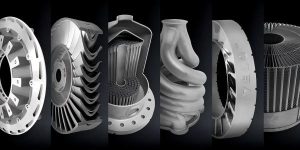
Conformal cooling mold inserts are specially designed metal inserts that contain internal fluid channels following the shape of the mold cavity.
Unlike traditional cooling systems, these channels maintain a more consistent distance from the molding surface.
This allows heat to leave the mold more evenly.
Traditional Cooling Channels vs Conformal Cooling Channels
Traditional tooling uses straight gun-drilled channels.
These channels have several limitations:
- Limited design freedom
- Poor cooling coverage in complex areas
- Hot spots around thick sections
- Longer cooling periods
Conformal cooling channels use three-dimensional paths.
They can:
- Follow curved surfaces
- Reach difficult areas
- Maintain more stable temperatures
- Improve overall thermal control
For aerospace manufacturers, the main advantage is not only faster cooling.
It is predictable cooling.
A stable thermal process helps manufacturers produce more consistent composite parts.
Why Does Thermal Management Matter in Aerospace Composite Manufacturing?
Temperature control directly affects composite part quality.
During Resin Transfer Molding, liquid resin enters a closed mold containing dry fiber reinforcement.
The mold temperature is controlled to:
- Reduce resin viscosity
- Improve fiber wetting
- Support polymer curing
- Control final part properties
During curing, resin releases heat through an exothermic reaction.
If that heat is not removed evenly, different areas of the part cure at different speeds.
How Does Uneven Cooling Create Composite Defects?
Uneven cooling creates a chain reaction:
Temperature differences → uneven curing → different shrink rates → internal stress → part distortion
This problem is common in:
- Thick sections
- Deep ribs
- Internal corners
- Complex aerospace structures
Polymer materials naturally transfer heat slower than metals.
Because of this, some areas can remain hotter for longer periods.
Traditional drilled cooling channels often cannot reach these areas effectively.
The result may include:
- Warping
- Twisting
- Sink marks
- Surface cracks
- Dimensional problems
How Does Conformal Cooling Improve Resin Cure Quality?
Conformal cooling creates a more balanced thermal environment.
Because the channels follow the mold surface, engineers can remove heat more evenly during the curing process.
Benefits include:
- Better resin cure consistency
- Lower thermal differences
- Reduced shrinkage variation
- Lower residual stress
In aerospace manufacturing, this matters because many composite components require strict dimensional accuracy.
A part that looks acceptable visually may still fail inspection if internal stresses cause movement later.
How Does Additive Manufacturing Create Better Cooling Channels?
Traditional machining removes material from a metal block.
This limits internal designs.
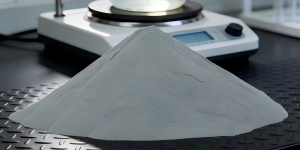
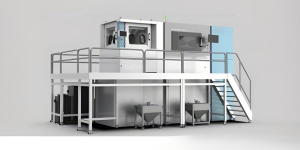
Metal additive manufacturing builds parts layer by layer, allowing engineers to create internal cooling structures that cannot be produced through normal machining.
The main technologies used for these inserts include:
- Laser Powder Bed Fusion (L-PBF)
- Direct Metal Laser Sintering (DMLS)
These processes allow cooling channels to follow complex mold geometry.
What Are the DfAM Rules for Conformal Cooling Channel Design?
Design for Additive Manufacturing (DfAM) is critical because internal channels create unique printing challenges.
A design that looks perfect in CAD may not print successfully.
Engineers must consider:
- Powder removal
- Support requirements
- Channel shape
- Structural strength
- Fluid flow
Why Are Teardrop Cooling Channels Used in Metal AM?
Circular channels are common in traditional machining.
However, large horizontal circular channels can create problems during metal additive manufacturing.
The upper section of the channel may become unsupported during printing.
Possible issues include:
- Metal sagging
- Poor surface quality
- Channel distortion
- Build failure
Because internal supports cannot easily be removed after printing, engineers often use self-supporting channel designs.
The teardrop channel is one common solution.
Its angled upper section supports each printed layer.
Advantages include:
- Better printing reliability
- Reduced overhang problems
- Easier powder removal
- Stable fluid performance
Many designs use support angles above approximately 45 degrees relative to the build direction.
How Do Engineers Optimize Cooling Channel Performance?
Creating a curved channel is only the first step.
Engineers also need to make sure coolant moves efficiently through the system.
This requires:
- Computational Fluid Dynamics (CFD)
- Thermal simulation
- Flow testing
CFD helps engineers study:
- Heat transfer
- Coolant velocity
- Pressure drop
- Flow distribution
How Does Pressure Drop Affect Cooling Performance?
Complex channel designs improve cooling coverage, but they can also increase resistance.
If pressure drop becomes too high:
- Coolant flow decreases
- Heat transfer becomes weaker
- Pumping requirements increase
Engineers optimize:
- Channel size
- Channel length
- Bend radius
- Flow paths
Smooth channel transitions reduce unnecessary losses.
A common design approach uses controlled bends with radius-to-diameter ratios around:
R/D > 1.5
This helps maintain stable coolant movement.
Why Is Reynolds Number Important in Cooling Design?
Engineers also study Reynolds number because it shows how coolant flows inside the channel.
For many conformal cooling systems, the target range is approximately:
Re = 4,000–10,000
This range helps balance:
- Heat transfer performance
- Flow stability
- Pumping requirements
The goal is not simply maximum flow.
The goal is efficient heat removal with reliable operation.
Which Materials Are Used for Aerospace Conformal Cooling Mold Inserts?
Material selection determines how well a conformal cooling insert performs during production.
Aerospace tooling must handle:
- High curing temperatures
- Repeated thermal cycles
- Mechanical loads
- Tight dimensional requirements
Engineers select materials based on the balance between:
- Thermal conductivity
- Coefficient of Thermal Expansion (CTE)
- Strength
- Additive manufacturing compatibility
Different applications require different solutions.
Why Is Invar 36 Used for Aerospace Composite Tooling?
Invar 36 (4J36) is widely used when dimensional accuracy is the highest priority.
Its main advantage is its extremely low thermal expansion.
Typical properties:
- Thermal conductivity: approximately 10–13 W/m·K
- CTE: approximately 1.2–2.0 ×10⁻⁶/K
Carbon fiber composites also have very low thermal expansion.
This makes Invar 36 a strong choice for high-temperature composite curing because it reduces expansion differences between the mold and the final part.
Without thermal matching, temperature changes can create:
- Tool-part movement
- Residual stress
- Dimensional variation
Invar 36 is commonly used for:
- Precision RTM tooling
- Aerospace composite structures
- High-accuracy curing applications
However, additive manufacturing with Invar requires strict process control because maintaining material quality during L-PBF production is more challenging than common steel alloys.
Why Is Maraging Steel MS1 Used for High-Pressure Tooling?
Maraging Steel MS1 (1.2709) is selected when strength and durability are critical.
Typical properties:
- Thermal conductivity: approximately 15–20 W/m·K
- CTE: approximately 10.3–11.0 ×10⁻⁶/K
Its advantages include:
- High tensile strength
- Excellent hardness after heat treatment
- Good polishing performance
- Strong resistance to repeated loading
MS1 is commonly used for:
- Compression molding tools
- High-pressure inserts
- Industrial production tooling
For manufacturers running thousands of cycles, mechanical reliability becomes just as important as cooling performance.
Why Is 17-4 PH Stainless Steel Used?
17-4 PH Stainless Steel provides a balance between strength and corrosion resistance.
Typical properties:
- Thermal conductivity: approximately 17–20 W/m·K
- CTE: approximately 10.8 ×10⁻⁶/K
It is useful for applications involving:
- Cooling fluids
- Repeated thermal changes
- Long production runs
Its corrosion resistance makes it suitable for industrial environments where tool life is important.
When Are Copper-Beryllium (CuBe) Inserts Used?
Some areas of a mold need much faster heat removal.
Copper-Beryllium provides very high thermal conductivity:
- Thermal conductivity: approximately 100–210 W/m·K
- CTE: approximately 17 ×10⁻⁶/K
It is commonly used in:
- Core pins
- Local hot spots
- Areas requiring rapid cooling
Because CuBe has different mechanical properties compared with steel alloys, it is often used as part of a hybrid tooling design.
What Is NVD Nickel Shell Hybrid Tooling?
Large aerospace structures often require a combination of materials.
A common approach uses:
- Nickel Vapor Deposition (NVD) shell
- Structural steel support frame
- Integrated heating and cooling channels
This design provides:
- Good surface quality
- Large tooling capability
- Controlled thermal performance
Hybrid tooling is useful for large composite aerospace parts where a single material cannot provide every required property.
What Engineering Problems Do Conformal Cooling Inserts Solve?
Industrial users often ask five practical questions before adopting this technology.
How Do Conformal Cooling Inserts Reduce Thermal Runaway and Warpage?
Deep ribs, thick sections, and complex structures often trap heat.
Traditional cooling channels cannot always reach these areas.
This creates:
- Local hot spots
- Uneven resin curing
- Different shrink rates
- Internal stress
Conformal cooling solves this by placing channels closer to difficult areas.
Engineers can design cooling paths around:
- Deep cavities
- Narrow cores
- Rib structures
With CFD optimization, cooling performance can be adjusted based on the actual thermal behavior of the mold.
The result can include:
- More consistent curing
- Lower distortion
- Reduced rejection rates
The report identifies applications where optimized conformal cooling reduced warpage by up to approximately 85%.
How Do Manufacturers Prevent Channel Blockage and Powder Problems?
One concern with metal additive manufacturing is internal channel cleanliness.
During printing, unused powder must be removed completely.
Potential problems include:
- Remaining metal powder
- Reduced coolant flow
- Scaling inside channels
- Lower heat transfer performance
Manufacturers use several verification steps:
Post-build cleaning:
- Ultrasonic cleaning
- Pressurized air flushing
- Internal channel evacuation
Inspection:
- X-ray Computed Tomography (X-ray CT)
X-ray CT allows engineers to inspect internal structures without cutting the insert open.
It can verify:
- Channel shape
- Blockage risks
- Wall integrity
During production, cooling systems often use:
- Closed-loop Temperature Control Units (TCUs)
- Demineralized water
- Inline filters below 50 μm
- Corrosion inhibitors
For difficult environments, surface treatments such as chemical nickel plating can reduce scaling inside channels.
Which Channel Designs Provide Better AM Performance?
The best channel design must balance:
- Printing reliability
- Coolant flow
- Tool strength
Common designs include:
- Teardrop channels
- Modified rhomboidal channels
Important design rules include:
- Self-supporting geometry
- Smooth transitions
- Controlled channel size
- Reduced sharp turns
For bends, engineers often maintain:
R/D > 1.5
This helps reduce unnecessary pressure losses and improves coolant movement.
How Does Conformal Cooling Compare With Traditional Steel Inserts?
A common business question is whether the higher cost of additive manufacturing is justified.
Traditional tooling usually has:
- Lower initial cost
- Simple manufacturing
- Limited cooling design
Conformal cooling inserts usually require:
- More engineering work
- Metal AM production
- Additional inspection
The upfront cost may be:
1.5×–3× higher than conventional inserts
However, the calculation changes when manufacturers consider production economics.
Benefits include:
- Shorter cooling cycles
- Lower scrap rates
- Higher equipment usage
- Better dimensional control
For medium and high-volume production, the return can happen from several days to less than eight months, depending on the application.
What Industry Examples Show the Value of Conformal Cooling?
Aerospace Composite Tooling Applications
Companies such as:
- Weber Manufacturing Technologies
- Composite Integration
- Safran Aerospace
have applied advanced thermal tooling methods in aerospace composite manufacturing.
Applications include:
- RTM tooling
- Aircraft structures
- Engine-related composite components
One example from Weber Manufacturing Technologies used:
- 10–15 mm Nickel Vapor Deposition (NVD) shells
- Steel support structures
- Integrated heating and cooling circuits
This type of tooling helped control resin behavior during composite processing and supported high-quality aerospace parts.
EVCO Plastics Case Study: Faster Cooling and Better Production Stability
EVCO Plastics used an additive manufactured conformal cooling insert made from MS1 Maraging Steel.
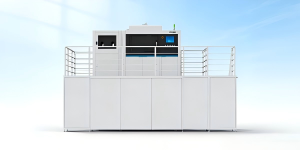
The insert was produced using an EOS additive manufacturing system.
The results:
| Performance Area | Result |
|---|---|
| Cooling time | Reduced from 20 seconds to 5 seconds |
| Total cycle time | Reduced from 40 seconds to 16 seconds |
| Cooling improvement | 75% reduction |
| Surface defects | Sink marks eliminated |
| Process capability | Cpk reached 16.43 |
| Investment recovery | About 8 months |
The important lesson is that cooling improvement created more stable production, not only faster production.
DME Tooling ROI Examples
DME production evaluations showed how conformal cooling can improve business results.
Example 1: Globoid Component Mold
Results:
- Cycle time reduced by 32%
- Production volume: 300,000 parts
- Tool investment: €4,200
- Total savings: €100,800
Payback was reached after:
- Approximately 12,422 parts
- About 3.62 production days
Example 2: Wire Coil Housing Application
The conformal insert allowed:
- Lower ejection temperature
- Less deformation
- More stable production
Results:
- 1,467 production hours saved
- €146,700 net savings per batch
How Should Companies Implement Conformal Cooling Technology?
A successful implementation requires careful planning.
Step 1: Run Thermal and CFD Simulation
Before manufacturing the insert, engineers should:
- Study heat distribution
- Identify hot areas
- Select channel locations
- Check coolant pressure requirements
Common simulation tools include:
- ANSYS Fluent
- Autodesk Moldflow
Step 2: Apply DfAM Design Rules
The design process should include:
- Self-supporting channels
- Teardrop geometry
- Correct channel spacing
- Balanced coolant flow
Step 3: Select the Right Material
Choose according to the application:
- Invar 36: high precision composite curing
- MS1 Maraging Steel: high-strength tooling
- 17-4 PH Stainless Steel: durable production environments
- CuBe: high heat transfer areas
Step 4: Verify Manufacturing Quality
Before production use:
- Confirm powder removal
- Perform internal inspection
- Complete X-ray CT checks
- Test coolant flow
Step 5: Maintain Cooling Performance
Production teams should use:
- Clean coolant systems
- Proper filtration
- Regular flushing
- Scale prevention procedures
Maintenance is important because even the best cooling design can lose performance if channels become blocked.
What Is the Future of Conformal Cooling Mold Inserts?
Conformal cooling is becoming an important option for advanced manufacturing because it solves a problem that traditional machining cannot easily fix.
The future direction includes:
- AI-assisted cooling design
- Digital twin simulation
- Smart temperature monitoring
- Hybrid material tooling
- Automated thermal optimization
For aerospace manufacturers, better heat control means better process stability, improved quality, and stronger production economics.
Frequently Asked Questions
What are conformal cooling mold inserts?
Short answer:
Conformal cooling mold inserts are metal tooling components with internal cooling channels that follow the shape of a mold cavity. They help manufacturers control heat more evenly, improve curing quality, reduce defects, and shorten production cycles.
Unlike traditional drilled channels, conformal channels can reach complex areas of the mold where heat usually builds up.
How do conformal cooling channels reduce cycle time?
Short answer:
They reduce cycle time by removing heat more efficiently from the mold. Better cooling control allows faster part release, shorter cooling stages, and more consistent production.
In applications such as injection molding and composite tooling, cooling improvements can create major productivity gains.
Why is Invar 36 used in aerospace composite tooling?
Short answer:
Invar 36 is used because its low thermal expansion closely matches carbon fiber composite materials. This reduces thermal movement during high-temperature curing and helps maintain part accuracy.
It is especially valuable for precision aerospace RTM tooling.
Are 3D printed conformal cooling inserts worth the higher cost?
Short answer:
They can be worth the investment when production volume, quality requirements, and cycle time savings justify the higher initial cost.
Manufacturers often recover the investment through lower scrap rates, faster cycles, and improved production stability.
How does CFD improve cooling channel design?
Short answer:
CFD helps engineers predict coolant behavior before manufacturing the insert. It evaluates flow speed, pressure loss, and heat transfer so the final design provides reliable cooling performance.
Author Information
Written by Felix Lee
CEO at Forgecise
Felix Lee works on advanced manufacturing solutions focused on additive manufacturing, industrial tooling, and production improvement strategies. His work focuses on helping manufacturers understand how engineering design choices affect real production results.
Technical Review: Forgecise Engineering Team
Last Updated: August 2026