








Quick Answer:
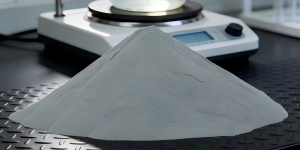
Metal powder engineering controls powder size, shape, chemistry, flowability, and handling processes to produce reliable additive manufacturing parts. In LPBF, DED, and Binder Jetting, powder quality directly affects layer consistency, part strength, surface finish, and production success.
Author: Felix Lee, CEO at Forgecise
Published: August 17, 2026
Last Updated: August 17, 2026
Table of Contents
Key Takeaways
- Metal powder is an engineered production material, not a simple raw commodity.
- Particle size distribution, powder shape, and flowability determine printing performance.
- Advanced sieving and classification systems help manufacturers improve quality and powder reuse.
- Metal powder safety requires strict control of dust, static electricity, and oxygen levels.
- Artificial intelligence and digital twins are helping manufacturers predict powder behavior before production.
Metal additive manufacturing has changed how manufacturers think about materials. Buying metal powder for technologies such as Laser Powder Bed Fusion (LPBF) or Directed Energy Deposition (DED) is no longer just a purchasing decision.
The powder itself becomes part of the manufacturing process.
A small difference in particle size, surface shape, oxygen content, or recycling history can create major problems during printing. These problems may appear as poor surface quality, internal pores, weak bonding between layers, or complete build failure.
For companies using metal 3D printing in aerospace, medical, automotive, and industrial applications, controlling powder quality is one of the most important steps toward stable production.
Why Does Metal Powder Quality Matter in Additive Manufacturing?
Metal powder quality affects how energy interacts with the material during printing. The laser or heat source melts thousands of particles layer by layer, so every particle contributes to the final part.
Common metal powders used in additive manufacturing include:
- 316L stainless steel
- 17-4PH stainless steel
- Ti-6Al-4V titanium alloy
- AlSi10Mg aluminum alloy
- Inconel nickel alloys
- CoCrMo medical alloys
The same alloy can produce different results depending on:
- atomization method
- particle shape
- oxygen and gas content
- thermal exposure during reuse
- powder handling conditions
A powder supplier that only provides an average particle size does not provide enough information. Engineers need a complete particle size distribution profile to understand how the powder will behave.
How Does Particle Size Distribution Affect Metal 3D Printing?
Particle size distribution (PSD) describes how particles are spread across different sizes in a powder batch.
The most common measurements are:
- D10: 10% of particles are smaller than this size
- D50: median particle size
- D90: 90% of particles are smaller than this size
These values help engineers predict:
- powder spreading behavior
- packing density
- layer quality
- melting stability
Typical Powder Sizes for Different AM Processes
| Additive Manufacturing Process | Typical Powder Size | Main Requirement |
|---|---|---|
| Laser Powder Bed Fusion (LPBF) | 15–45 μm | Thin layers and high accuracy |
| Directed Energy Deposition (DED) | 45–150 μm | Stable powder feeding through nozzles |
| Binder Jetting | 45–150 μm | Good packing and sintering behavior |
For LPBF systems, fine and consistent powder is required because machines often use very thin layers.
Too many fine particles may cause:
- overheating
- vapor formation
- spatter
- keyhole porosity
Too many large particles may cause:
- incomplete melting
- rough surfaces
- recoater problems
The best powder is not always the smallest powder. It is the powder designed for the specific printing process.
What Makes High-Quality Metal Powder?
High-quality additive manufacturing powder needs three important properties:
1. High Particle Sphericity
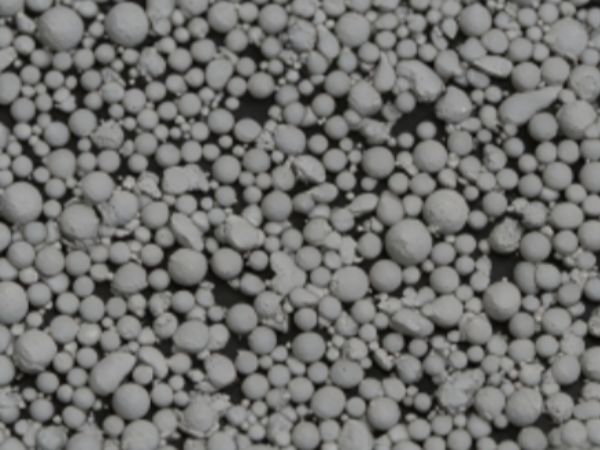
Spherical particles move more easily and create better powder layers.
Manufacturers usually produce high-quality powder through:
- Vacuum Induction Melting Gas Atomization
- Centrifugal Atomization
These methods create more uniform particles compared with mechanical grinding or milling.
Grinding metal into powder does not work for industrial AM because irregular particles create:
- poor flow
- unstable spreading
- inconsistent melting
2. Stable Chemical Properties
Metal powder changes over time.
Repeated printing cycles can affect:
- oxygen levels
- particle size
- surface chemistry
- flow behavior
This is especially important for reactive metals such as titanium.
3. Good Flowability
Flowability describes how easily powder moves through manufacturing equipment.
It affects:
- recoater movement
- powder feeding
- deposition accuracy
Common testing methods include:
- ASTM B213 Hall Flow testing
- Carney funnel testing for difficult powders
How Do Metal Powder Sieving and Classification Technologies Work?
Modern metal powders create challenges for traditional screening systems.
Common problems include:
- mesh blocking
- powder sticking
- reduced throughput
- contamination risk
Advanced classification technologies help manufacturers maintain consistent powder quality.
Ultrasonic Vibratory Sieving
Ultrasonic sieving uses high-frequency vibration directly on the screen surface.
This vibration helps prevent fine powder from blocking the mesh.
It is commonly used for:
- 100 mesh
- 200 mesh
- 325 mesh
fine metal powder applications.
Industrial ultrasonic systems can process hundreds of kilograms per hour while maintaining separation quality.
High-Energy Vertical Sieving
High-energy vertical motion systems use strong vertical movement to keep powder particles away from the screen surface.
A well-known example is the Elcan Hi-Sifter system.
Benefits include:
- reduced mesh blocking
- sharper particle separation
- separation down to around 10 μm
- faster screen changes
This approach is valuable when processing expensive materials such as:
- titanium alloys
- Inconel powders
Air Classification
When particle separation goes below about 10 μm, physical screens become less practical.
Air classification uses:
- airflow
- aerodynamic drag
- centrifugal force
Fine particles move through the classifier while larger particles are rejected.
Advantages include:
- no screen contamination
- continuous operation
- adjustable particle separation
Examples include:
- Hosokawa Alpine Turboplex ATP
- Elcan Elbow-Jet Air Classifier
These systems are widely considered for aerospace and medical powder applications where purity matters.
Cyclone and Electrostatic Classification
Newer classification methods use fluid dynamics and electrical forces to improve powder separation.
Cyclone systems can improve particle separation by controlling airflow and particle movement.
Electrostatic separation is also being studied for materials such as aluminum powder.
Because reactive powders can ignite under certain conditions, these systems require careful electrical and dust safety controls.
Can Metal Additive Manufacturing Powder Be Recycled?
Yes. Powder recycling is necessary because metal AM powders can be expensive.
Typical powder costs include:
- steel and aluminum powders: around $110–$200 per kilogram
- titanium powders: often above $600 per kilogram
With proper systems, manufacturers can recover approximately:
95–98% of unused powder.
However, recycled powder is not exactly the same as new powder.
Repeated thermal cycles may change:
- particle size distribution
- oxygen content
- flowability
- chemistry
For aerospace and medical applications, recycled powder must go through qualification testing before reuse.
Closed-Loop vs Bottle-to-Bottle Powder Handling
Powder handling systems should match the factory’s production model.
Closed-Loop Systems
Best for:
- single alloy production
- high-volume manufacturing
Advantages:
- less manual handling
- lower operator exposure
- improved automation
Limitations:
- difficult cleaning
- higher cross-contamination risk when changing materials
Bottle-to-Bottle Systems
Best for:
- research facilities
- multi-material manufacturers
Advantages:
- easier batch tracking
- better contamination control
- more flexible material changes
For sensitive materials such as titanium, many manufacturers still prefer controlled batch management.
What Are the Safety Requirements for Metal Powder Handling?
Metal powder safety is a major concern in additive manufacturing.
Fine powders can create:
- respiratory hazards
- combustible dust explosions
- static electricity risks
Particles below approximately 50 μm can become airborne easily.
Reactive powders such as:
- titanium
- aluminum
- magnesium
require additional protection.
Facilities should use:
- explosion-rated vacuum systems
- grounded equipment
- anti-static flooring
- ESD footwear
- controlled powder transfer systems
Compressed air should not be used for cleaning because it can spread combustible dust into the air.
Why Are Inert Gases Important for Metal Powder Processing?
Different metals require different protection gases.
Nitrogen
Commonly used for:
- stainless steel
- aluminum
Argon
Required for:
- titanium alloys
Titanium reacts with nitrogen at high temperatures and forms titanium nitrides. These brittle compounds reduce the mechanical performance of the final part.
Which Standards Control Metal Powder Quality?
Professional additive manufacturing companies follow strict quality systems.
Important standards include:
Quality Management
- ISO 9001
- AS9100 for aerospace manufacturing
- ISO 13485 for medical devices
Additive Manufacturing Standards
- ISO/ASTM 52900 series
- ISO/ASTM 52907 for powder characterization and reuse
Safety Requirements
In the United States, OSHA combustible dust guidance requires companies to manage powder risks through proper engineering controls.
How Are AI and Digital Twins Changing Powder Engineering?
The next stage of metal additive manufacturing is moving toward prediction instead of trial and error.
Machine learning models can analyze:
- particle geometry
- powder shape
- flowability data
to predict powder performance.
Researchers have developed models that classify powder flow behavior using particle measurements.
Digital twins are also becoming more common.
They combine:
- computational fluid dynamics
- melt pool simulation
- thermal analysis
- grain structure prediction
to estimate possible defects before a production build starts.
Research groups such as DTU Construct are developing digital manufacturing systems that connect powder properties with printing results.
What Should Companies Check Before Buying Metal Powder?
Companies should evaluate more than price.
Before selecting a supplier, manufacturers should ask:
- Does the powder size match the printing process?
- Is particle distribution data available?
- Can recycled powder be tracked and tested?
- Does the supplier provide quality certificates?
- Are safety requirements supported?
A reliable powder supply chain reduces failed builds, lowers waste, and improves production confidence.
Frequently Asked Questions
What is metal powder engineering in additive manufacturing?
Short answer:
Metal powder engineering controls powder size, shape, chemistry, and handling to make additive manufacturing more stable and predictable.
It includes powder production, testing, classification, recycling, and safety management. Good powder engineering helps manufacturers produce stronger parts with fewer defects.
What particle size is used for LPBF metal powder?
Short answer:
LPBF metal powder usually uses particles between 15 and 45 microns.
This size range supports thin printing layers and high-resolution components. The exact requirement depends on the machine, material, and application.
Can metal additive manufacturing powder be reused?
Short answer:
Yes, but recycled powder must be tested before reuse.
Manufacturers monitor particle size, chemistry, oxygen content, and flowability because repeated heating cycles can change powder performance.
Why is metal powder classification important?
Short answer:
Powder classification removes unwanted particles and improves consistency.
Better classification helps reduce printing defects, improves powder recycling, and creates more stable production results.
Why does titanium powder require argon protection?
Short answer:
Titanium reacts with nitrogen at high temperatures and can form brittle titanium nitrides.
Argon provides a safer inert environment and helps protect the final mechanical properties of titanium components.
About Forgecise
Forgecise helps manufacturers improve advanced production processes through engineering solutions, manufacturing knowledge, and industrial optimization.
For companies scaling metal additive manufacturing, powder control is not a secondary task. It is a core part of production quality.
References:
- ISO/ASTM 52900 Additive Manufacturing Standards
- ISO/ASTM 52907 Feedstock Characterization
- ASTM B213 Flow Rate Testing
- ASTM B822 Particle Size Analysis
- AS9100 Aerospace Quality Management
- ISO 13485 Medical Device Quality Management
Accessed: August 17, 2026