






Release Date: 2026-04-19
Paul Li
CTO | Author18 years experience in the Research and Development of 3D printing equipment and additive manufacturing processes, empowering the efficient intelligent manufacturing of complex parts.
Industry Background and Technical Requirements
Smart speakers, as core devices in smart home ecosystems, have audio quality and appearance design that directly impact user experience. Traditional manufacturing processes face numerous challenges in the production of acoustic components, including difficulties in forming complex internal cavities, insufficient acoustic tuning precision, and limitations in appearance design. Particularly in the high-end smart speaker segment, where requirements for acoustic performance and product aesthetics continue to rise, traditional injection molding and metal processing techniques struggle to meet growing design demands. In this context, 3D printing technology, with its unique manufacturing advantages, provides an innovative solution for the design and efficient production of smart speaker acoustic components.
Core Technological Breakthrough
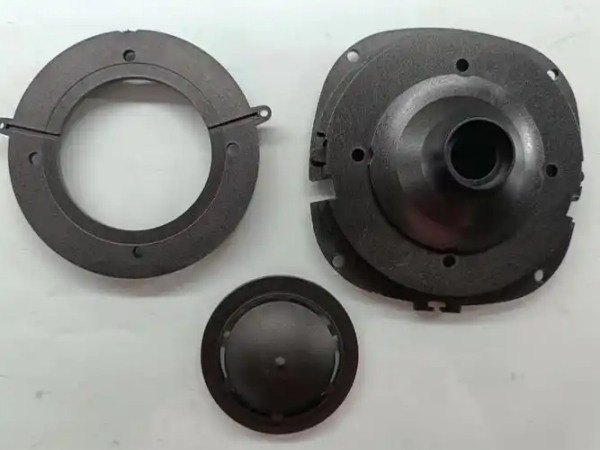
In early 2025, an audio equipment manufacturer specializing in research and development implemented 3D printing technology on a large scale for manufacturing core acoustic components in its new generation of smart speaker products. This innovation employs multi-material printing processes, successfully achieving integrated manufacturing of acoustic chambers, sound guide tubes, and heat dissipation structures, fundamentally transforming traditional smart speaker acoustic component production methods. By directly converting complex acoustic designs into 3D printing files and combining them with advanced acoustic simulation software, seamless integration from design to finished product was achieved, marking a significant breakthrough for 3D printing technology in the consumer electronics acoustic field.
Material and Process Innovation
In terms of material selection, this technology utilizes high-performance engineering plastic composites, including polycarbonate, nylon, and specially optimized acoustic materials. These materials possess excellent acoustic characteristics, heat resistance, and mechanical strength, meeting performance requirements for smart speakers in various usage environments. Through precise control of material ratios, optimal balance was achieved in acoustic damping, resonance frequency, and sound transmission.
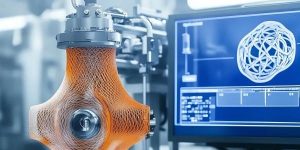
The manufacturing process employs multi-nozzle fused deposition modeling technology, combined with real-time temperature control and interlayer bonding optimization algorithms, ensuring printed components have uniform density and stable acoustic performance. Each acoustic component’s printing time is controlled within 8-12 hours and can be flexibly adjusted according to different product models and acoustic requirements.
Technical Parameters and Performance Metrics
This 3D printing process achieved multiple technical breakthroughs: internal surface roughness of acoustic chambers is controlled within 0.02-0.05 millimeters, significantly superior to traditional injection molding’s 0.1-0.2 millimeters; resonance frequency precision reaches ±2 hertz, representing a 50% improvement over traditional processes; acoustic transmission efficiency increased by 15-20%; product weight reduced by 30-40% compared to traditional metal structural components; structural strength reaches 150% of industry standards, fully meeting stringent reliability requirements for consumer electronics products.
Product Advantages and User Experience
3D printed acoustic components achieve significant audio quality improvements while maintaining product performance. Users experience purer, clearer audio, with particularly outstanding performance in low-frequency response and high-frequency extension. Complex internal acoustic chamber designs enable more uniform sound diffusion, reducing common acoustic distortion and resonance issues found in traditional designs.
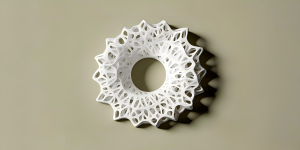
Additionally, 3D printing technology enables smart speakers to achieve complex external designs impossible with traditional processes, such as streamlined shapes, lattice patterns, and personalized textures, significantly enhancing product aesthetics and artistic value. Lightweight structural design also makes products more portable and easier to position, improving user convenience.
Design Freedom and Customization Capabilities
3D printing technology provides unprecedented freedom for smart speaker acoustic design. Designers can break through limitations of traditional manufacturing processes, creating more complex and precise internal acoustic structures. Through parametric design tools, acoustic chamber shapes, volumes, and internal sound guide channel orientations can be precisely controlled to achieve optimal acoustic performance tuning.
Multi-material printing technology enables different acoustic characteristic zones within the same structural component, such as high-damping areas for resonance suppression and high-conductivity areas for sound transmission optimization. This refined acoustic design, nearly impossible with traditional manufacturing processes, opens new technical pathways for smart speaker audio quality enhancement.
Simultaneously, 3D printing technology enables customized acoustic tuning for smart speakers. Based on different users’ listening preferences and usage environments, acoustic component design parameters can be quickly adjusted to achieve personalized audio performance. For example, for users preferring bass effects, low-frequency chamber designs can be optimized; for users requiring clear vocal reproduction, mid-to-high frequency sound guide channels can be adjusted.
Conclusion and Outlook
The 3D printed smart speaker acoustic component manufacturing case fully demonstrates this technology’s immense potential in the consumer electronics field. Through multi-material printing processes and precision acoustic design applications, significant improvements in acoustic performance and innovative product design breakthroughs were achieved, providing efficient and flexible production solutions for consumer electronics manufacturing. The success of this case indicates that 3D printing will play an increasingly important role in consumer electronics, driving the entire industry toward higher performance, greater precision, and more innovation, delivering superior audio experiences to users.
About Forgecise
Forgecise is an innovator in additive manufacturing technology, dedicated to providing high-performance metal 3D printing materials, equipment, and process solutions for the mold manufacturing, energy power, and other industrial sectors.