








- Author: Felix Lee (CEO, Forgecise)
- Published: June 9, 2026
- Read Time: 15 mins
Table of Contents
I. Introduction: The Industrial Shift in Additive Manufacturing
For decades, the question of how to use a 3D printer was answered in the context of rapid prototyping—building cheap plastic mockups to sit on designers’ desks. Today, as CEO of Forgecise, I am witnessing a monumental, permanent shift. B2B organizations have moved past experimentation, entering a key phase of deep industrial adoption where additive manufacturing (AM) is used to produce certified, end-use, mission-critical components.
According to recent industrial market analyses, the global 3D printing market is on track to reach approximately $44.5 billion, with the combined metal and polymer segments representing a value of €20 billion. Looking further ahead, long-term forecasts indicate that the global market is poised for massive expansion, starting at USD 67.68 billion and projected to reach USD 441.25 billion by 2035, representing a phenomenal compound annual growth rate (CAGR) of 23.16%. This growth is heavily concentrated in high-performance sectors: aerospace alone accounts for over 18% of the global market, closely followed by the automotive industry at 14%.
[ Traditional Tooling & Warehouse Model ] –> (Geopolitical/Logistics Vulnerability)
vs.
[ Secure Cloud CAD Library ] –> [ Localized 3D Printing Node ] –> (On-Demand Supply Chain)
Historically, 3D printing was marketed as a direct replacement for conventional manufacturing. Today’s sophisticated B2B strategies, however, focus on hybrid workflows that blend additive, subtractive (CNC machining), and formative technologies into unified, complementary production chains. The primary value proposition has shifted to solving complex engineering challenges, shortening lead times, and establishing bulletproof supply chain resilience.
By substituting physical, capital-intensive inventory with qualified digital part files, manufacturers can transition to localized, distributed manufacturing models. This approach insulates enterprises against geopolitical instability, tariff exposure, and shipping delays by producing components closer to the point of use. In 2026, success is no longer measured by mere machine installations, but by utilization rates, process repeatability, and real-world application performance in highly regulated environments.
II. Case Studies: How Enterprises Are Leveraging Additive Manufacturing
B2B organizations are actively utilizing professional networks, collaborative ecosystems, and strategic alliances to share validation successes, process integrations, and technological milestones.
A. Aerospace and Defense Production Integration
Operational verification shared across professional channels indicates a rapid acceleration of metal powder bed fusion systems within aerospace and defense.
- Nikon SLM Solutions has highlighted how laser powder bed fusion (LPBF) supports operational readiness, showcasing successful collaborations with the U.S. Army, German Air Force, SAAB Dynamics, Lockheed Martin, and Bosch.
- A primary example of sovereign capability reinforcement is the unveiling of the Additive Manufacturing Development Cell in Bristol by Rolls-Royce, funded directly by the UK Ministry of Defence. Centered around advanced NXG multi-laser technology, this facility supports the production of critical, next-generation aircraft engine components.
- In tandem, companies like Rocket Lab have demonstrated the incredible scalability of AM by successfully rolling their 1,000th 3D-printed Rutherford engine off the production line, transforming additive technology into a core competitive advantage.
B. Semiconductor Supply Chains and Precision Quality Control
In highly demanding manufacturing environments like the semiconductor sector, process consistency, strict documentation, and absolute traceability are non-negotiable. To address these requirements:
- German precision manufacturer toolcraft collaborated with quality software specialist amsight to implement an automated and scalable quality management system.
- Toolcraft deployed a digital quality backbone platform to connect and analyze production data across its active metal additive manufacturing workflows.
- By consolidating machine telemetry, process parameters, raw material batch logs, and post-build inspection results within a single traceable database, the partnership successfully eliminated fragmented spreadsheet-based reporting. This integrated quality infrastructure allows production teams to perform statistical process control (SPC) analysis, identify mechanical process drifts early, and accelerate decision-making from build completion to component deployment.
C. B2B E-Commerce and Spatial Artificial Intelligence
The integration of artificial intelligence (AI) with 3D scanning and printing has disrupted traditional manufacturing cycles.
- AI-driven generative design software and text-to-3D tools, such as Tripo, Meshy, and MidJourney, allow users to generate complex, functional 3D models from simple descriptive text prompts.
- This supports a highly efficient, one-hour closed-loop process where custom models are generated, confirmed by the client, printed, and shipped without requiring manual CAD modeling.
- Medical and consumer brands are deploying spatial AI to commercialize personalized products. For example, Fitasy has made customized single-shoe purchasing commercially viable through the combination of spatial scanning AI and localized 3D printing.
- In the B2B sector, service providers are proactively structuring their case libraries with standardized service scenarios and process timelines to ensure that automated AI agents can match and recommend their manufacturing capabilities to corporate buyers instantly.
D. Digital Inventory Partnerships
To combat global logistics volatility, manufacturers are increasingly moving away from centralized, offshore production models.
- Under digital inventory strategies, physical components are replaced by qualified digital part files stored in secure cloud libraries.
- When a replacement component or low-volume tool is required, the digital file is sent securely to a localized printing node near the point of use.
- This localized approach is supported by strategic alliances, such as the integration of HP’s Additive Manufacturing Network (AMN) program with the Würth Additive Group. By connecting localized print service bureaus and distributors, this partnership allows industrial customers to print replacement parts on demand. This digital workflow significantly shortens lead times, reduces physical warehouse storage costs, and insulates B2B supply chains from maritime shipping delays and geopolitical disruptions.
III. Step-by-Step Guide: How to Use a 3D Printer in an Enterprise Pipeline
Transitioning an additive manufacturing setup from an experimental prototyping lab into a profitable B2B production line requires strict adherence to standardized workflows and rigorous QA. Every printed component must progress through a series of structured stages to ensure mechanical properties, geometric tolerances, and material traceability conform to regulatory requirements.
+—————————————+
| 1. CAD Design & Topology Optimization | -> Apply DfAM (fillets, self-supporting angles)
+—————————————+
|
v
+—————————————+
| 2. Slicing & Toolpath Generation | -> STL/3MF to G-code via Bambu Studio/OrcaSlicer
+—————————————+
|
v
+—————————————+
| 3. Material & Machine Preparation | -> Pre-dry filaments; verify metal powder PSD
+—————————————+
|
v
+—————————————+
| 4. Active Printing & In-Situ QA | -> Real-time tracking via OCT and sensors
+—————————————+
|
v
+—————————————+
| 5. Post-Processing & Metrology | -> Stress relief, support removal, CT scanning
+—————————————+
Step 1: Digital Design and Topology Optimization
The process begins with computer-aided design (CAD) and topology optimization. Designers must apply strict Design for Additive Manufacturing (DfAM) principles. This includes implementing fillets on sharp internal corners to distribute mechanical stress and incorporating self-supporting angles (generally above 45 degrees) to minimize unnecessary support material waste.
Step 2: Slicing and Toolpath Generation (G-code)
The optimized design is converted to an STL or 3MF file format and imported into an enterprise slicing engine, such as Bambu Studio or OrcaSlicer. The slicer translates the 3D geometry into layered toolpath instructions known as G-code. Slicing parameters—including layer height, orientation, and infill density—must be strictly controlled and locked using standardized, certified profiles.
Step 3: Material and Machine Preparation
Prior to initiating any print, the feedstock must be validated:
- Polymers are pre-dried in dedicated dehumidifying chambers to prevent moisture-induced surface defects or under-extrusion.
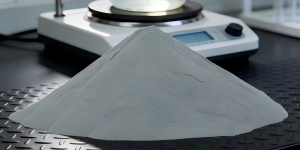
- Metal powders undergo rigorous particle size distribution (PSD) and contamination testing.
- The machine environment is prepared by leveling the build plate, calibrating nozzle or laser offsets, and establishing appropriate chamber temperatures.
Step 4: Active Printing & In-Situ Monitoring
During the active print phase, in-situ sensors and optical coherence tomography (OCT) track layering quality in real time to detect structural defects, void formations, or thermal anomalies immediately.
Step 5: Post-Processing and Quality Assurance
Upon print completion, the parts undergo post-processing:
- Thermal post-processing, such as controlled annealing or Hot Isostatic Pressing (HIP), is conducted to relieve residual stresses and improve density.
- Support removal and surface finishing are performed to achieve technical tolerances.
- Final non-destructive inspection is conducted using metrology scanners or industrial CT imaging to guarantee internal and external structural integrity.
IV. Choosing the Right Materials: Industrial Material Matrix
The structural and environmental demands of B2B applications require highly precise material selection. The table below outlines the core properties, limitations, and operational profiles of dominant industrial materials.
| Material | Key Mechanical & Thermal Properties | Primary B2B Applications | Processing Limitations | Certification Standards |
| Polylactic Acid (PLA) | High tensile strength, low thermal shrinkage, and excellent surface finish; minimal printing odor. | Visual prototypes, architectural scale models, and low-load brackets. | Low heat deflection temperature (approx. 55°C); highly prone to brittle failure. | General dimensional standards (ISO 2768). |
| Polyethylene Terephthalate Glycol (PETG) | Excellent chemical resistance, impact toughness, and environmental weatherability. | Functional mechanical brackets, protective housings, and chemical containers. | Prone to stringing and moisture absorption; requires strict pre-drying. | FDA-compliant grades available for food-contact applications. |
| Acrylonitrile Butadiene Styrene / Acrylonitrile Styrene Acrylate (ABS/ASA) | High heat resistance, excellent impact resistance, and high UV stability (specifically ASA). | Outdoor enclosures, automotive exterior parts, and structural industrial tooling. | High thermal contraction; requires heated enclosures to prevent warping. | UL 94 flame retardancy standards. |
| Titanium Alloys (e.g., Ti-6Al-4V) | Extreme strength-to-weight ratio, biocompatibility, and superior corrosion resistance. | Aerospace structural components, customized orthopedic implants, and defense components. | High material cost; extreme post-processing and support removal complexity. | ASTM F2924 for LPBF Titanium, AS9100 for aerospace supply chains. |
| Thermoplastic Composites (e.g., Basalt-PETG, Carbon-Nylon) | Ultra-high rigidity, high dimensional stability, and reduced thermal expansion. | Aerospace layup tooling, structural brackets, and maritime repair components. | High nozzle wear; requires hardened steel or ruby nozzles. | ISO/ASTM 52900 terminology standards. |
V. Financial Modeling: How to Run a Commercial 3D Print Farm
For operators looking to scale up production, precise financial forecasting is the primary mechanism used to evaluate feasibility. The table below projects the capital expenditure (CapEx), operational expenditure (OpEx), and return on investment (ROI) metrics for a modest print farm consisting of four automated, mid-range Fused Filament Fabrication (FFF) / FDM printers operating in a commercial B2B contract environment.
| Financial Category | Example Items and Infrastructure Requirements | Estimated Cost Range (USD) | Operational Notes and Return on Investment (ROI) Metrics |
| Primary Hardware Capital Expenditure | 4x Mid-Range FDM Printers (e.g., Bambu Lab A1 or similar CoreXY systems). | $2,000 – $6,000 | Selected for build speed, active calibration, and reliability. |
| Ancillary Hardware & Automation | 4x SwapMod Automatic Bed Changers, custom filament dryers, and basic hand tools. | $1,500 – $3,500 | SwapMod kits enable continuous 24/7 printing without manual labor. |
| Facility Infrastructure Setup | Heavy-duty racking, dedicated electrical circuit installation, and ventilation exhaust hoods. | $500 – $3,000 | Crucial for maintaining stable ambient temperatures and ensuring operator safety. |
| Software and Licensing | Centralized Farm Management Software and CAD/Slicing enterprise subscriptions. | $300 – $1,500 | Enables unified queue management, print telemetry tracking, and API integration. |
| Initial Feedstock Inventory | 20kg PLA filament, 10kg PETG filament, and 5kg specialty engineering filaments. | $600 – $1,200 | Stocking multiple colors and material classes to satisfy initial B2B job quotes. |
| Business Formation & Compliance | LLC registration, local business licensing, and product liability insurance. | $200 – $1,000 | Protects company assets and ensures compliance with light manufacturing zones. |
| Total Startup Investment | Consolidated capital and operational setup expenses. | $5,100 – $16,200 | Dependent on localized electrical rates and the scale of structural upgrades. |
Projected Monthly Performance
- Estimated Gross Revenue: $3,500/month (based on a conservative billing rate of $25/hour print time across a 65% farm utilization rate).
- Estimated Operating Expenses (OpEx): $1,500/month (power, filament, maintenance, licensing).
- Net Monthly Profit: $2,000/month.
- Projected Payback Period: 5 Months (highly attractive ROI for light manufacturing).
VI. Workforce Development & Smart Lamination
As additive technology shifts from raw hardware installation to high-yield utilization, B2B employers are facing a pronounced shortage of qualified personnel.
A. The Evolution of Hiring Priorities
Hiring priorities have shifted away from simple, hands-on machine operation toward deep digital manufacturing fluency. Modern enterprise engineering teams require specialists who understand data analytics, machine learning, in-process quality validation, and digital cybersecurity protocols to safeguard intellectual property across distributed print networks.
B. Standardization and Professional Certification Pathways
To bridge this skills gap, organizations are deploying professional education and standardization pathways. The ASTM Professional Certificate Course in Additive Manufacturing (PCCAM) is widely recognized as the gold standard foundational benchmark. Instructed by subject matter experts from NASA, Pratt & Whitney, and the University of Texas at Austin, this eight-module course covers the entire AM process chain, giving engineers and managers a standards-aligned understanding of material certification, build preparation, and post-processing quality control.
C. Smart Lamination in Aerospace Composites
Simultaneously, composite manufacturing in aerospace is moving toward highly automated systems like Automated Fiber Placement (AFP) and Automated Tape Laying (ATL). As presented by Fives Composite, these systems are evolving from operator-dependent, manual workflows into data-driven production systems.
By integrating real-time laser-based surface inspection and 3D digital representations, these “smart lamination” platforms can detect gaps, tow defects, and foreign object debris (FOD) during the active layup process. This integration ensures that quality is built in during production rather than inspected after the fact, highlighting the demand for engineering talent capable of managing complex, software-driven manufacturing environments.
VII. FAQ: Solving Modern Industrial & Technical Controversies
Q1: Traditional Forging vs. Metal Additive Manufacturing (AM)—Which is better?
For B2B buyers, choosing between traditional forging and cutting-edge metal additive manufacturing (AM) is a critical decision that influences component weight, fatigue limits, and overall lead times.
| Parameter | Traditional Die Forging | Metal Additive Manufacturing (LPBF/DED) |
| Primary Industrial Applications | High-volume structural parts, landing gears, and heavy automotive chassis. | Low-volume custom designs, heat exchangers, and complex internal manifolds. |
| Mechanical Isotropy & Grain | Superior uniaxial grain flow; high isotropy ensuring exceptional fatigue cycle resistance. | Anisotropic grain structures; exhibits weaker mechanical properties along the Z-build axis. |
| Defect Rate & Quality Check | < 0.1% defect rates; verified via standard ultrasonic and magnetic particle testing. | 0.2% – 0.5% defect rates; requires advanced industrial CT scanning and layer-by-layer validation. |
| Lead Times and Tooling Costs | 8 to 16 weeks lead time; exceptionally high initial tooling and die fabrication costs. | 1 to 4 weeks lead time; zero tooling costs, with pricing linear on a per-part basis. |
| Design Geometry Limits | Simple shapes; draft angles restricted to 3 degrees due to physical die extraction constraints. | Extreme geometric freedom; handles overhang angles of 45+ degrees and internal lattice structures. |
| Post-Processing Needs | Minimal post-processing beyond basic cleaning and direct machining of interface points. | Intensive post-processing; requires automated depowdering, support removal, and thermal HIP treatment. |
The Forum Consensus & Hybrid Solution: For critical, zero-defect applications like structural aerospace brackets, traditional forging remains the gold standard due to its isotropic mechanical safety profile. However, for performance-optimized or low-volume custom parts under 100 units, metal AM is highly competitive, allowing weight reductions of up to 55%.
To bridge this divide, forward-thinking manufacturers are deploying hybrid manufacturing models. In these workflows, dense, standardized cores are forged, and complex, customized design features are subsequently printed directly onto the forged substrate. This cutting-edge process cuts failure probabilities by 25% while maintaining rapid development cycles.
Q2: Slicing Ecosystems and Vendor Lock-in—How do we ensure B2B compliance?
A prominent debate on professional forums centers on slicing software restrictions, printhead safety, and compliance with organizational purchasing standards. B2B users often look to transition away from proprietary print ecosystems due to high cost and restrictive software licenses.
[ B2B Procurement Office ]
|
+——————-+——————-+
| (Rejected) | (Approved)
v v
[ Non-UL Certified Multi-Toolhead ] [ Standardized CoreXY System ]
* Incompatible with Cura * Open-source firmware options
* Requires proprietary slicer * Broad slicing compatibility
* Fails municipal safety audits * UL / CE safety certifications
When evaluating multi-material setups, professionals frequently critique systems like certain multi-toolhead extruders. Forum contributors note that these toolheads are often incompatible with open-source slicers like Cura, forcing companies to adopt specialized or proprietary software licenses.
Crucially, many of these custom or highly modified setups lack Underwriters Laboratories (UL) or CE safety certifications. This omission is a major barrier for B2B buyers, as school districts, government agencies, and municipal corporations are legally barred from purchasing or operating non-certified equipment.
The Solution: To bypass these limitations, professional buyers are moving toward standardized CoreXY platforms like the Prusa Core One, Qidi Max, or customized Voron Trident kits, which support open-source firmware modifications, operate with standard slicers, and comply with institutional safety codes.
Q3: How do we set up unattended 24/7 printing, and how do we bypass the SwapMod mechanical bug?
The optimization of desktop print farms for B2B contract manufacturing has spurred extensive discussion regarding unattended continuous production and mechanical bed-clearing modifications. Automated mechanical bed changers, such as the SwapMod kit designed for the Bambu Lab A1, allow continuous 24/7 printing by physically ejecting completed plates once the bed cools below a safe threshold.
[ Print Completes ] —> [ Bed Cools to Safe Temp ] —> [ Printer Executes G-code Move ]
|
v
[ Next Print Starts ] <— [ SwapMod Magazine Loads Fresh Plate ] <— [ Linkage Ejects Cold Plate ]
The Bug: Despite the efficiency gains, forum discussions highlight a critical hardware-software bug with the Bambu Lab A1. When the printer’s built-in “nozzle clumping detection” routine is active, the printer automatically commands the build plate to travel fully forward during the detection process. This movement engages the passive mechanical linkage of the SwapMod system, prematurely ejecting the active build plate and the unfinished print mid-job.
The Fix: To prevent this catastrophic print failure, operators must modify their print start scripts to explicitly disable nozzle clumping detection before initiating multi-plate queues. Additionally, users are sharing open-source CAD files, such as the InfinityFlow3D or 3D-Printomat setups, to create highly reliable, custom bed-clearing scripts that avoid mechanical interference.
Q4: FDM vs. Resin (SLA/DLP) Systems—How do they compare on safety and accuracy?
Professional boards frequently address the division between FDM and Resin (SLA/DLP) systems.
[ Workshop Selection Criteria ]
|
+——————–+——————–+
| |
v v
[ FDM System ] [ Photoresin System ]
* Structural mechanical parts * Orthodontics & detailed molds
* Low toxicological risk * Strict chemical handling rules
* Standard particulate ventilation * Isopropyl washing & UV curing
* Layer Z-axis anisotropy * Fully isotropic mechanical parts
While high-speed FDM platforms have improved dramatically in resolution and speed, SLA and DLP photoresin systems remain the absolute standard for high-tolerance, fully isotropic medical and orthodontic parts.
The Safety Overhead: The toxicological and safety overhead of photoresin is a primary concern for small-scale B2B workspaces. Liquid resin requires intensive personal protective equipment (PPE), dedicated exhaust hoods to manage volatile organic compound (VOC) off-gassing, and separate chemical washing and curing stations.
Operational Best Practices: Forum contributors emphasize the need for exposure calibration tests, such as Ameralabs Town, Cones of Calibration, or Boxes of Calibration, to precisely dial in exposure times. Additionally, B2B designers are warned against sourcing design assets from consumer-facing sites like Etsy, where intellectual property theft is common. Instead, B2B designers are encouraged to establish secure contracts with professional designers on platforms like MyMiniFactory or directly build clean CAD databases using tools like Fusion 360.
Q5: How do we design and execute powder removal for Powder Bed Fusion (PBF)?
The transition of metal additive manufacturing into serial production has brought post-processing challenges to the forefront of industry discourse. Among these, removing raw, unfused metal powder from complex internal channels, conformal cooling loops, and fine lattice structures is highly critical. Trapped powder can contaminate fluid systems, reduce thermal efficiency, and cause catastrophic part failure under cyclical mechanical loads.
The DfAM and Software Fix: To resolve this issue, forum experts emphasize incorporating depowdering guidelines into the initial DfAM phase. Designers are instructed to avoid long, narrow channels with rectangular profiles, which encourage powder compaction, and instead utilize self-draining geometries and integrated powder removal canals.
At the digital preparation stage, simulation software such as Solukon’s SPR-Pathfinder is utilized to predict powder flow behavior. This software analyzes the part’s CAD file and generates automated, multi-axis rotational movement sequences for automated depowdering machines, ensuring that gravity, vibration, and inert gas streams thoroughly evacuate all loose powder from intricate internal cavities.
VIII. Strategic Recommendations for B2B Adoption
For B2B organizations looking to integrate or scale additive manufacturing within their production lines, we recommend the following four strategic steps:
- Conduct an Asset and Lead-Time Audit: Identify high-value, low-volume, or out-of-production components within your supply chain that suffer from high tooling costs or extensive lead times. Focus initial additive efforts on custom tooling, manufacturing fixtures, and replacement parts to minimize financial risk and demonstrate immediate operational value.
- Establish a Digital Inventory and Localized Nodes: Transition from physical component warehousing to a digital model. Store certified CAD files in a secure cloud-based digital thread and establish partnerships with localized additive service providers near the point of use to print parts on demand, reducing transport times and inventory overhead.
- Invest in Quality Assurance Software Infrastructure: Rather than focusing solely on hardware procurement, allocate capital to digital quality frameworks. Partner with AM-specific intelligence software providers to implement statistical process control, integrate in-situ monitoring, and secure Digital Product Passports to guarantee part compliance and shorten regulatory certification times.
- Implement Standards-Aligned Professional Training: Upskill current engineering and design teams using recognized programs like the ASTM Professional Certificate Course in Additive Manufacturing. Ensure that designers are trained in advanced DfAM principles, automated depowdering design, and multi-material workflows to prepare your workforce for digital manufacturing fluency.
IX. Conclusion
Unlocking the full potential of a 3D printer in an industrial environment requires shifting our mindset from “using a tool” to “managing a highly standardized digital ecosystem.” By implementing the standardized steps of our B2B additive pipeline, choosing materials strategically, and understanding the financial models of production, enterprises can build resilient, distributed supply chains capable of outperforming traditional models.
Are you ready to audit your current manufacturing pipeline for additive opportunities? Ensure your team is armed with the digital tools and standards-based training required to compete in the smart manufacturing era of 2026.