




Author: Felix Lee (CEO at Forgecise)
Published: June 25, 2026
Table of Contents
TL;DR
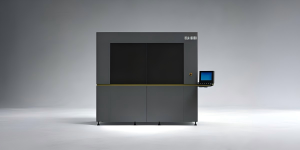
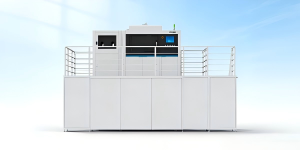
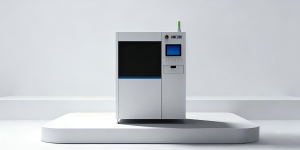
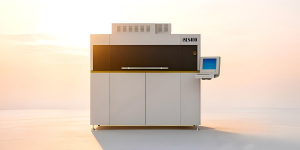
- What is a castable resin 3D printer? A castable resin 3D printer is a specialized vat photopolymerization system (using SLA, DLP, or MSLA technologies) that cures high-purity photopolymer resins containing organic waxes. These printed patterns are designed to undergo direct sublimation and combustion during a burnout cycle, leaving zero ash residue ($<0.01\%$) inside a ceramic or plaster investment mold.
- What is the primary B2B value proposition? Implementing a castable resin 3D printer replaces traditional labor-intensive, mold-based wax injection workflows. It reduces manufacturing lead times by 70% to 90%, eliminates tooling costs (saving $\$4,000$ to $\$7,000$ per mold), and enables direct CAD-to-metal casting of complex geometries within 2 to 5 days.
I. Introduction: The Digital Transformation in Precision Casting
The global manufacturing landscape is undergoing a structural transformation as digital workflows replace traditional, labor-intensive patternmaking and casting technologies. At the center of this industrial shift is the integration of the castable resin 3d printer within B2B environments, notably in jewelry manufacturing, dental laboratories, and precision industrial foundries.
Historically, precision investment casting relied on creating metallic master molds, injecting molten wax, and manually assembling wax trees—a process requiring weeks of lead time and significant capital expense. By using a high-precision castable resin 3d printer, businesses can now bypass physical tooling entirely. This direct-to-cast digital workflow translates complex CAD files into high-resolution, low-ash photopolymer patterns ready for immediate investment slurry coating, changing production timelines and design capabilities.
II. Global B2B Market Growth and Microeconomic Indicators
The financial and operational adoption of additive manufacturing is supported by robust macroeconomic expansion across multiple overlapping sectors. To assist B2B procurement managers and industrial planners, the table below consolidates key growth indicators across parent and segment-specific additive manufacturing markets.
Table 1: Additive Manufacturing Market Projections & Segment Drivers
| Market Segment | 2025 Valuation | 2026 Forecast | Long-Term Projection (Year) | CAGR | Primary Regional & Segment Drivers |
|---|---|---|---|---|---|
| Global 3D Printing Market | $30.5 Billion | $37.6 Billion | $168.9 Billion (2033) | 23.9% | North American dominance (32.8% share); Asia-Pacific leading in growth rate. |
| Industrial 3D Printers | $18.3 Billion | $20.8 Billion | $73.8 Billion (2035) | 15.1% | Driven by Industry 4.0 integration, IoT connectivity, and lightweighting in aerospace. |
| Global Dental 3D Printing | $4.99 Billion | $6.30 Billion | $48.48 Billion (2035) | 25.53% | Accelerated by dental lab digitalization (58% share) and orthodontics demand. |
| Global Dental 3D Printers | $174.1 Million | $191.28 Million | $424.4 Million (2034) | 10.47% | Strong North American demand; in-lab systems account for 83.56% of regional applications. |
| Castable Stereolithography Resin | Index 100 | Begin Expansion | Index 450–550 (2035) | 15.0% – 18.0% | Rapid substitution of conventional wax injection molding across jewelry (40% share). |
| 3D Printing Resins (All Grades) | $2.8 Billion | $3.1 Billion | $5.9 Billion (2033) | 9.8% | Growth led by standard and tough resins; castable grades represent $370M. |
Microeconomic Drivers of the Castable Resin Segment
The expansion of the industrial 3D printer market—scaling to USD 73.8 billion by 2035—is heavily driven by the dental and jewelry segments. The global dental 3D printing market is exhibiting a staggering 25.53% CAGR, rising from USD 4.99 billion in 2025 to a projected USD 48.48 billion by 2035. This massive growth is driven by the rapid modernization of dental laboratories, which currently represent 58% of the end-use market share.
Concurrently, the specialized castable stereolithography resin segment is capturing a 3.7 billion market share within the larger 3D printing resin parent sector. This growth highlights a broader industry transition: standard-grade, high-impurity resins are increasingly losing ground to high-purity, functional-grade formulations that minimize ash residue, accelerate print cycles, and provide certified biocompatibility.
III. Purchasing Insights: Pricing Architecture & Supply Chain Hurdles
Procuring raw materials for precision casting requires analyzing the relationship between chemical specifications and final casting yields. The pricing architecture of castable resins reflects a distinct categorization based on chemical purity, wax loading, and performance verification.
Table 2: Classification Matrix of Castable Resins
| Resin Classification | Primary Target Applications | Distributor Price Range | Technical Performance Characteristics |
|---|---|---|---|
| Standard Functional Grade | General prototype modeling, industrial sand molds, low-criticality brass/bronze casting. | $50 – $110 per liter/kilogram | Moderate ash content ($<0.5\%$), basic viscosity tolerances, non-certified raw monomers. |
| High-Purity Jewelry Grade | Gold, silver, and copper-alloy precious jewelry; high-detail dental crown/bridge patterns. | $130 – $180 per liter/kilogram | Certified low-ash residue ($<0.01\%$), optimized viscosity for delicate filigree, high green strength. |
| Premium Specialty Formulation | Medical-grade implants, high-reliability aerospace components, platinum casting. | Over $200 per liter/kilogram | Ultra-low ash content, rigorous batch-to-batch quality control, documented burnout validation. |
B2B Supply Chain Hurdles: Qualification Cycles and Vendor Lock-In
The high cost of premium specialty formulations represents a major barrier to competitive entry but is heavily offset by downstream process reliability. A key structural challenge in the B2B supply chain is the lengthy end-user qualification cycle, which typically spans 4 to 12 months depending on application criticality.
Because of the extreme risk of casting defects in high-value metals, foundries and dental labs subject new resins to rigorous, multi-batch validation. This prolonged evaluation period creates strong vendor lock-in effects, preventing rapid switching of material suppliers. Consequently, B2B procurement managers increasingly focus on purchasing open-platform 3D printers that support third-party material calibration, thereby mitigating supply chain vulnerabilities.
IV. Vertical Industry Profiles: How Castable Resins Drive Specific Industries
A. Restorative and Prosthetic Dentistry
Historically, dental restorations relied on subtractive milling of zirconia or manual lost-wax casting of metallic alloys. Modern additive manufacturing via specialized dental 3D printers has enabled a highly efficient “Scan-to-Delivery in One Visit” model.
┌────────────────────────┐      ┌────────────────────────┐      ┌────────────────────────┐
│  1. Intraoral Scan     ├─────►│  2. CAD Design (Chair) ├─────►│  3. 3D Print Pattern   │
│  (Digital Impression)  │      │  (Crown/Bridge/Veneer) │      │  (Castable Photopolymer)│
└────────────────────────┘      └────────────────────────┘      └──────────┬─────────────┘
                                                                           │
┌────────────────────────┐      ┌────────────────────────┐                 │
│  6. Final Delivery     │◄─────┤  5. Direct Casting     │◄────────────────┘
│  (Patient Placement)   │      │  (Zero-Ash Metallics)  │
└────────────────────────┘      └────────────────────────┘
High-filler nano-composite resins reinforced with nano-ceramic particles now exhibit flexural strengths between 100 MPa and 230 MPa and fracture resistance exceeding 1000 N in crown form. This structural performance closes the historical gap with milled zirconia, while its lower elastic modulus allows for superior stress distribution to the underlying dentin, reducing root fracture risks during conservative preparations.
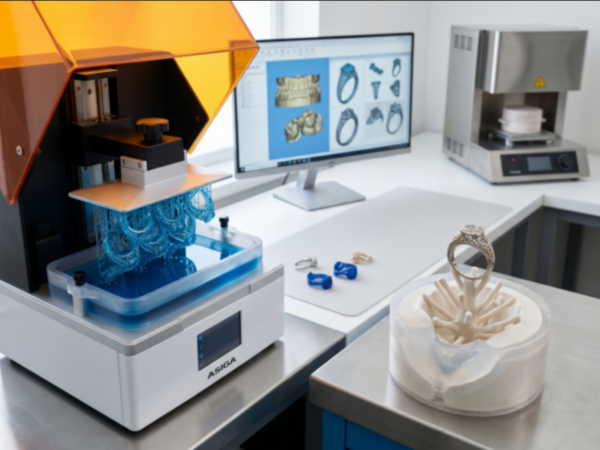
For direct-cast metallic restorations, materials like Asiga DentaCAST provide completely ash-free burnout profiles. This chemistry allows labs to produce metal partial frameworks, crowns, and bridges with sub-35-micron accuracy. These digital workflows reduce dental lab turnaround times by 70% to 90% while cutting per-unit material waste compared to traditional subtractive milling blocks.
B. High-Value Jewelry Manufacturing
The jewelry industry represents the largest end-use segment for castable stereolithography resins, accounting for approximately 40% of global consumption. The market has fully transitioned from manually carving wax or machining rubber molds toward direct printing of highly intricate bridal, filigree, and customized patterns.
The primary technological drivers are specialized photopolymer formulations loaded with organic waxes, such as Formlabs Castable Wax 40 (40% wax-filled) and BlueCast X-One. These formulations are engineered to mimic the physical behaviors of traditional carving waxes.
During the kiln burnout cycle, the wax filler melts out first, causing the pattern to shrink away from the ceramic investment shell. This physical shrinkage relieves internal expansion forces that typically cause fragile plaster molds to crack. B2B jewelry operations focus on these highly filled wax resins to eliminate surface defects, minimize expensive precious metal losses during finishing, and bypass the labor-intensive requirements of rubber mold making.
C. Precision Industrial Casting (Aerospace, Automotive, and Medical)
In aerospace, automotive tooling, and medical implant manufacturing, castable resins and industrial wax printers have enabled toolless production workflows. Rather than investing tens of thousands of dollars and waiting weeks for traditional steel or aluminum injection molds, foundries use large-format stereolithography (SLA) or MultiJet Printing (MJP) systems to print patterns directly.
For instance, the 3D Systems ProJet 2500 IC using VisiJet M2 ICast (a 100% real wax material) allows foundries to transition from CAD to a finished cast metal component in 2 to 5 days, down from the traditional 6-to-12-week lead times.
Furthermore, advanced techniques like SLA QuickCast use hollow, internal hexagonal lattice structures inside the printed resin pattern. When the ceramic shell is heated, the internal lattice allows the resin pattern to collapse inward as it softens. This inward collapse limits outward thermal expansion, preventing ceramic shell rupture during the critical burnout phase.
V. Real-World B2B Case Studies: Proof of ROI and Efficiency
Case Study 1: Long-Term Durability of Heat-Pressed Veneers Sourced from Castable Resin Patterns
A clinical study tracked the efficacy of fabricating fixed dental restorations using digital impressions and CAD design. The workflow bypassed traditional manual wax-ups. Castable resin patterns were 3D-printed from the digital models, invested, and heat-pressed using lithium disilicate (LD) ingots to produce final aesthetic veneers.
- Clinical Success Metrics: At the 48-month clinical follow-up, all veneers remained fully intact (100% survival rate). The restorations exhibited clinically acceptable marginal adaptation, stable color, and surface gloss with zero signs of secondary caries or marginal discoloration.
- Patient Feedback: The patient reported sustained aesthetic satisfaction and comfortable function with no postoperative sensitivity. This case shows the long-term clinical reliability of the “additive-plus-pressing” methodology for high-criticality prosthodontics.
Case Study 2: Scrap Reduction and Support Optimization at Barksdale Dental Lab
Barksdale Dental Lab partnered with Asiga to address a persistent operational bottleneck: small-part failures when printing high-precision castable and pressable resin restorations. To reduce the technician labor required for post-processing support marks on critical margins, the lab attempted to minimize the contact width of supports. However, the high peeling forces exerted on the FEP film during printing caused parts to shear off the build plate or deform, forcing technicians to choose between excessive support structures or high failure rates.
- The Technology Solution: The lab integrated Asiga’s Liquid Interface Film Technology (LIFT™) trays and Ultragloss LIFT systems. The LIFT mechanism uses a flexible membrane that significantly reduces peeling forces during the separation step of the printing process.
- The ROI Results: Since implementation, Barksdale Dental Lab reported zero failures on castable prints. The Ultragloss trays eliminated bubbling, punctures, and tray wear, leading to flawless surface finishes on transparent splints and surgical guides. The reduced peel forces allowed the lab to use extremely small support touchpoints, eliminating non-value-added manual finishing tasks and significantly boosting overall in-house productivity.
Case Study 3: Financial Scaling and Production Acceleration in Luxury Jewelry Manufacturing
Uptown Diamond modernized its design and casting operations by transitioning from artistic paper sketches and manual wax carving to a digital workflow using 3D Systems’ ProJet MJP platform using VisiJet RealWax materials. Before this integration, producing champion rings and complex bridal pieces required custom metal molds costing between $4,000 and $7,000, or five hours of precision CNC machining per model.
- Throughput Improvements: With the introduction of the ProJet printer, Uptown Diamond began printing up to 50 unique, highly detailed wax patterns simultaneously in a single 10-hour overnight run. For urgent orders, a single wax pattern could be printed in two hours, enabling same-day design, casting, and finishing.
- Financial Audit: A financial audit conducted by the company’s analysts revealed that the MJP system generated between $20,000 and $25,000 in monthly revenue while incurring only $1,600 in operating costs, representing a massive return on investment.
In a similar industrial upgrade, the traditional Finnish goldsmith company Narsakka adopted the ProJet MJP 2500W solution with pure wax VisiJet M2 CAST material to remove the manual variability of patternmaking. By generating 60 to 100 perfect wax patterns in four hours, the goldsmith achieved a 100% casting success rate, eliminated the need for master patterns and rubber molds, and shortened production lead times from weeks to days.
Case Study 4: Lead-Time Compaction in Heavy Foundry Operations
At Invest Cast, traditional investment casting workflows required average lead times of 6 to 12 weeks to manufacture custom tooling and investment casting molds. To capture low-volume, high-mix production contracts without incurring the time and expense of tooling fabrication, the foundry integrated two ProJet 2500 IC digital foundry solutions.
- Lead-Time Savings: By using 100% RealWax VisiJet M2 ICast patterns, Invest Cast integrated the prints directly into their standard ceramic slurry shelling and autoclaving lines. The wax patterns melted out completely at standard temperatures, enabling the foundry to go from a digital CAD file to a finished metal casting in just 2 to 5 days. This toolless process reduced per-part development costs, bypassed physical mold storage requirements, and allowed the foundry to quote small-batch aerospace and automotive jobs competitively from day one.
- The 3DPTEK & Xinxin Casting Joint Venture: A similar operational transformation was documented in the joint venture between sand-printing developer 3DPTEK and Xinxin Casting. By integrating 3D printed sand molds and core boxes directly into their casting line, the foundry doubled its gross profit margin from 20% to over 40%, reduced lead times by 50%, and increased annual turnover from ¥170 million to ¥400 million (+135%). The highly optimized workflow generated an immediate demand surge, illustrating how additive integration acts as a direct business growth driver.
VI. The Engineering of Nesting: High-Efficiency Build-Plate Strategies
For industrial-scale operators, print efficiency is dictated by advanced nesting and build-plate optimization. High-density nesting moves beyond basic layout fitting, focusing on maximizing throughput per print run without compromising the micrometer-level accuracy required for critical dental and industrial components.
       [45° to 60° Angled Part]           [Z-Axis Stacking Structure]

               / /  <-- Part 3                     ┌─────────┐ <-- Part 3
             / /                                   ├─────────┤
             / /   <-- Part 2                      │ Support │
           / /                                     ├─────────┤
           / /     <-- Part 1                      │  Part 2 │
         / /                                       ├─────────┤
       ========= <-- Build Plate                   │ Support │
                                                   ├─────────┤
                                                   │  Part 1 │
                                                   ========= <-- Build Plate
1. Part Orientation & “The Magic Angle”
Part orientation is the foundation of a successful build plate. While printing components flat ($0^\circ$) is the fastest method for single low-profile arches, it represents an inefficient use of resin tank life and build space. Professional workflows use the $45^\circ$ to $60^\circ$ rule.
Tilting components at this optimal angle allows technicians to overlap the profiles of complex structures, significantly increasing the total number of parts nested per plate. Furthermore, an angled orientation prevents the suction cup effect in hollowed designs. This minimizes the physical peel forces exerted on the FEP or ACF film during the separation step, extending the lifespan of the resin vat and preventing layer separation.
2. Z-Axis High-Density Vertical Stacking
To maximize throughput in high-volume production facilities, operators have migrated from two-dimensional layouts to three-dimensional vertical stacking. This method involves stacking parts on top of one another along the vertical Z-axis, separated by sacrificial support structures.
By creating stable connector bridges between vertical layers, labs can double or triple their output in a single overnight print run. For example, in orthodontic clear aligner production, since the anatomical base is less critical than the active dentition, vertical stacking allows for massive batches. However, vertical stacking requires a highly calibrated system, as the support structures must be robust enough to hold the weight of multiple layers but easily removable to avoid surface damage during post-processing.
3. Grid-Based Raft Optimization and Model Hollowing
To reduce material waste and streamline post-processing, advanced strategies focus on the geometry of the support raft. Traditional solid “slab” rafts consume substantial resin and are difficult to remove. Professional nesting software uses a grid-based raft system.
A grid-based design uses significantly less material, allows for superior solvent penetration and cleaning in ultrasonic baths, and makes it easier to remove parts from the build plate without risking structural damage. Concurrently, non-critical thick sections should be hollowed out with strategically placed drainage holes to reduce peel forces and material volume, enabling tighter overall nesting patterns.
4. Managing Optical Cross-Talk and Exothermic Reaction Heat
When build-plate utilization approaches 95% capacity, physical limitations like light bleed and heat generation must be managed. In high-intensity LCD and MSLA printers, UV light can bleed laterally between models that are nested too close together (less than $1\text{ mm}$ apart). This optical cross-talk compromises marginal sharpness.
Advanced nesting algorithms maintain a strict safety buffer zone to ensure crisp dimensional margins. Furthermore, photopolymerization is an exothermic reaction. Concentrating a high density of polymerizing resin on a single plate causes localized temperature spikes, leading to thermal expansion of the cured layers. Spacing components dynamically across the plate ensures consistent resin flow and heat dissipation, preserving CAD-to-part fidelity.
VII. Financial Assessment: In-House Production vs. Outsourcing
When formulating an additive manufacturing integration strategy, B2B procurement managers must weigh the financial implications of setting up an in-house printing lab against outsourcing patterns to specialized bureaus.
An in-house B2B setup demands substantial initial expenditures. For instance, operating a commercial 3D printing line carries an average monthly fixed cost of $34,442, driven primarily by:
- Specialized Technicians & Designers Payroll: $26,042
- Workspace Facility Rent: $5,000
- Utility Draws (Heavy Industrial Machinery): $1,200
- Professional CAD/CAM Slicing Licenses: $800
To assist B2B financial planners, the table below provides a comparative cost analysis between in-house production and outsourced service bureaus.
Table 3: Comparative Cost Analysis Matrix
| Cost & Operational Metric | In-House Budget Desktop SLA/LCD | In-House Professional Setup | Outsourced Pattern Bureau |
|---|---|---|---|
| Initial CAPEX Setup | $500 – $5,000 | $10,000 – $20,000+ | $0 (Zero Capital Expense) |
| Material Cost (per model) | $0.05 – $0.10 | $0.20 – $0.50 | $10.00 – $20.00 (or $100+ for bespoke work) |
| Casting Service Fee | In-house execution (~$5.00) | In-house execution (~$5.00) | $10.00 – $50.00 (plus metal weight fees) |
| Labor Overhead Requirement | High (manual support clipping & curing) | Moderate (semi-automated post-processing) | None (bureau handles all preparation) |
| Production Flexibility | Rapid (same-day in-house iteration) | Rapid (same-day in-house iteration) | Low (dependent on shipping & scheduling logs) |
Payback Period Analysis for Mid-Volume Studios
While outsourcing requires no initial CAPEX, it introduces long-term margin erosion for businesses handling consistent volume. For a jewelry studio casting 200 custom rings monthly, outsourcing the wax patterns can cost between $2,000 and $4,000.
By bringing production in-house with a professional $15,000 system, the material cost drops to less than $100 per month. On these metrics, a professional $15,000 setup achieves complete ROI within 4 to 6 months. Additionally, it allows design teams to run rapid design iterations and same-day casting, creating a stronger competitive advantage.
VIII. Engineering & Practitioner FAQ: Troubleshooting Forums-Sourced Failures
Q1: What causes investment cracking or mold breakdown during the burnout of 3D-printed castable resin patterns, and how is it prevented?
Short Answer:
Investment cracking happens because solid resin patterns have a high coefficient of thermal expansion (CTE) and expand rapidly against the rigid mold walls when heated, rather than melting cleanly like traditional wax.
[Heating Stage]
Resin Pattern Expands (High CTE) ──► Generates Mechanical Stress ──► Investment Cracks
                                                                           │
[Mitigation via Hollowing]                                                 ▼
Lattice Core Collapses Inward ◄─── Absorb Expansion Force ◄─── Shell Buckles Inward Safely
The Detailed Engineering Solutions:
- Optimize Resin Chemistry: Use high-wax content formulations (minimum 40% wax loading). As the wax phase melts, the pattern physically shrinks and collapses inward, creating venting space for gases and relieving mechanical pressure on the mold walls.
- Implement Structural Hollowing: Hollow any pattern design with a wall thickness exceeding $3\text{ mm}$. Design the walls as a thin shell (ideally $0.7\text{ mm}$) reinforced by an internal hexagonal lattice structure. This design allows the pattern to buckle inward during thermal expansion rather than pushing outward against the ceramic shell.
- Incorporate Boric Acid: Add boric acid at a concentration of 1% by weight (approximately $20\text{ g/L}$) directly to the distilled water used for mixing the investment powder. Boric acid acts as a high-temperature bonding agent, dramatically increasing the physical strength of gypsum-bonded investments during the critical pre-combustion phase.
- Extend the Burnout Profile: Avoid rapid thermal ramps. Use a slow, progressive 12-to-16-hour burnout cycle. Ensure a long hold step (minimum of 3 hours) at $370^\circ\text{C}$ ($700^\circ\text{F}$) to allow the polymer to smolder and break down completely before ramping to the final casting temperature of $730^\circ\text{C}$ ($1350^\circ\text{F}$).
Q2: Can desktop MSLA/LCD printers achieve the same detail and casting reliability as industrial $30k+ pure wax jetting systems?
Short Answer:
Yes, desktop LCD printers can match the optical resolution of industrial systems on small, isolated parts, but they lack the operational reliability, dimensional stability, and automated, support-free processing of high-end pure wax jetting printers.
The Detailed B2B Selection Rules:
- The Desktop Approach (LCD/MSLA): Highly viable for custom design studios, boutique jewelers, and individual dental practices. However, the business must accept the labor cost of manual support removal and dedicate technical resources to calibrating exposure matrices and environment-specific burnout ramps.
- The Industrial Approach (MJP): Required for scale manufacturing and high-volume foundries. The high CAPEX is offset by the elimination of manual post-processing, near-zero casting failure rates, and seamless compatibility with standard investment casting lines without specialized training.
Q3: What is the post-processing workflow (wash, dry, post-cure) to prevent casting porosity and investment breakdown?
Short Answer:
To prevent metal porosity, you must completely remove uncured resin residue by performing a dual-stage wash, drying the parts with compressed air, and curing them inside a water or glycerin bath to block oxygen.$$\text{Residual Monomer} + \text{Acidic Plaster Water} \longrightarrow \text{Binder Deactivation} \longrightarrow \text{Localized Mold Erosion} \longrightarrow \text{Surface Porosity}$$
The Detailed Standardized Steps:
- Dual-Stage Wash: Submerge the printed parts in high-purity (minimum 99%) Isopropyl Alcohol (IPA) or Ethyl Alcohol. Use a dual-stage setup: a first wash in “dirty” alcohol to remove bulk liquid resin, followed by a second wash in pristine, uncontaminated alcohol for 10 to 15 minutes. Avoid over-washing (exceeding 15 minutes), as alcohol absorption causes the polymer to swell and lose dimensional accuracy.
- Pneumatic Drying: Blast the parts immediately with dry, oil-free compressed air to force out residual resin trapped in fine crevices, stone holes, and engraved areas. Let the parts air-dry completely for 15 to 30 minutes until a uniform, matte finish is observed.
- Oxygen-Free Post-Curing: To maximize polymer cross-linking and eliminate residual monomers, submerge the dried parts in a clear glass container filled with liquid glycerin or water, then place the container inside the UV curing chamber. Water or glycerin blocks atmospheric oxygen, which naturally inhibits surface polymerization. Cure the parts at $77^\circ\text{C}$ to $80^\circ\text{C}$ for 20 to 30 minutes.
Q4: How do you eliminate platinum-cure silicone mold inhibition when using SLA/LCD printed models as masters?
Short Answer:
You can stop mold inhibition by coating the master in a barrier spray, lacquer sealing the surface, or chemically oxidizing sulfur/amine compounds in a household bleach bath.
The Detailed Solution Workflows:
- Incorporate Chemical Barrier Sealers: Dip the post-cured resin master directly into Smooth-On Inhibit X multiple times, letting it air dry completely between coats. This builds a microscopic, chemical-impermeable barrier that prevents the migration of photoinitiators into the silicone.
- Apply High-Gloss Polyurethane Lacquers: Spray the resin master with multiple thin coats of a clear, high-gloss polyurethane or acrylic sealer (such as Krylon 1303). Ensure the coating is completely cured before pouring the silicone. Note that this method will slightly alter fine dimensional tolerances.
- Execute Bleach Oxidation: Submerge the fully cured resin model in full-strength household liquid bleach (sodium hypochlorite) for 4 to 6 hours. The strong oxidizing agent neutralizes sulfur and amine compounds on the outer boundary layer of the polymer. Rinse thoroughly in distilled water and dry before pouring the silicone.
Q5: Is it commercially viable to cast large-scale prints (e.g., bronze statues) using direct castable resin, or should alternative workflows be applied?
Short Answer:
No, direct casting of large-scale resin prints is commercially unviable due to high resin costs and high expansion forces that rupture ceramic shells. Use a hybrid molding workflow instead.
The Detailed Hybrid Workaround:
- Print the Master Pattern: 3D print the large-scale master pattern using an inexpensive, highly stable standard prototyping resin or via Fused Deposition Modeling (FDM) with PLA filament.
- Surface Finishing: Sand, prime, and polish the printed master pattern until the desired surface finish is achieved.
- Pull a Flexible Mold: Encase the finished master pattern in a high-strength polyurethane or silicone rubber mold.
- Cast Traditional Foundry Wax: Pour molten, reclaimable foundry casting wax into the rubber mold to produce multiple wax copies.
- Execute Standard Casting: Assemble the wax patterns on a traditional sprue tree, build the investment shell, melt the wax out cleanly at low temperatures, and pour the molten bronze. This hybrid process ensures 100% casting success, reduces material costs by up to 80%, and allows the original printed master to be reused indefinitely.
IX. Final Takeaways
The integration of castable resin 3D printing represents a major advance for modern digital dental laboratories, jewelry manufacturers, and precision industrial foundries. Transitioning to an in-house digital workflow requires a systematic approach to managing material chemistry, environmental parameters, and post-processing variables.
For custom design studios and specialized clinics, highly calibrated desktop LCD systems represent an accessible path to digital integration. For high-volume manufacturing facilities, the physical reliability and automated labor savings of industrial wax jetting workstations justify the higher initial capital expense.
By pairing advanced digital nesting strategies with rigorous thermal and chemical post-processing protocols, B2B operators can achieve zero-failure production, minimize manual labor overhead, and leverage the speed and design freedom of digital investment casting.