



Author: Felix Lee
Position: CEO at Forgecise
Published Date: August 17, 2026
Table of Contents
What Is 3D Printing Powder Automation?
Short answer:
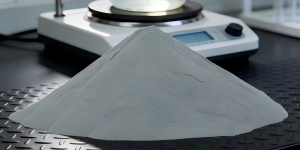
3D printing powder automation is a system that automatically collects, transports, cleans, stores, and reuses printing powder during additive manufacturing. It reduces manual handling, improves safety, lowers material waste, and helps manufacturers build more stable production workflows.
How Powder Automation Is Changing Industrial 3D Printing
Additive manufacturing has moved beyond its early use as a rapid prototyping method. In 2026, many manufacturers use 3D printing for real production in industries such as aerospace, automotive, medical devices, energy, and advanced engineering.
The challenge is no longer only about making a faster printer. A complete industrial 3D printing process depends on many connected steps:
- Powder preparation
- Material storage
- Powder transportation
- Printing
- Part cleaning
- Powder recovery
- Powder testing
- Material reuse
For powder-bed fusion technologies, including Selective Laser Melting (SLM), Direct Metal Laser Sintering (DMLS), Selective Laser Sintering (SLS), and Multi Jet Fusion (MJF), powder management has become one of the most important parts of production.
Poor powder control can create:
- Unstable printing results
- Higher material costs
- More production waste
- Safety risks
- Longer processing time
This is why manufacturers are moving from manual powder handling toward automated powder management systems.
Why Powder Engineering Matters in Additive Manufacturing
Printing powder is not just a raw material. Its physical and chemical properties directly affect the final part.
Important powder characteristics include:
- Particle size distribution
- Powder shape
- Flowability
- Moisture level
- Oxygen content
- Material consistency
A stable powder supply helps maintain:
- Better layer spreading
- More consistent melting
- Improved part strength
- Repeatable production quality
Both metal and polymer powders require careful management, but they face different challenges.
Metal Powder Management: Controlling Moisture and Oxygen
Metal powder used in laser powder-bed fusion must maintain strict quality standards.
During printing, the laser creates a small melt pool by heating metal particles. This process produces heat, spatter, and fine particles around the printing area.
Even when manufacturers use protective gases such as argon or nitrogen, small amounts of oxygen and moisture can still affect powder performance.
Metal powders naturally absorb moisture from the environment. This can cause:
- Poor powder flow
- Uneven powder layers
- Recoating problems
- Higher internal porosity
- Reduced mechanical performance
Materials such as titanium and aluminum alloys require especially careful control because contamination can reduce reliability in demanding applications.
Automated powder systems help reduce exposure to air and maintain better material conditions.
Polymer Powder Management: Reuse Without Losing Quality
Polymer powders used in systems such as Selective Laser Sintering and Multi Jet Fusion face different issues.
During printing, unused powder stays close to the melting temperature for a long period. This heat exposure slowly changes the material.
Over time, recycled polymer powder may experience:
- Changes in molecular structure
- Different melting behavior
- Reduced flow performance
- Surface quality problems
- Increased risk of warping
For this reason, manufacturers usually mix recycled powder with fresh powder at controlled ratios.
The goal is not unlimited reuse.
The goal is stable and predictable material performance.
How a Closed-Loop Powder Handling System Works
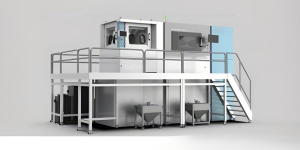
A closed-loop powder handling system creates an automated connection between printing, recovery, cleaning, and reuse.
The basic workflow is:
Printing → Powder Recovery → Cleaning → Conditioning → Storage → Reuse
This process reduces direct human contact with powder and creates better control over production materials.
Automated Powder Recovery
After printing, unused powder must be collected from the build area.
Manual collection creates several problems:
- Powder loss
- Operator exposure
- Contamination risk
- Longer preparation time
Automated recovery systems collect unused powder through controlled processes and send it to the next treatment stage.
Vacuum Powder Transportation
Industrial powder movement requires careful handling because fine powders can easily become contaminated.
Vacuum-based transportation systems help manufacturers:
- Move powder through sealed pathways
- Reduce exposure to the environment
- Protect operators
- Maintain cleaner production areas
This approach is especially important when handling fine metal powders that may create safety risks when released into the air.
Automated Sieving and Powder Cleaning
Recovered powder often contains unwanted materials, including:
- Large particles
- Powder clusters
- Metal particles created during printing
- Other contaminants
Automated sieving systems separate reusable powder from unwanted material.
This improves:
- Powder consistency
- Printing stability
- Material efficiency
Vacuum Drying and Moisture Control
Moisture control is becoming a key part of industrial powder management.
Traditional storage methods often depend on controlled environments and protective gases.
Modern powder systems can use vacuum drying technology to remove moisture without excessive heating.
Better moisture control helps manufacturers maintain powder flow and reduce defects caused by contamination.
Automated Powder Blending
Recycled powder is usually combined with new powder before reuse.
Automated blending systems help control:
- Material ratios
- Chemical consistency
- Production quality
This creates a more reliable powder supply for continuous manufacturing.
Automated Depowdering: Removing Powder From Complex Parts
Depowdering is one of the most difficult steps in additive manufacturing.
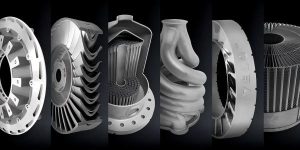
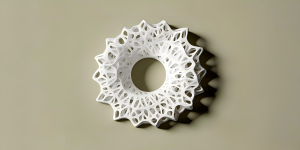
Modern printed parts often contain:
- Internal channels
- Lightweight structures
- Medical lattice designs
- Complex cooling paths
Traditional cleaning methods such as brushing and compressed air may not remove all trapped powder.
Automated depowdering systems use:
- Controlled movement
- Vibration
- Mechanical force
- Air-assisted cleaning
These methods help remove powder from difficult internal areas.
For high-value applications, additional cleaning processes may be used to confirm that parts meet quality requirements.
Business Benefits of Powder Automation
Higher Production Efficiency
Manual powder processing can take hours and requires skilled workers.
Automation helps manufacturers reduce:
- Processing delays
- Repetitive labor
- Machine waiting time
This allows production teams to focus on engineering, quality control, and improvement activities.
Better Safety Management
Metal and polymer powders require careful handling.
Fine powder particles can create risks when they become airborne.
Industrial facilities need proper systems for:
- Powder containment
- Static control
- Safe transportation
- Workplace protection
Closed-loop automation reduces direct exposure and improves factory safety.
Lower Material Waste
Powder is one of the most valuable materials in additive manufacturing.
Better recovery and recycling systems help companies reduce:
- Powder loss
- Disposal costs
- Production waste
A controlled powder recycling process supports more sustainable manufacturing.
Can Metal 3D Printing Powder Be Recycled 100%?
Short answer:
No. Critical industrial applications usually cannot rely on 100% recycled metal powder because repeated processing may change powder quality and affect final part performance.
During laser processing, metal powder can experience:
- Oxygen absorption
- Surface changes
- Reduced particle quality
- Lower flow performance
For industries such as aerospace and medical manufacturing, companies usually follow controlled recycling procedures.
The common process includes:
- Collect used powder
- Remove unwanted particles
- Check powder condition
- Mix recycled powder with fresh powder
- Validate production quality
The goal is controlled reuse, not unlimited recycling.
Alternative Paths Toward Circular Manufacturing
Manufacturers are also exploring other material approaches.
Metal-Polymer Powder Systems
Some metal printing methods combine metal powder with polymer binders.
Benefits include:
- Easier handling
- Lower powder risks
- Reduced facility requirements
After printing, parts can go through additional processes to achieve final metal properties.
Direct Pellet Manufacturing
Pellet-based manufacturing is another growing approach.
Instead of producing filament first, manufacturers can use industrial pellets directly.
Advantages include:
- Lower material cost
- Easier recycling
- Simpler material processing
Waste parts can be processed and reused, supporting circular manufacturing.
When Should Companies Invest in Powder Automation?
Manufacturers should consider powder automation when they experience:
- Multiple industrial 3D printers
- High powder usage
- Frequent manual processing
- Production delays
- Safety concerns
- Growing manufacturing demand
The business value comes from several areas:
- Lower labor requirements
- Better machine utilization
- Reduced material waste
- More consistent quality
Automation becomes especially valuable when additive manufacturing moves from small projects to regular production.
Future of 3D Printing Powder Automation
The next stage of additive manufacturing will connect powder systems with digital factory technologies.
Future workflows will combine:
- Artificial intelligence
- IoT monitoring
- Manufacturing execution systems
- Digital material records
- Automated quality tracking
Powder management will become part of a connected manufacturing network.
The companies that succeed with industrial 3D printing will not only focus on printers. They will build complete systems that manage materials, data, safety, and production quality.
Frequently Asked Questions
What is 3D printing powder automation?
Short answer:
3D printing powder automation uses machines and software to manage powder collection, cleaning, storage, and reuse during additive manufacturing.
It replaces many manual tasks and helps factories maintain stable production.
Why is powder management important in additive manufacturing?
Short answer:
Powder quality directly affects printing results. Poor powder condition can create defects, inconsistent parts, and higher production costs.
Manufacturers use automation to control powder quality throughout the production process.
How does automated powder recycling work?
Short answer:
Automated powder recycling collects unused powder, removes contaminants, controls moisture, and prepares the material for reuse.
The process helps reduce waste while maintaining production quality.
Can manufacturers reuse metal 3D printing powder forever?
Short answer:
No. Repeated processing can change powder properties. Industrial manufacturers normally combine recycled powder with fresh material and monitor quality.
Why is automated depowdering important?
Short answer:
Complex 3D printed parts can trap powder inside small channels and structures. Automated depowdering helps remove remaining material and improves production reliability.
When should a factory use powder automation?
Short answer:
Factories should consider automation when powder handling becomes a production bottleneck or when they need safer, faster, and more consistent manufacturing.
Conclusion
3D printing powder automation has become an important part of industrial additive manufacturing.
The future of production depends not only on faster printers but also on better control of materials, recycling processes, safety systems, and workflow automation.
By improving powder recovery, cleaning, drying, blending, and reuse, manufacturers can build more reliable and efficient additive manufacturing operations.
For companies using industrial 3D printing in 2026 and beyond, powder engineering is no longer a secondary process.
It is a core manufacturing capability.