











Written by Felix Lee
CEO at Forgecise
Published: August 2026
Last Updated: August 2026
Table of Contents
Quick Answer
Metal 3D printing melting and alloying is the process of using laser or electron beam energy to melt metal powder, form a controlled melt pool, mix alloy elements, and rapidly solidify the material. This process controls the final microstructure, strength, and quality of printed metal parts.
Key Points
- Metal 3D printing creates parts through controlled melting and solidification.
- The melt pool is where melting, alloy mixing, and crystal growth happen.
- Alloy elements change the structure and performance of printed metals.
- Rapid cooling creates special microstructures that are different from traditional manufacturing.
- Titanium and aluminum alloys are widely studied for aerospace metal 3D printing.
How Does Metal 3D Printing Melting Work?
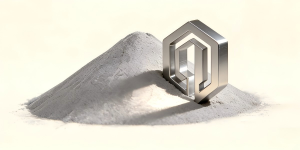
Metal 3D printing melting starts when a heat source, such as a laser or electron beam, transfers energy to metal powder. The powder absorbs the energy, heats quickly, and changes from solid particles into liquid metal.
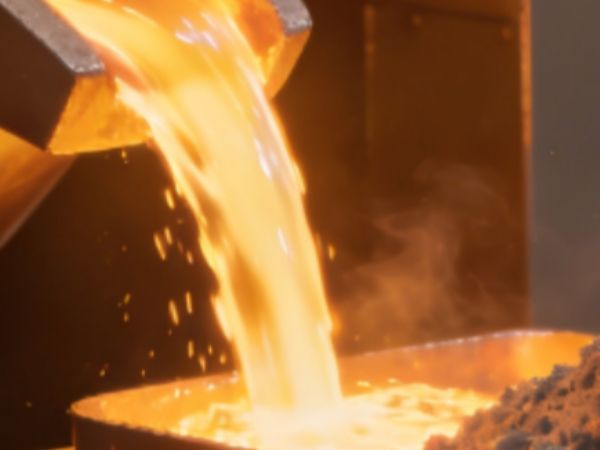
The liquid metal forms a small area called a melt pool. As the heat source moves away, the molten metal cools and becomes a solid layer.
This process repeats thousands of times until the complete part is built.
The basic process is:
Metal powder → Energy input → Melting → Melt pool → Cooling → Solid metal layer
Unlike traditional machining, which removes material, metal additive manufacturing builds components by adding material layer by layer.
Why Is the Melt Pool Important in Metal 3D Printing?
The melt pool controls the quality of a printed metal part because many important changes happen inside this small liquid area.
Inside the melt pool:
- Metal powder melts completely.
- Alloy elements mix together.
- Heat moves through the material.
- New crystals begin to form during cooling.
A stable melt pool helps create dense and strong parts. An unstable melt pool can create defects such as pores, cracks, and uneven surfaces.
The melt pool is affected by:
- Laser power
- Scanning speed
- Powder size
- Energy density
- Cooling conditions
These factors determine how well the metal melts and how the final alloy structure develops.
How Does Alloying Happen During Metal 3D Printing?
Alloying happens when different metal elements melt together inside the melt pool.
The process includes three main stages.
Melting of Alloy Powder
Metal powders are usually made from carefully selected elements.
For example, Al-12%Si alloy contains:
- Aluminum as the main material
- Silicon as an alloy element
During laser melting, both elements enter a liquid state.
Element Mixing and Movement
Inside the melt pool, liquid metal flow and heat movement allow alloy elements to spread.
The elements move through:
- Diffusion
- Liquid flow
- Thermal movement
This changes how the final material structure forms.
Rapid Solidification
After melting, the metal cools very quickly.
During this stage, atoms arrange into new structures.
For Al-12%Si alloy, researchers found:
- α-Al phase
- Al-Si eutectic phase
- Different α-Al regions
The printed sample showed clear layer structures, which are common in metal additive manufacturing.
The measured density reached 94%.
What Happens During Al-12%Si Alloy Laser Melting?
A laser melting study on Al-12%Si alloy provides a clear example of how melting and alloying affect printed metals.
The experiment used:
- Al-12%Si alloy powder
- Powder size: 50–100 μm
- 6063 aluminum alloy substrate
- Powder feeding laser melting equipment
The powder composition included:
- Silicon: 12.00%
- Iron: 0.18%
- Copper: 0.03%
- Remaining material: Aluminum
The researchers studied how a transverse steady magnetic field changed the solidification structure.
The printed sample showed:
- Layer-by-layer structure
- α-Al phase
- Al-Si eutectic phase
- Improved pore conditions
How Does Rapid Cooling Change Metal Structure?
Metal 3D printing uses very fast heating and cooling cycles.
This rapid solidification changes how crystals grow.
It affects:
- Grain size
- Crystal direction
- Alloy distribution
- Mechanical properties
Traditional casting usually allows crystals more time to grow. Metal 3D printing creates smaller and different structures because cooling happens much faster.
How Does Magnetic Field Control Crystal Growth?
The Al-12%Si study compared samples with and without a magnetic field.
Without a magnetic field:
- α-Al crystals mainly showed columnar structures.
- Crystals grew in the heat flow direction.
With a 0.5T transverse steady magnetic field:
- Columnar crystals changed into equiaxed crystals.
- Grain structures became smaller.
- Dendrite growth changed.
The magnetic field affected liquid metal movement inside the melt pool.
The force created by the magnetic field broke primary α-Al dendrites and reduced directional crystal growth.
This created more evenly distributed equiaxed structures.
How Do Alloy Elements Improve 3D Printed Metals?
Alloy elements change how metals behave after printing.
Different elements provide different functions.
Silicon
Silicon improves:
- Strength
- Hardness
- Melt flow
In aluminum alloys, silicon forms an Al-Si eutectic structure that improves mechanical performance.
Titanium
Titanium can refine grains and improve alloy structure.
Manganese
Manganese helps improve corrosion resistance.
Nickel
Nickel improves high-temperature performance.
How Do Printing Parameters Affect Melting Quality?
The final quality of metal 3D printed parts depends heavily on process control.
Laser Power
Low laser power may cause:
- Incomplete melting
- More pores
High laser power may cause:
- Metal evaporation
- Unstable melt pools
Scan Speed
Scan speed changes:
- Heat input
- Melt pool time
- Cooling speed
Powder Size
Powder size affects:
- Energy absorption
- Powder flow
- Melting efficiency
The Al-12%Si study selected 50–100 μm powder because it provided suitable flow behavior for printing.
What Defects Can Happen During Metal 3D Printing?
Melting and cooling problems can create defects.
Porosity
Causes:
- Gas trapped inside metal
- Incomplete melting
Effects:
- Lower density
- Reduced strength
Balling Effect
Causes:
- Unstable melt pool
- Surface tension problems
Effects:
- Uneven printed layers
Cracks
Causes:
- Thermal stress
- Fast cooling
- Material shrinkage
Effects:
- Lower reliability
Warping
Causes:
- Uneven heat distribution
- Residual stress
Effects:
- Shape changes
Which Metal 3D Printing Technologies Use Melting?
Different technologies use different heat sources and methods.
Selective Laser Melting (SLM)
SLM uses laser energy to fully melt metal powder.
Main advantages:
- High accuracy
- High density
- Suitable for aerospace parts
Electron Beam Selective Melting (EBSM)
EBSM uses an electron beam instead of a laser.
Research on titanium alloy 3D printing shows EBSM has advantages:
- High efficiency
- Good accuracy
- Lower cost
- Low pollution
It is considered a useful technology for future titanium alloy manufacturing.
Laser Metal Deposition (LMD)
LMD uses a laser with powder feeding.
It is suitable for:
- Large components
- Repair work
- Flexible manufacturing
Why Are Titanium and Aluminum Alloys Used in Aerospace 3D Printing?
Aerospace parts need materials with:
- High strength
- Low weight
- Good reliability
Titanium and aluminum alloys meet these needs.
Titanium Alloy Applications
Titanium alloys are used because they provide:
- High strength-to-weight ratio
- Good corrosion resistance
- Good aerospace performance
SLM and EBSM are common technologies studied for titanium alloy parts.
Aluminum Alloy Applications
Aluminum alloys provide:
- Lightweight structures
- Good mechanical properties
- Design flexibility
Applications include:
- Aircraft structures
- Satellite components
- Optical systems
One SLM aluminum mirror design reduced weight by about 73%.
How Can Engineers Improve Metal 3D Printing Performance?
Engineers improve results through:
Better Process Control
Control:
- Laser power
- Scan speed
- Powder quality
- Layer thickness
Heat Treatment
Heat treatment can:
- Reduce residual stress
- Adjust microstructure
- Improve mechanical properties
Better Material Design
New alloy systems and metal composites can improve:
- Strength
- Heat resistance
- Wear performance
Future Development of Metal 3D Printing Melting and Alloying
Future work will focus on better control of:
- Melt pool behavior
- Alloy design
- Defect detection
- Large-scale production
The connection between materials, equipment, and testing methods will help engineers create more reliable metal parts.
Frequently Asked Questions
What happens during metal 3D printing melting?
Metal 3D printing melting uses laser or electron beam energy to heat metal powder until it becomes liquid. The liquid metal forms a melt pool, where alloy elements mix before rapid cooling creates a solid printed layer.
During this process, temperature control affects the final structure, density, and strength of the metal part.
How does alloying happen inside a metal 3D printing melt pool?
Alloying happens when different elements melt together and move through the liquid metal. After cooling, these elements form new phases and structures that control the material’s strength and performance.
The Al-12%Si example shows how aluminum and silicon form α-Al and Al-Si eutectic structures.
Why is rapid solidification important in metal 3D printing?
Rapid solidification changes crystal growth and creates unique microstructures. It can refine grains and change crystal shapes.
In the Al-12%Si study, a 0.5T magnetic field changed columnar crystals into equiaxed crystals.
What causes defects in metal 3D printing?
Defects happen when melting and cooling are not properly controlled.
Common problems include:
- Porosity from incomplete melting
- Balling from unstable melt pools
- Cracks from thermal stress
- Warping from uneven cooling
Why are titanium and aluminum alloys used for aerospace 3D printing?
Titanium and aluminum alloys combine low weight with good mechanical performance.
They allow engineers to create complex aerospace structures while reducing material use and improving design flexibility.
Author Information
Felix Lee
CEO at Forgecise
Felix Lee focuses on advanced manufacturing technologies and industrial applications of metal additive manufacturing. His work includes studying how new production methods can improve component design, material performance, and manufacturing efficiency.
Technical Source Note:
This article is based on peer-reviewed studies covering titanium alloy 3D printing, pulsed laser melting of Al-12%Si alloy, and selective laser melting aluminum alloys for aerospace applications.