





Release Date: 2026-04-10
Paul Li
CTO | Author18 years experience in the Ru0026amp;D of 3D printing equipment and additive manufacturing processes, empowering the efficient intelligent manufacturing of complex parts.
In the high-stakes world of aerospace engineering, every gram of weight and every hour of production time matters. Traditional manufacturing methods for complex parts like aero-engine casings—often involving forging a massive block of expensive titanium and then machining away up to 90% of it—are incredibly wasteful and slow.
A new technical report from China’s aviation industry offers a compelling blueprint for a smarter future: using laser cladding not just for repair, but as an integral part of a “hybrid” manufacturing strategy. This approach, detailed in the “TC4 Casing Laser Cladding Test Report,” demonstrates how we can build complex features like mounting bosses directly onto a near-net-shape base, saving material, time, and cost without sacrificing performance.
The Problem with Traditional Casing Manufacturing
Aero-engine casings are critical components. They are large, thin-walled, cylindrical structures made from high-performance materials like titanium alloy (TC4) or nickel-based superalloys. Their job is to house and support other engine parts, making their structural integrity paramount.
The conventional process is straightforward but inefficient:
- Forge a solid, oversized blank from expensive TC4 billet.
- Machine it extensively on multi-axis CNC machines to achieve the final thin-walled shape.
- Add features like flanges and mounting bosses, which often requires even more complex machining or separate welding operations.
This “subtractive” method leads to massive material waste (low buy-to-fly ratio), long lead times, high tooling costs, and significant machine occupancy.
The Hybrid Solution: “Machining + Localized Additive”
The report proposes a paradigm shift: “Overall Machining – Localized Additive – Localized Machining.”
Instead of starting with a huge block, you start with a simpler, near-net-shape base component that has been machined to its final outer profile. Then, using Laser Directed Energy Deposition (DED), also known as laser cladding, you add the complex features—like the protruding bosses shown in the report—exactly where they are needed.
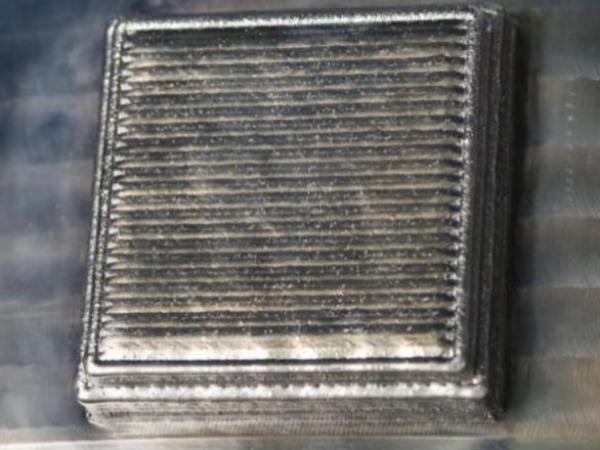
Figure 1 from the report shows the final result: a TC4 casing with a successfully deposited boss feature. This is the core concept of hybrid manufacturing in action.
This strategy promises dramatic improvements:
- >50% reduction in raw material cost.
- ~60% reduction in overall processing time.
- 50-70% reduction in total manufacturing cost.
Making it Work: The Technical Journey
Turning this vision into reality required solving several key challenges, which the report meticulously documents.
1. Material & Machine Setup
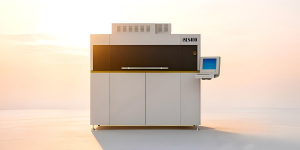
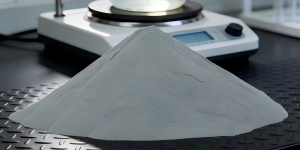
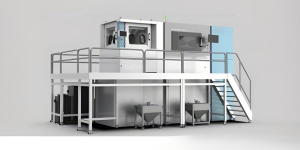
The team used spherical TC4 (Ti-6Al-4V) powder with a particle size of 53-150 µm. The process was performed on a custom-built METAL+1005 system, featuring a 1000W laser, a 6-axis industrial robot for precise path control, and a sealed chamber filled with inert gas to prevent oxidation of the reactive titanium during the build.
2. Process Parameter Optimization: From Single Track to Multi-Layer Block
The heart of any successful DED process is finding the right combination of laser power, scan speed, and powder feed rate. The researchers took a systematic approach:
- Single Track Trials: They started by depositing single beads of molten metal, adjusting parameters until they achieved a smooth, defect-free track with good geometry (see Figures 8-11).
- Multi-Pass, Multi-Layer Blocks: Once the single track was perfected, they built larger test blocks (Figures 12 & 14). These were inspected using dye penetrant testing (Figure 7) to check for surface cracks and then sectioned for microscopic analysis.
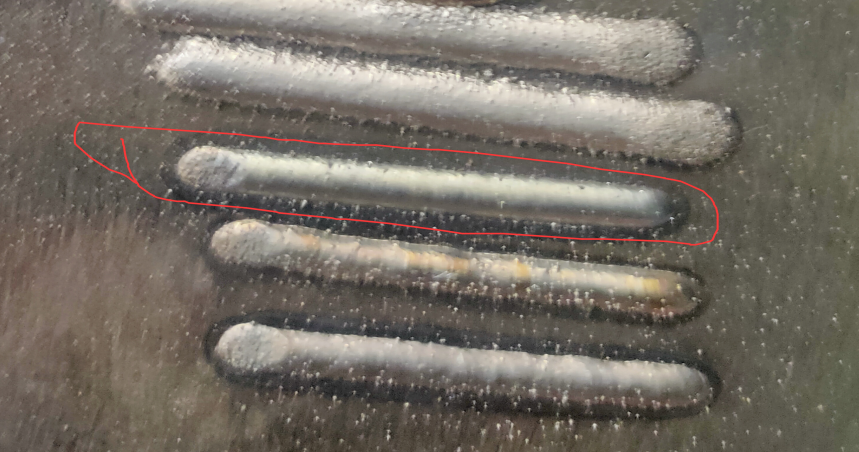
Figure 2 shows a successful, optimized single track—a fundamental building block for the entire process.
3. The Microstructure Verdict: Sound and Dense
The most critical validation came from the metallographic analysis. A cross-section of the multi-layer block was polished, etched, and examined under a microscope.
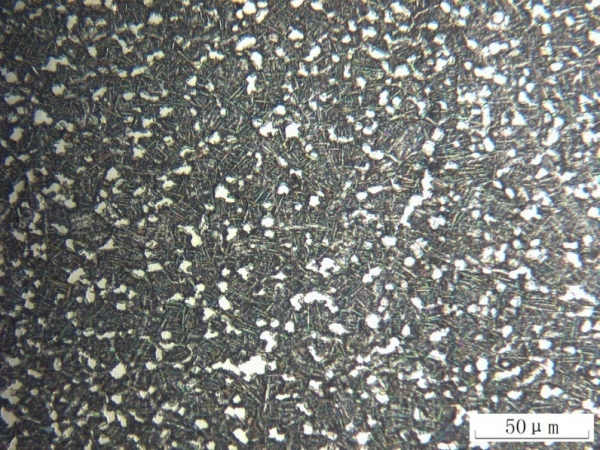
Figure 3 presents the final microstructure. It reveals a fully dense, fine-grained structure with no visible pores, cracks, or lack-of-fusion defects. The bond between the deposited layer and the original substrate is a perfect metallurgical joint.
This microstructural integrity is the foundation for the part’s mechanical reliability.
4. Tackling the Big Challenge: Heat Management on Thin Walls
The final and most practical hurdle was printing a boss onto an actual thin-walled casing. The concentrated heat from the laser can easily cause the thin wall to warp or distort.
The report’s solution was elegant: strategic cooling. By enhancing the heat dissipation from the workpiece during the build, they were able to control the thermal input and prevent unacceptable deformation, leading to a successful final part (Figures 18 & 19).
Conclusion: A New Path for High-Value Components
This report is more than just a set of test results; it’s a validated roadmap for a new manufacturing philosophy. By integrating laser cladding into a hybrid workflow, manufacturers can move beyond the limitations of pure subtractive methods.
The successful deposition of a dense, defect-free, and geometrically accurate TC4 boss onto a complex casing demonstrates that this technology is ready for prime time. It offers a clear path to achieving the holy grail of aerospace manufacturing: producing high-integrity, complex parts with dramatically improved efficiency and sustainability.
About Forgecise
Forgecise is an innovator in additive manufacturing, focusing on high-performance metal 3D printing equipment, materials, and software solutions for industrial manufacturing.