




- 1. The Strength Paradox: Why Strong Statically but Weak Dynamically?
- 2. Defect Map: Who is the "Invisible Killer" of Fatigue Life?
- 3. Surface Roughness: The Fatal Weakness of As-Printed Parts
- 4. The Solution: How to Improve Performance Through Process and Post-Processing?
- 5. Frontier Breakthrough: The "Triple Defense Line"
- Conclusion
- About Forgecise
In the aerospace, medical device, and automotive industries, metal 3D printing (additive manufacturing) is gradually transitioning from prototyping to the production of safety-critical components. However, to truly replace traditional forging or casting processes, a core threshold must be crossed: fatigue performance.
Unlike traditional manufacturing, the layer-by-layer stacking nature of 3D printed parts makes their microstructure, defect distribution, and residual stress more complex. This article will delve into how these factors affect the “lifespan” of parts and how the industry addresses this challenge through process optimization and post-processing.
1. The Strength Paradox: Why Strong Statically but Weak Dynamically?
Metal 3D printed parts often face a “biased” phenomenon:
- Excellent Static Strength: Due to the extremely high cooling rates during the 3D printing process, parts often form an extremely fine microstructure (such as fine grains) internally. According to materials science principles, the finer the grains, the higher the strength. Therefore, the tensile strength of as-printed parts is usually superior to castings and can even reach the level of forgings.
- Fragile Fatigue Performance: Fatigue failure often begins with microscopic defects. Under cyclic loading, micropores and lack-of-fusion areas within the material become “trigger points” for stress concentration. Even if static tensile tests pass, these tiny defects can cause parts to fracture prematurely under dynamic loading.
2. Defect Map: Who is the “Invisible Killer” of Fatigue Life?
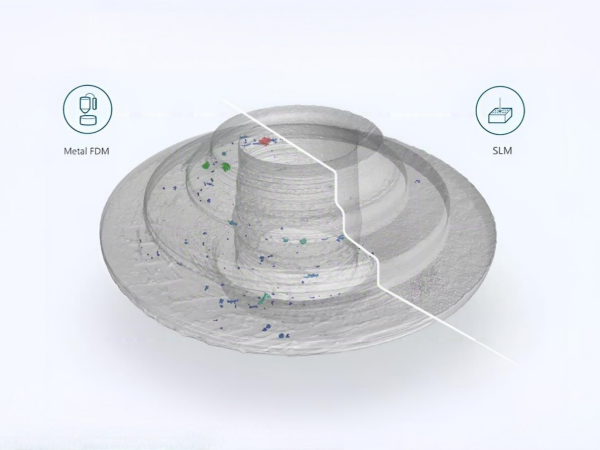
Fluctuations in energy input during the 3D printing process (energy too high or too low) lead to different types of defects, each posing varying degrees of harm to fatigue performance:
表格
| Defect Type | Morphological Characteristics | Cause of Formation | Hazard Level |
|---|---|---|---|
| Gas Pores | Spherical or oval | Gas trapped in powder or shielding gas entrapment | Medium |
| Lack of Fusion | Irregular shape, sharp edges | Insufficient energy input; powder between layers or scan lines not fully melted | Extremely High |
| Cracks | Slender and strip-like | Excessive residual stress or material thermal brittleness | High |
Key Point: Lack-of-fusion defects, due to their irregular shape and sharp edges, generate extremely high stress concentration and are more destructive than spherical gas pores. Furthermore, these defects often exhibit anisotropy (directionality), meaning the impact of defects on strength varies significantly depending on the printing direction.
3. Surface Roughness: The Fatal Weakness of As-Printed Parts
Research indicates that for untreated “as-printed” parts, surface roughness is the primary factor affecting fatigue life.
- Surface Effect: The surface of 3D printed parts typically has semi-melted powder particles attached, forming an uneven topography. These surface defects act as countless microscopic notches, easily inducing cracks.
- Data Support: Experimental data shows that the fatigue life of as-printed Ti6Al4V specimens can be more than 4 times shorter than that of machined specimens. The vast majority of fatigue cracks originate from the surface rather than internal defects.
4. The Solution: How to Improve Performance Through Process and Post-Processing?
To bring 3D printed parts up to industrial standards, a “combination punch” must be used to eliminate defects and stress:
Process Optimization (Source Control)
- Parameter Tuning: Precisely control laser power, scanning speed, and scan spacing to ensure a stable melt pool, reducing gas pores and lack of fusion from the source.
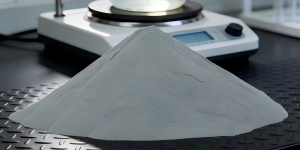
- High-Quality Powder: Use powder with high sphericity and reasonable particle size distribution to reduce gas entrapment.
Heat Treatment (Internal Strengthening)
- Stress Relief Annealing: Eliminates the huge residual tensile stress generated during printing, preventing part deformation or cracking.
- Hot Isostatic Pressing (HIP): This is the “killer app” for improving fatigue performance. Through a high-temperature and high-pressure environment, it forcibly closes internal micropores and lack-of-fusion defects, bringing density close to 100%.
Surface Engineering (External Defense)
- Machining and Polishing: Removes the rough surface layer and eliminates surface crack initiation sites.
- Shot Peening and Surface Grinding: Introduces beneficial compressive stress on the surface to hinder crack propagation.
5. Frontier Breakthrough: The “Triple Defense Line”
Notably, regarding the challenge of poor fatigue performance in titanium alloys, a team from the Institute of Metal Research at the Chinese Academy of Sciences has recently made a breakthrough.
They developed a novel post-processing technology called NAMP (Near-Void-Free Additive Manufacturing Preparation). By precisely controlling Hot Isostatic Pressing (HIP) and subsequent heat treatment, this technology not only eliminates internal micropores but also preserves the fine grain structure unique to 3D printing.
This technology constructs a “triple defense line” against fatigue:
- Fine Grain Boundaries: Hinder crack propagation under low stress.
- Void-Free Structure: Eliminates internal defect sources under medium stress.
- Fine α Grains: Resist cleavage cracking under high stress.
Titanium alloys treated with this process have achieved fatigue strength that not only surpasses all known 3D printed titanium alloys but is even superior to traditional forged titanium alloys, setting a new world record. This demonstrates that through technological innovation, 3D printed parts can completely break the “curse” of poor fatigue performance and become truly “all-around” industrial materials.
Conclusion
The fatigue performance of metal 3D printed parts is a systematic project involving every link from powder quality and printing parameters to post-processing techniques. Although surface roughness and internal defects were once bottlenecks restricting their application, with the maturity of Hot Isostatic Pressing (HIP), surface modification, and new processes (such as NAMP), 3D printed metal parts are gradually meeting and even exceeding the performance standards of traditional manufacturing, providing broader design and manufacturing space for high-end industries.
About Forgecise
Forgecise is an innovator in additive manufacturing technology, dedicated to providing high-performance metal 3D printing materials, equipment, and process solutions for the mold manufacturing, energy power, and other industrial sectors.
Paul Li
CTO | Author18 years experience in the Research and Development of 3D printing equipment and additive manufacturing processes, empowering the efficient intelligent manufacturing of complex parts.