









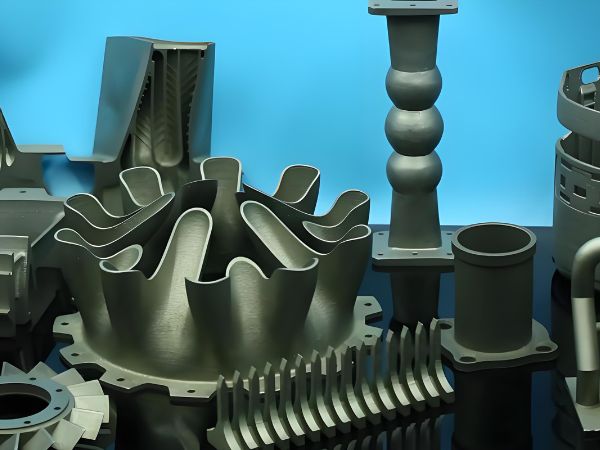
- Author: Felix Lee, CEO at Forgecise
- Date: August 6, 2026
- Word Count: ~1,720 words (Reading time: ~7 minutes)
- Readability Level: Grade 8 (Clear, simple, direct technical English)
Raw material is the first gatekeeper in the metal additive manufacturing quality chain. Powder shape, particle size, oxygen levels, and flow performance directly determine part density, strength, and batch stability. This guide walks through how metal raw materials are made, tested, selected, and recycled.
Table of Contents
1. Raw Material Formats and Process Matching
Metal 3D printing uses two main material formats: powders and wires. Matching the right format to your process is the first step in setting up a clean manufacturing line.
Powder Bed Fusion (PBF / SLM / EBM) and Binder Jetting (BJ)
- Feedstock: Pre-alloyed fine powders.
- Main Uses: Complex thin-walled aero-engine parts, conformal cooling molds, and custom medical implants.
- Requirement: Needs the strictest powder quality control because fine layers must spread evenly across the bed.
Directed Energy Deposition (DED / LMD), WAAM, and EBF
- Feedstock: Coarse powders or metal wire.
- DED / LMD: Uses powder or wire fed directly into the laser melt pool for repairs and cladding.
- WAAM (Wire Arc Additive Manufacturing): Uses welding wire to build large structures quickly.
- EBF (Electron Beam Freeform Fabrication): Uses wire inside a vacuum chamber.
Action Step: Decide between powder and wire early, then build your incoming inspection rules around that format.
2. How Metal Powders Are Made: GA, PREP, and PA
The way a powder is made changes its shape, internal defects, and price. Three methods dominate aerospace production today:
                  ┌─────────────────────────────────────────┐
                  │       Metal Powder Production           │
                  └────────────────────┬────────────────────┘
                                       │
         ┌─────────────────────────────┼─────────────────────────────┐
         ▼                             ▼                             ▼
┌──────────────────┐          ┌──────────────────┐          ┌──────────────────┐
│ Gas Atomization  │          │      PREP        │          │Plasma Atomization│
│      (GA)        │          │  (Rotating Bar)  │          │       (PA)       │
└────────┬─────────┘          └────────┬─────────┘          └────────┬─────────┘
         │                             │                             │
  • High yield                  • Ultra-spherical             • High fine yield
  • Cost effective              • Zero satellites             • Low oxygen
  • Some satellites             • High cost                   • Great for Ti/Ni
Gas Atomization (GA)
Inert gas (argon or nitrogen) hits a liquid metal stream at high speeds. The gas breaks the liquid into small drops that cool fast. GA yields large amounts of powder at a fair price. However, it often creates satellite particles (small bits stuck to larger spheres) and hollow powders with trapped gas.
Plasma Rotating Electrode Process (PREP)
A plasma arc melts the end of a metal bar spinning at high speed. Centrifugal force flings the molten drops outward to cool. PREP makes extremely round powder (sphericity above 0.95) with almost no hollow particles and zero satellites. It is the top choice for titanium and nickel superalloys, though it yields fewer fine powders and costs more.
Plasma Atomization (PA)
Plasma torches melt and atomize metal wire. PA offers both a high yield of fine powder and low oxygen levels. It works well for reactive metals like titanium and nickel-aluminum alloys.
| Feature | Gas Atomization (GA) | PREP | Plasma Atomization (PA) |
|---|---|---|---|
| Powder Shape | Round, with satellites | Extremely round (>0.95) | Round and clean |
| Hollow Powder Rate | Higher | Very low | Low |
| Satellites | Common | None | Very low |
| Fine Powder Yield | High | Lower | High |
| Best Used For | Steel, aluminum, tooling | Titanium, Nickel superalloys | Titanium, Nickel, Active metals |
| Cost | Moderate | High | High |
3. Key Quality Metrics Every Engineer Must Check
Verify these six physical and chemical checks before letting any powder into your printers:
    ┌────────────────────────────────────────────────────────┐
    │              Core Quality Metrics Check                │
    └───────────────────────────┬────────────────────────────┘
                                │
   ┌────────────────────┬───────┴────────┬────────────────────┐
   ▼                    ▼                ▼                    ▼
[Particle Size]   [Sphericity]    [Oxygen Content]     [Flowability]
 SLM: 15–53 μm     Target: >0.90   Ti: <0.13 wt%        Hall: <25 s/50g
 DED: 45–105 μm                    Ni: <0.02-0.05 wt%
1. Particle Size Distribution (PSD)
- SLM: Uses 15–53 μm (or 20–63 μm) powder.
- DED: Uses 45–105 μm powder.
- Risk: Coarse powder makes layer spreading uneven. Too much fine powder creates dust hazards and poor flow.
2. Sphericity
- Target: Higher than 0.90 (closer to 1.0 is best).
- Impact: Rounder powder flows smoother and spreads into flat, dense layers.
3. Oxygen Content Limits
- Titanium Alloys: Keep oxygen under 0.13 wt% (ideally under 0.10 wt%).
- Nickel Superalloys: Keep oxygen between 0.02 wt% and 0.05 wt%.
- Aluminum Alloys: Keep oxygen under 0.10 wt%.
- Risk: High oxygen creates brittle oxide spots inside parts, lowering toughness and strength.
4. Flow Rate and Density
- Hall Flow Test: Titanium powder should pass through a standard Hall flowmeter in less than 25 seconds per 50 grams (some specs allow up to 30 seconds).
- Apparent and Tapped Density: Shows how tightly powder packs together, which affects layer thickness.
5. Other Key Parameters
- Hollow Powder Rate: Keep below 1% to avoid gas voids inside printed parts.
- Inclusions: Non-metallic bits must be removed.
- PSD Metrics: Track $D_{10}$, $D_{50}$, and $D_{90}$ numbers along with apparent density variance.
4. How to Choose the Right Metal Alloy
Match your metal choice to the working temperature, corrosion threats, mechanical loads, and post-processing limits of your final part:
| Metal Group | Common Grades | Key Traits | Common Uses |
|---|---|---|---|
| Titanium Alloys | TC4 (Ti6Al4V), TA15, TC11, TiAl | Strong, light, biocompatible | Engine casings, brackets, medical implants, turbine blades (TiAl) |
| Nickel Superalloys | IN718, IN625, Hastelloy X, CM247LC, René series | Handles high heat and corrosion | Hot engine parts, combustion chambers, DED repairs |
| Aluminum Alloys | AlSi10Mg, AlSi7Mg | Lightweight, good heat conductor | Heat exchangers, lightweight frames |
| Stainless Steels | 316L, 17-4PH | Fights rust, affordable | Factory tooling, general hardware |
| Cobalt-Chrome | CoCrMo | Wear-resistant, biocompatible | Dental crowns, artificial joints |
| Refractory Metals | Tungsten (W), Molybdenum (Mo), Niobium (Nb), Tantalum (Ta) | Resists extreme heat | Nuclear reactors, electronics |
- Safety Note: Fine aluminum powders catch fire easily. Use argon gas safety systems and explosion-proof equipment whenever handling or sieving aluminum.
5. Incoming Inspection and the “Powder Passport”
Test every incoming lot before moving it to the shop floor.
Arriving Powder Batch ──► Lab Testing ──► Build "Powder Passport" ──► Print Test Blocks ──► Release
                          • PSD Laser      • Heat & Lot #
                          • SEM Image      • Chemistry Report
                          • Gas Check      • Lab Test Sheet
Required Lab Tests
- Particle Size: Test with a laser diffraction analyzer.
- Shape Check: Look at particles under a Scanning Electron Microscope (SEM) to spot satellites and measure roundness.
- Chemistry & Gas: Check oxygen and nitrogen using gas analyzers. Test alloy elements with ICP or EDS systems.
- Flow and Density: Measure with a Hall flowmeter and Scott/tapped density meters.
- Hollow Particles: Check with X-ray scans or image analysis software.
The Powder Passport
Build a permanent digital file for every powder lot. Store these details:
- Heat number and batch number
- Production method (GA, PREP, or PA)
- Material test report from the vendor
- Internal lab verification results
New Supplier Rule: When using a new vendor or new powder process, print test blocks and run mechanical strength tests before approving regular production.
6. Powder Preparation Before Printing
Preparing powder properly stops spatter, pores, and feeding jams during print runs.
┌────────────────────────┐     ┌────────────────────────┐     ┌────────────────────────┐
│   Bake Powder          │ ──► │  Ultrasonic Sieving    │ ──► │  Sealed Argon Storage  │
│   60–80 °C (Vacuum)    │     │  53 μm or 63 μm Mesh   │     │  Keep Moisture Away    │
└────────────────────────┘     └────────────────────────┘     └────────────────────────┘
1. Drying and Degassing
Bake powder in a vacuum oven or under inert gas at 60–80 °C for several hours. This removes surface moisture and trapped gases, stopping spatter and porosity during printing.
2. Sieving
Run powder through an ultrasonic sieve (using a 53 μm or 63 μm mesh for SLM). This screens out clumps, spatter debris, and foreign objects.
3. Safe Storage
Store powder in vacuum-sealed containers or purge bottles with argon gas. Open containers only when necessary to stop humidity and oxidation.
4. DED and Wire Setup
- DED Powder: Calibrate powder feed rates and carrier gas flow rates before starting.
- Wire Feedstock: Clean wire surfaces to remove oil. Keep wire diameter tight and spools neatly wound so wire feeds smoothly without bending.
7. Closed-Loop Powder Recycling
Reusing leftover powder cuts material costs, but heat and exposure change powder properties over time. Recycled powder runs the risk of gaining oxygen, dropping fine particles, and flowing poorly.
                       ┌─────────────────────────────────────────┐
                       │     Closed-Loop Recycling Steps         │
                       └────────────────────┬────────────────────┘
                                            │
                                            ▼
                              ┌──────────────────────────┐
                              │ Sieve Used Powder        │
                              └─────────────┬────────────┘
                                            │
                                            ▼
                              ┌──────────────────────────┐
                              │ Test O2, Flow, and PSD   │
                              └─────────────┬────────────┘
                                            │
                        ┌───────────────────┴───────────────────┐
                        ▼                                       ▼
                  [Passed Test]                           [Failed Test]
                        │                                       │
                        ▼                                       ▼
         ┌──────────────────────────────┐              ┌─────────────────┐
         │ Mix: 70% Virgin / 30% Used   │              │ Downgrade or    │
         │ Record in 3-Tier Log         │              │ Scrap Powder    │
         └──────────────────────────────┘              └─────────────────┘
The 70:30 Rule
Keep recycled powder ratios low. The standard limit is 70% new (virgin) powder mixed with no more than 30% recycled powder.
Re-Testing Recycled Powder
Re-test every recycled batch for:
- Oxygen levels
- Particle size distribution
- Hall flow rate
If oxygen or flow values drift outside your limits, downgrade the powder for lower-tier work or scrap it.
The 3-Tier Tracking Ledger
Keep strict inventory records that track three distinct stages:
- Virgin Powder
- Recycled Powder
- Blended Powder
This 3-tier logging setup satisfies major aerospace specs like AMS 7000/7001 and GB/T 38957.
8. Standards and Compliance Reference
Keep your raw material specs aligned with established industrial standards:
| Material / Focus | Relevant Standards |
|---|---|
| Titanium Alloys | ASTM F2924, ASTM F3001 |
| Nickel Superalloys | ASTM F3055, ASTM F3184 |
| Cobalt-Chrome | ASTM F75, ASTM F1537 |
| AM Terminology | ISO/ASTM 52900, GB/T 35351 |
| Powders and Parts | GB/T 38957, GB/T 38958 |
| Aerospace Audits | NADCAP Special Process Rules & OEM Specifications |
Write down any plan deviations in formal engineering review notes and get signed approvals before printing.
9. Summary: The 3-Specification System
Do not simply buy the most expensive powder on the market. Match your powder choice to your printing process and part performance needs.
           ┌────────────────────────────────────────────────────────┐
           │        The 3-Specification Engineering System          │
           └───────────────────────────┬────────────────────────────┘
                                       │
    ┌──────────────────────────────────┼──────────────────────────────────┐
    ▼                                  ▼                                  ▼
[1. Purchase Spec]            [2. Inspection Spec]          [3. Recycling Spec]
   Set GA/PREP and O2 rules      Mandatory lab tests           70:30 ratio & 3-tier logs