





Release Date: 2026-04-19
Paul Li
CTO | Author18 years experience in the Research and Development of 3D printing equipment and additive manufacturing processes, empowering the efficient intelligent manufacturing of complex parts.
The Evolution of Shoe Mold Manufacturing
As 3D printing technology continues to mature, the traditional shoe mold manufacturing industry is undergoing a quiet but profound transformation. Through digital technologies, mold manufacturers can now significantly improve both efficiency and quality in their production processes. Among various additive manufacturing techniques, metal 3D printing stands out as a representative technology that enhances the digital and intelligent design and manufacturing capabilities of complex precision molds. Given their shared industrial characteristics, metal 3D printing is becoming a new key technology for efficient, high-precision mold manufacturing.
Traditional Shoe Mold Manufacturing Challenges
Shoe mold manufacturing, as one of the traditional processing industries, involves a complete workflow including design, wooden pattern making, casting, mold fabrication, texture etching, sandblasting, and electroplating/PTFE coating treatments. This entire process is highly complex, time-consuming, and costly, requiring significant manual labor while meeting strict environmental protection requirements and addressing increasingly diverse and personalized customer demands.
Metal 3D Printing: A New Solution for Shoe Mold Manufacturers
Metal 3D printing offers shoe mold manufacturers a completely new approach to overcoming these challenges. SLM (Selective Laser Melting) metal 3D printing technology enables small-batch personalized customization, freedom in lightweight design, and direct fabrication of complex molds in a single integrated process. This eliminates the need for wooden patterns, casting, and chemical etching processes, resulting in faster product delivery, more three-dimensional texture effects, and a more environmentally friendly manufacturing approach.
In recent years, metal 3D printing has become a focal point for major shoe mold manufacturers, who are actively promoting its application to establish it as a core competitive advantage. The application of metal 3D printing in the footwear industry has greatly simplified the shoe mold production process, improved production efficiency and product update speed, helped enterprises achieve efficient production, reduced manufacturing costs, and enhanced product functionality and performance.
Forgecise Metal 3D Printing Technology for Shoe Mold Manufacturing
Forgecise, as a leading domestic manufacturer of industrial-grade metal 3D printing equipment, has consistently focused on technological innovation and industry development trends. Leveraging extensive industry experience and deep application expertise combined with a relentless pursuit of new technologies and processes, Forgecise fully harnesses the advantages of metal additive manufacturing. With strong research and development capabilities and advanced equipment design and manufacturing expertise, the company helps footwear manufacturers reduce costs, improve quality, and increase efficiency, accelerating the digital and intelligent transformation of the footwear industry.
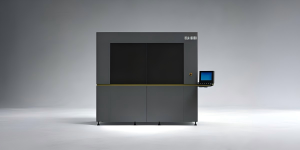
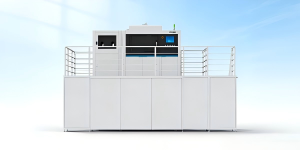
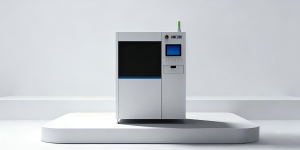
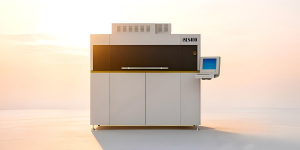
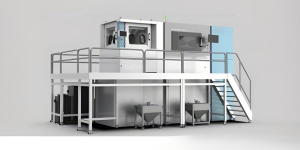
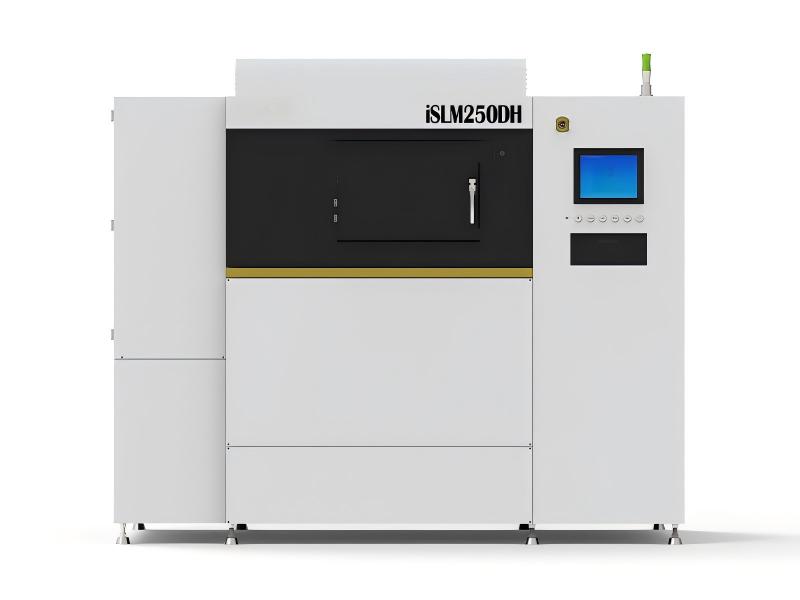
The Forgecise iSLM350D and iSLM420D are industrial-grade metal 3D printers specifically designed for the shoe mold industry, capable of meeting manufacturers’ demands for high efficiency, high strength, high quality, and continuous production.
Technical Specifications and Features
Laser System
- German IPG fiber laser for stable and reliable performance
- Dual galvanometer modular collaborative high-speed scanning with variable spot technology
- Intelligent partition and block laser path scanning for optimized energy distribution
Precision and Quality
- High positioning accuracy of ±0.1mm, enabling high-precision printing of shoe mold textures with exquisite details
- Flight deletion of damaged parts and fault self-diagnosis capabilities
- Multi-stream optimized airflow system for efficient removal of dust and spatter, reducing formation defects and ensuring density and surface quality
Environmental and Safety Features
- Three-stage dust removal filtration system with H13 grade filtration efficiency
- Filter cartridges with reverse blow powder cleaning function
- EU CE safety certification, ATEX explosion-proof certification, RoHS hazardous substance directive certification, and IP56 protection level certification
Software and Control
- Proprietary Presto-SLM equipment control software for efficient, stable, and safe operation
- Flexible printing strategy with three intelligent printing modes (fast mode, quality mode, shell-core separation manufacturing and part separation manufacturing mode)
- Open programmable printing system with open multi-parameter processes and customizable multi-part parameters
- Intelligent visual process monitoring and control system with remote OPC UA industrial interconnection for real-time project progress and quality monitoring
Design and Operation
- Compact and elegant exterior design with powerful functionality
- Rigorous hardware selection and configuration ensuring overall system stability
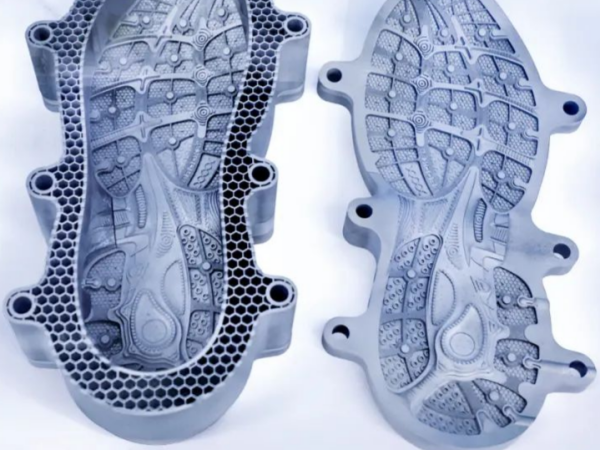
Application Case Study: Forgecise Metal 3D Printed Shoe Molds
Technical Parameters
- Process Type: SLM (Selective Laser Melting)
- Printing Equipment: iSLM250D
- Printing Material: Stainless Steel (316L)
- Layer Thickness: 0.03mm or 0.06mm variable layer thickness
- Printing Time: 19 hours (one sole mold + one side shoe mold)
- Surface Treatment: Sandblasting
Production Benefits
The implementation of Forgecise’s metal 3D printing technology in shoe mold manufacturing demonstrates several key advantages:
- Reduced Production Time: Traditional shoe mold manufacturing typically requires 2-3 weeks from design to finished product. With metal 3D printing, this timeline is compressed to 3-5 days, representing a 70-80% reduction in lead time.
- Cost Efficiency: While initial equipment investment is significant, the elimination of wooden patterns, casting processes, and chemical etching reduces overall production costs by approximately 30-40% for small to medium batch production.
- Design Freedom: Complex internal cooling channels, intricate surface textures, and lightweight structural designs that were previously impossible or extremely difficult to manufacture can now be realized with ease.
- Environmental Sustainability: The elimination of chemical etching processes reduces hazardous waste generation, while the additive nature of 3D printing minimizes material waste compared to subtractive manufacturing methods.
- Quality Improvement: Consistent printing parameters and digital process control result in higher dimensional accuracy and repeatability, reducing the need for post-processing adjustments and improving final product quality.
Industry Impact and Future Outlook
From a broader industry perspective, while aerospace and defense sectors demand high technical specifications, and medical applications face strict regulatory barriers, the footwear industry—with its dense ecosystem of specialized enterprises and industrial clusters—is exceptionally well-positioned for the widespread adoption and scaling of 3D printing technology.
The integration of metal 3D printing into shoe mold manufacturing represents more than just a technological upgrade; it signifies a fundamental shift in manufacturing philosophy. By enabling rapid prototyping, customization, and on-demand production, this technology supports the industry’s transition toward more agile, responsive, and sustainable manufacturing practices.
As metal 3D printing technology continues to advance and costs decrease, its adoption in the footwear industry is expected to accelerate, potentially transforming not only mold manufacturing but also enabling direct production of customized footwear components and even complete shoes for specialized applications.
Conclusion
Metal 3D printing technology, exemplified by Forgecise’s high-precision SLM systems, is revolutionizing shoe mold manufacturing by addressing long-standing industry challenges related to efficiency, cost, customization, and environmental impact. The successful implementation of this technology demonstrates how additive manufacturing can bridge the gap between traditional craftsmanship and modern digital manufacturing, creating new possibilities for innovation and growth in the footwear industry.
About Forgecise
Forgecise is an innovator in additive manufacturing technology, dedicated to providing high-performance metal 3D printing materials, equipment, and process solutions for the mold manufacturing, energy power, and other industrial sectors.