





Release Date: 2026-04-10
Paul Li
CTO | Author18 years experience in the Ru0026amp;D of 3D printing equipment and additive manufacturing processes, empowering the efficient intelligent manufacturing of complex parts.
In the demanding realm of aerospace engineering, where performance at extreme temperatures is non-negotiable, nickel-based superalloys like GH4169 (the Chinese equivalent of Inconel 718) are the material of choice for critical hot-section components. However, their exceptional strength and heat resistance come at a cost: they are notoriously difficult and expensive to machine.
A new technical report from China’s aviation industry demonstrates a powerful solution: leveraging laser cladding not just for repair, but as a core part of a “hybrid” manufacturing strategy for complex parts like aero-engine casings. This approach builds intricate features like mounting bosses directly onto a near-net-shape base, dramatically cutting waste, time, and cost while meeting the stringent performance requirements of forged parts.
The Challenge of Traditional Casing Manufacturing
Aero-engine casings made from GH4169 are vital, high-load-bearing structures. Traditionally, they are manufactured by:
- Forging a massive, solid billet of this expensive alloy.
- Machining away up to 90% of the material on sophisticated multi-axis CNC machines to achieve the final thin-walled geometry and features.
This subtractive process is incredibly inefficient, leading to:
- Massive material waste (a very low buy-to-fly ratio).
- Excessive tool wear and long machining times due to the alloy’s hardness.
- High overall production costs and long lead times.
The Hybrid Solution: “Overall Machining – Localized Additive”
The “GH4169 Casing Laser Cladding Test Report” proposes a smarter paradigm: “Overall Machining – Localized Additive – Localized Machining.”
The workflow is elegant:
- Start with a simpler, near-net-shape base component that has been machined to its final outer profile.
- Use Laser Directed Energy Deposition (DED) to add complex, hard-to-machine features—like the protruding bosses detailed in the report—precisely where needed.
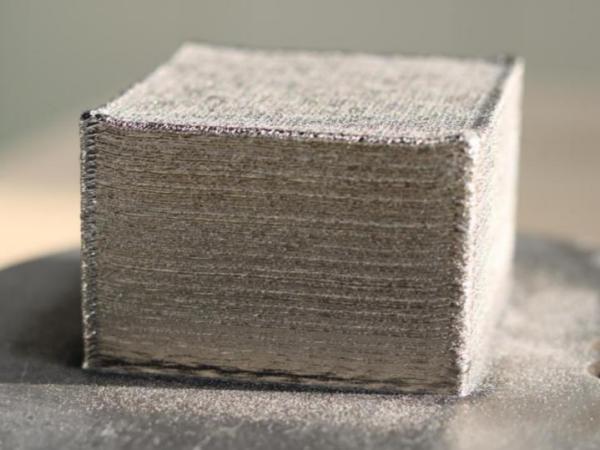
Figure 1 from the report shows the final product: a GH4169 casing with a successfully deposited boss feature, showcasing the hybrid manufacturing concept.
This strategy promises transformative benefits:
- >50% reduction in raw material cost.
- ~60% reduction in overall processing time.
- 50-70% reduction in total manufacturing cost.
Making it Work: The Technical Journey with GH4169
Successfully applying DED to a challenging material like GH4169 required meticulous process development, which the report documents in detail.
1. Material & Machine Setup
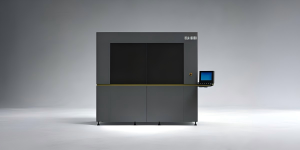
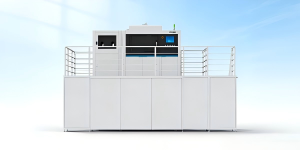
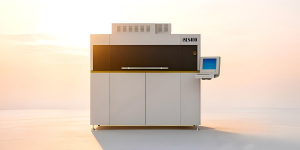
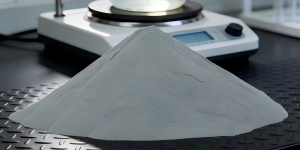
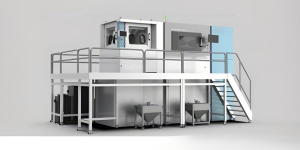
The team used spherical GH4169 powder (53-150 µm particle size) and a custom-built METAL+1005 system. This setup featured a 1000W laser, a 6-axis industrial robot for precise path control, and a sealed chamber filled with inert gas to prevent oxidation during the build—a critical requirement for reactive alloys.
2. Process Parameter Optimization: From Single Track to Multi-Layer Block
Finding the perfect laser parameters was an iterative process:
- Single Track Trials: Initial attempts resulted in poor deposition (Figure 8). By carefully adjusting laser power, scan speed, and powder/gas flows, they achieved a smooth, defect-free, and well-formed single bead (Figure 11)—the fundamental building block.
- Multi-Pass, Multi-Layer Blocks: Using the optimized single-track parameters, they built larger test blocks (Figures 12 & 14). These were rigorously inspected using dye penetrant testing (Figure 7) to ensure no surface cracks were present before moving to the next step.
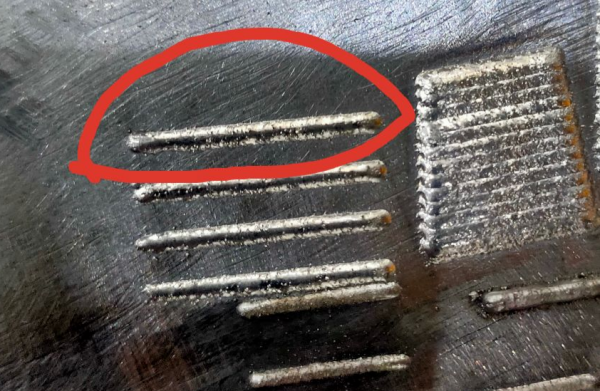
Figure 2 shows the final, qualified single track for GH4169—a critical milestone in the process development.
3. The Microstructure Verdict: Dense, Sound, and Ready for Service
The ultimate test of any additively manufactured part is its internal structure. A cross-section of the multi-layer block was prepared for metallographic analysis. This microstructural integrity confirmed that the laser cladding process could produce material suitable for high-stress aerospace applications.
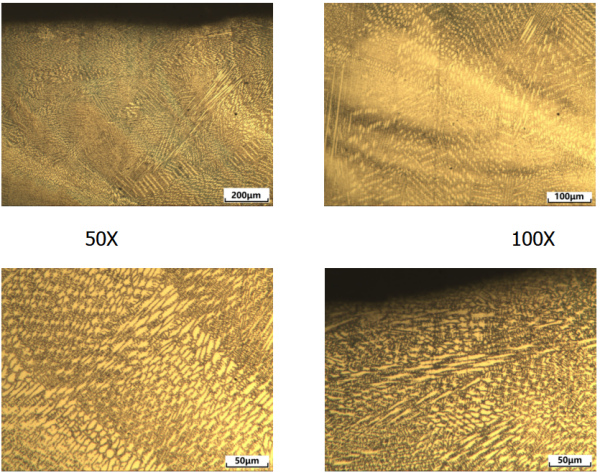
Figure 3 presents the final microstructure at various magnifications (50X to 500X). It reveals a fully dense, fine-grained structure with no visible pores, cracks, or lack-of-fusion defects. The bond between the deposited layer and the original substrate is a perfect metallurgical joint.
4. Tackling the Big Challenge: Heat Management on Thin Walls
The final practical hurdle was printing a boss onto an actual thin-walled GH4169 casing. The concentrated heat from the laser posed a significant risk of warping the delicate wall.
The report’s solution was pragmatic: enhanced cooling. By strategically managing heat dissipation from the workpiece during the build, they successfully controlled thermal distortion, resulting in a high-quality final part (Figures 18 & 19).
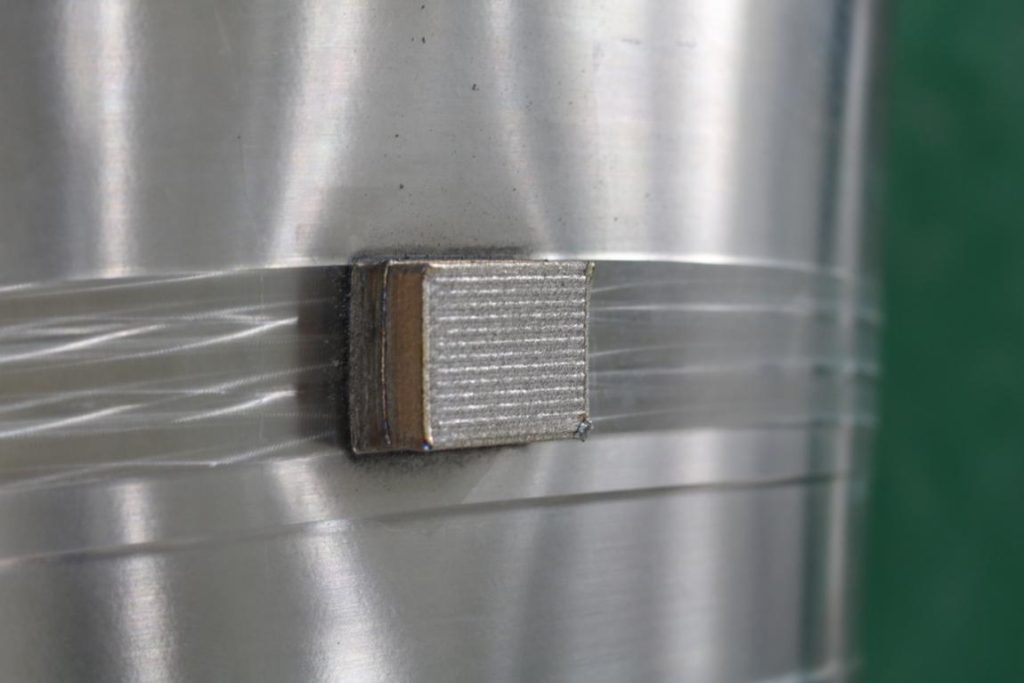
Figure 4 shows the finished GH4169 casing after the successful deposition of the boss feature.
Conclusion: A Proven Path for High-Value, High-Performance Components
This comprehensive report validates a powerful new manufacturing philosophy for nickel-based superalloys. By integrating laser cladding into a hybrid workflow, manufacturers can overcome the inefficiencies of traditional methods.
The successful deposition of a dense, defect-free, and geometrically accurate GH4169 boss onto a complex casing proves that this technology is mature and ready for demanding aerospace applications. It offers a clear and validated path to producing high-integrity, complex parts with dramatically improved efficiency, sustainability, and cost-effectiveness.
About Forgecise
Forgecise is an innovator in additive manufacturing, focusing on high-performance metal 3D printing equipment, materials, and software solutions for industrial manufacturing.