



Release Date: 2026-04-10
Paul Li
CTO | Author18 years experience in the Research and Development of 3D printing equipment and additive manufacturing processes, empowering the efficient intelligent manufacturing of complex parts.
Imagine this: due to an accident, a large piece of your jawbone is missing, making eating and speaking difficult. In the past, this might have been an irreparable tragedy. But today, I want to share a real story with you—a miracle of how 3D printing technology helped a 35-year-old male patient reconstruct his jawbone and regain a normal life.
An Accident, A Challenge
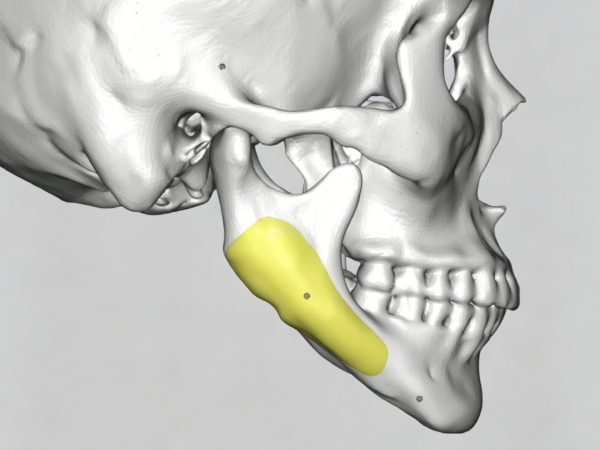
Our story’s protagonist is a 35-year-old man. In a traffic accident, his jawbone suffered severe damage, with a defect area measuring 4.5 × 3.2 × 2.1 centimeters. This might sound like just a cold number, but for the patient, it meant impaired chewing function, altered facial appearance, and even difficulties with speaking and breathing.
Traditional repair methods, such as using titanium mesh, could provide some support but came with many problems: titanium mesh is too rigid and would “steal” the force that bones should bear (medically called “stress shielding”), leading to poor bone healing. Moreover, titanium mesh is standardized and difficult to perfectly match each person’s unique bone structure.
The Magic of Technology: A Custom-Made “Bone Scaffold”
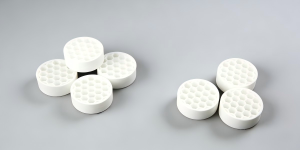
Faced with this challenge, the medical team decided to use cutting-edge technology—ceramic 3D printing. This technology may sound sophisticated, but the principle is actually quite simple: just like using a 3D printer to print toys, except this time the printing material is a special type of bio-ceramic, and the “product” printed is a bone scaffold completely customized to match the patient’s defect area.
Step 1: Precision “Tailoring”
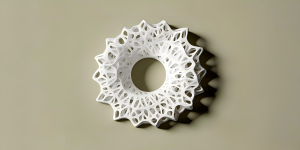
First, doctors performed a high-precision CT scan on the patient, essentially taking a “3D photograph” of the defective bone. Then, engineers used computer software to design a perfect scaffold model based on this “photograph.” This scaffold not only matched the patient’s original bone shape exactly, but its interior was also designed with countless tiny pores—these pores weren’t randomly designed. Their size (400-600 microns, finer than a human hair) and distribution were carefully calculated to allow new bone cells to grow smoothly within them.
Step 2: Choosing the Right “Building Materials”
The choice of scaffold material was also a science. The medical team selected a mixture of two bio-ceramics: hydroxyapatite and β-tricalcium phosphate. These materials may sound technical, but they share one common characteristic: they are naturally occurring components in human bones! This means they have excellent “compatibility” with human tissue and won’t cause rejection reactions.
More importantly, this material has a magical property: it gradually “disappears” as new bone grows. Like scaffolding at a construction site, once the new building (new bone) is complete, the scaffolding (ceramic scaffold) automatically dismantles itself, leaving no foreign objects in the body.
Step 3: The “Magic” of 3D Printing
After the design was completed, the real magic began. The 3D printer worked like a patient craftsman, “building” this scaffold layer by layer. Each layer was only 0.05 millimeters thick—thinner than a sheet of paper. After printing was complete, the scaffold still needed high-temperature sintering and other treatments to make it strong and durable while maintaining its porous structure.
Surgery: Connecting Technology with Life
On the day of surgery, doctors implanted this carefully crafted scaffold into the patient’s defect area. To accelerate bone growth, doctors also extracted some bone marrow stem cells from the patient’s iliac bone (commonly known as the “hip bone”). These stem cells act like “construction workers” and were injected into the scaffold’s pores to help new bone grow quickly.
The entire surgery lasted 3 hours, 40% shorter than traditional methods. After surgery, the patient recovered quickly, with pain significantly reduced by the third day.
The Miracle Unfolds: The Bone’s Self-Reconstruction
The most amazing part happened after surgery. Over time, something miraculous occurred:
- 1 month post-surgery: The scaffold remained stable in place, with no abnormal reactions in surrounding tissues.
- 6 months post-surgery: CT scans showed that new bone had begun growing within the scaffold’s pores, and the boundary between the scaffold and original bone became blurred.
- 2 years post-surgery: The scaffold had been completely replaced by new bone, the patient’s chewing function recovered to 95% of pre-injury levels, and facial appearance returned completely to normal.
Why Is This Technology So Important?
You might ask, isn’t this just a successful surgery case? Why is it worth highlighting? The answer lies in the fact that this technology represents an important direction in medical development—personalized medicine.
1. Custom-Made, Perfect Fit
Everyone’s bone structure is unique, like fingerprints. Traditional standardized implants are difficult to match perfectly, while 3D printing technology can create completely personalized scaffolds based on each individual’s specific situation, achieving a match rate of over 98%.
2. Accelerated Healing, Reduced Suffering
Due to the scaffold’s porous structure and bioactive materials, new bone growth was 35% faster than traditional methods. This means patients can return to normal life more quickly, reducing pain and inconvenience.
3. Scarless Repair, No Future Complications
The scaffold gradually degrades as new bone grows and is eventually completely absorbed by the body. This means patients don’t need a second surgery to remove the implant and won’t have any permanent foreign objects left in their bodies.
Future Outlook: Smarter Bone Repair Technology
This case is just the beginning of ceramic 3D printing technology’s application in bone repair. Scientists are researching even smarter materials and technologies:
- Drug-Delivery Scaffolds: Future scaffolds could work like “smart pills,” releasing medication when needed to help control infections or promote healing.
- 4D Printing Technology: Imagine scaffolds that, after implantation, can automatically adjust their shape based on changes in the surrounding environment, better adapting to bone growth needs.
- Vascularization Technology: Building tiny vascular networks within scaffolds to provide better blood supply for large bone defect repairs.
Conclusion: Technology Makes the Impossible Possible
The story of this patient’s jawbone rebirth is not just a successful medical case—it’s a vivid example of how technology changes lives. From cold 3D printers to warm life reconstruction, the power of technology is turning more and more “impossibilities” into “possibilities.”
In the future, as technology continues to advance, we have every reason to believe that more people like this patient will benefit from this technology, regaining health and confidence. And it all started with a simple idea: if we can print anything, why can’t we print “bones” that help people regain their health?
About Forgecise
Forgecise is an innovator in additive manufacturing technology, dedicated to providing high-performance metal 3D printing materials, equipment, and process solutions for the mold manufacturing, energy power, and other industrial sectors.