



Ceramic 3D printing for bone-repair scaffolds is an engineering topic that connects patient-specific geometry, porous structures, material processing, and device verification. This overview explains the manufacturing workflow and the questions a technical team must resolve. It does not report a verified patient case or establish the clinical suitability of a particular implant.
What does a ceramic bone scaffold need to do?
A scaffold design must be assessed against its intended function, loading conditions, geometry, and biological requirements. A close geometric fit alone does not establish strength, stability, or clinical performance. The design brief should distinguish temporary scaffolding from a permanent implant and define how the component will be evaluated.
From imaging to a manufacturable design
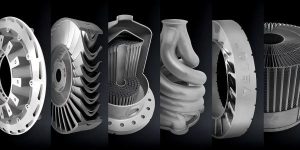
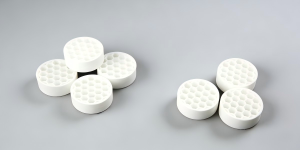
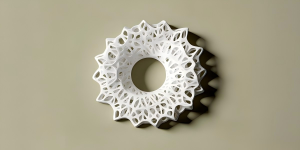
A typical design discussion starts with medical imaging and a digital representation of the defect. The team must check segmentation, model accuracy, manufacturing allowances, and inspection access. Pore geometry, interconnections, wall thickness, and external surfaces are design variables that require validation; there is no single pore size or layer thickness suitable for every application.
Material and process selection
Hydroxyapatite and calcium-phosphate ceramics are often discussed in bone-scaffold development. Selecting a material requires its exact composition, supplier documentation, processing route, and intended device requirements. A material name by itself does not establish biocompatibility, resorption rate, or suitability for a specific patient.
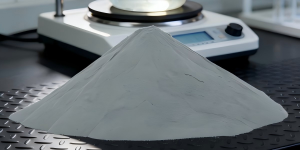
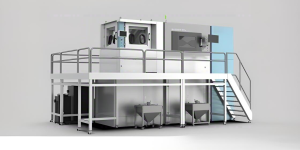
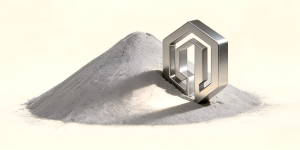
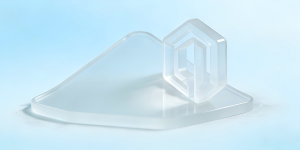
Depending on the printing route, the ceramic may be processed as a suspension or powder-based feedstock. Printing, binder removal where applicable, and sintering must be developed together. Shrinkage, distortion, cracks, residual material, and variation between batches are manufacturing issues that need inspection and process controls.
Verification before clinical use
A technical verification plan should define dimensional tolerances, pore and wall measurements, defect detection, mechanical testing, cleanliness, and traceability. It should also identify the biological evaluation, sterilization validation, and regulatory requirements relevant to the intended device and jurisdiction. Manufacturing success and clinical effectiveness are separate questions.
Claims about healing speed, complete scaffold replacement, complication rates, or recovered chewing function require an identifiable clinical source, study design, and follow-up period. This page does not provide evidence for those outcomes. Treatment selection belongs to the responsible clinical team.
Questions to ask a manufacturing partner
Ask which ceramic formulation and printing process are used; how shrinkage is compensated; how internal defects and pore connectivity are measured; which tests support the stated mechanical properties; and how powder or slurry lots, builds, thermal cycles, and inspection results are traced. Clarify whether the supplier is discussing research samples, manufacturing development, or a device authorized for clinical use.
Related manufacturing guides
For a comparison with metal-based production routes, see our metal additive manufacturing guide. For broader industrial development and inspection planning, see how to use 3D printing in an industrial production workflow. These guides describe manufacturing considerations and do not qualify a medical device.