




Release Date: 2026-04-10
Paul Li
CTO | Author18 years experience in the Research and Development of 3D printing equipment and additive manufacturing processes, empowering the efficient intelligent manufacturing of complex parts.
In the wave of modern medical technology, ceramic 3D printing is bringing unprecedented treatment experiences to patients with its unique biocompatibility and precise manufacturing capabilities. This technology can not only replicate complex human body structures but also customize personalized medical devices according to each patient’s unique needs.
Bone Tissue Engineering and Repair: Scaffolds for Rebuilding Life
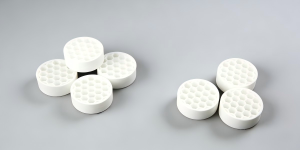
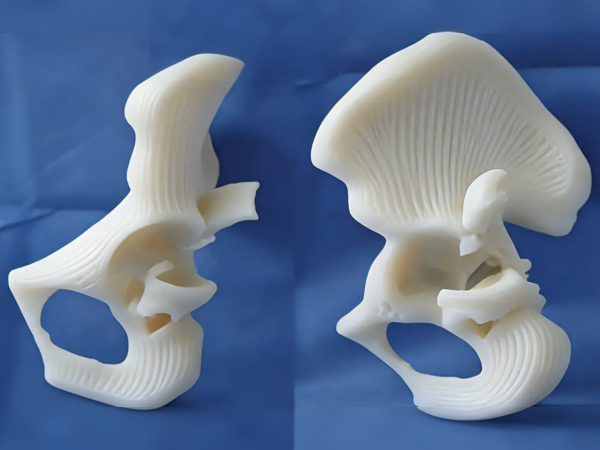
Traditional bone defect treatments often face challenges such as poor matching and slow healing. Ceramic 3D printing technology has completely transformed this situation. Doctors can now precisely print bone implants that perfectly match the defect site based on patients’ CT or MRI data. More remarkably, these implants are designed with sophisticated porous structures inside, with pore sizes scientifically calculated to promote bone cell growth and guide vascular regeneration.
Bioactive ceramics such as hydroxyapatite and β-tricalcium phosphate have chemical compositions similar to human bone tissue, allowing them to perfectly integrate with surrounding tissues. Clinical studies show that patients using 3D-printed ceramic bone scaffolds experience an average reduction in bone healing time of 30-40%, with significantly lower complication rates. For patients with large bone defects or complex fractures, this technology provides therapeutic effects that traditional methods cannot match.
Dental Applications: The Precision Art of Smiles
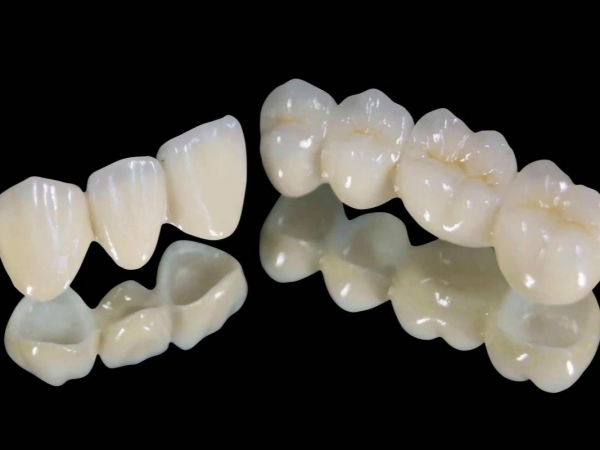
In the dental field, ceramic 3D printing is redefining the standards of tooth restoration. Traditional crown fabrication requires multiple visits, impressions, and fittings, while 3D printing technology can complete the entire process in a single visit. Dental implants made from high-performance ceramic materials such as zirconia and alumina through 3D printing not only possess excellent mechanical strength but also achieve aesthetic effects almost indistinguishable from natural teeth.
Digital scanning technology ensures precise fit of restorations, avoiding edge mismatch issues that may occur with traditional methods. More importantly, the surface smoothness and internal structure of 3D-printed crowns are optimized through design, greatly reducing the risk of bacterial adhesion and secondary caries. For patients pursuing perfect smiles, this technology achieves a perfect unity of function and aesthetics.
Artificial Joints: Regaining Freedom of Movement
Joint replacement surgery has extremely demanding requirements for materials—neither able to withstand long-term mechanical wear nor coexist harmoniously with human tissues. Ceramic 3D printing technology demonstrates significant advantages in this area. Artificial joint components made from composite ceramic materials such as zirconia-toughened alumina (ZTA) possess ultra-high hardness and wear resistance, with service life extended several times compared to traditional metal joints.
3D printing processes can also create micron-level texture structures on joint surfaces. This biomimetic design not only improves joint lubrication performance but also promotes integration with surrounding tissues. For younger patients, this means they may only need one joint replacement surgery to enjoy decades of normal life. Additionally, personalized design ensures perfect joint matching, greatly reducing postoperative pain and functional impairment.
Future Outlook: Ceramic 3D Printing Leading a New Era in Medicine
With the deep integration of materials science, biotechnology, and artificial intelligence, the application prospects of ceramic 3D printing in the medical field are becoming even broader, rapidly developing toward intelligent, precise, and personalized directions.
Smart Responsive Materials and 4D Printing Technology
Future ceramic 3D printing will no longer be limited to static structures but will move toward “smart materials” and “4D printing.” Researchers are developing smart ceramic materials that can respond to external stimuli (such as temperature, pH, and biological signals). Implants made from these materials can automatically adjust their shape or release drugs according to changes in the internal environment, achieving truly “living” medical devices. 4D printing technology will enable ceramic implants to possess time-dimensional deformation capabilities, gradually changing shape according to preset programs after implantation to better adapt to tissue growth needs.
Artificial Organs and Complex Tissue Construction
Ceramic 3D printing is advancing toward more complex organ manufacturing fields. Scientists are exploring the possibility of using bioceramic materials to print artificial organs such as kidneys and heart valves. These ceramic-based organs not only possess excellent biocompatibility but can also achieve complex physiological functions such as blood filtration and nutrient delivery through sophisticated porous structure design. In vascular and skin tissue engineering, ceramic 3D printing technology can manufacture biomimetic tissues with microvascular networks, providing new solutions for large-area trauma repair and organ transplantation.
About Forgecise
Forgecise is an innovator in additive manufacturing technology, dedicated to providing high-performance metal 3D printing materials, equipment, and process solutions for the mold manufacturing, energy power, and other industrial sectors.