







Release Date: 2026-04-19
Paul Li
CTO | Author18 years experience in the Research and Development of 3D printing equipment and additive manufacturing processes, empowering the efficient intelligent manufacturing of complex parts.
Introduction
3D printing technology, also known as additive manufacturing, has evolved from a simple prototyping tool since its inception in the 1980s to become an integral component of modern manufacturing. In the consumer electronics sector, this technology is playing an increasingly important role, not only accelerating product development processes but also driving breakthrough innovations in product design. With continuous technological advancements and sustained cost reductions, 3D printing is profoundly transforming the R&D models and production methods of consumer electronic products.
Basic Principles of 3D Printing Technology
3D printing technology constructs three-dimensional objects by layer-by-layer material deposition, forming a stark contrast to traditional subtractive manufacturing methods (such as cutting and drilling). In the consumer electronics field, the main 3D printing technologies applied include Selective Laser Melting (SLM), Fused Deposition Modeling (FDM), Stereolithography (SLA), and Multi Jet Fusion (MJF). Different technologies are suitable for different materials and application scenarios, providing diversified manufacturing solutions for consumer electronics product development.
Rapid Prototyping and Validation
In the development process of consumer electronic products, design validation is a crucial phase. Traditional prototyping typically requires mold fabrication, which is time-consuming and costly. 3D printing technology can complete prototype production within hours to days, significantly shortening the product development cycle. The advantages include rapid design iteration, enabling multiple modifications within a short timeframe; relatively low costs, particularly suitable for small-batch validation; and the ability to produce complex structures to verify design feasibility. These advantages make 3D printing an indispensable tool in the consumer electronics R&D process.
Manufacturing of Complex Structural Components
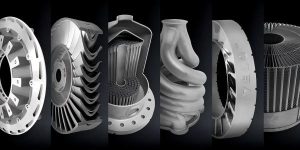
Consumer electronic products increasingly demand lightweight and miniaturized designs, which has given rise to numerous complex structural design requirements. 3D printing technology can achieve complex geometric shapes that are difficult or impossible to manufacture using traditional processes. For example, foldable phone hinges utilize aerospace-grade titanium alloy 3D printing processes, with wing plate thickness reaching 0.15mm and strength improvements of 120% compared to traditional materials. Internal bracket structures can be designed with complex internal support systems that ensure strength while achieving lightweight construction. These applications fully demonstrate the unique advantages of 3D printing technology in complex structure manufacturing.
Personalized Customization
The consumer electronics market is experiencing growing demand for personalized products. 3D printing technology enables small-batch, multi-variety production models that satisfy consumers’ personalized needs. Typical applications include personalized phone cases, earphone shells, customized smartwatch bands, and specialized electronic accessories. This on-demand production model not only meets consumers’ personalized requirements but also reduces inventory pressure and resource waste.
Large-Scale Application of Metal 3D Printing
In recent years, metal 3D printing technology has achieved breakthrough progress in the consumer electronics sector. In 2023, Honor released the first smartphone in the consumer electronics field containing 3D printed components, with the 3D printed hinge making it the thinnest foldable phone at that time. In 2025, OPPO’s Find N5 further pushed technological boundaries, utilizing titanium alloy 3D printing processes to create the “Sky Dome” hinge, compressing the body thickness to 8.93mm and setting a new global record for the thinnest foldable screen. Technical specifications include materials (titanium alloy, aluminum alloy, stainless steel), precision (±0.1mm positioning accuracy), strength (100-120% improvement over traditional materials), and durability (passing 500,000 folding tests), fully demonstrating the maturity and reliability of metal 3D printing technology.
Innovative Applications of Polymer 3D Printing
Beyond metal materials, polymer 3D printing technology also plays a significant role in the consumer electronics sector. Chip-level polymer 3D printing technology has been applied to address foldable screen crease issues, effectively improving screen flatness and durability through precise control of material distribution and structural design. This innovative application showcases the enormous potential of 3D printing technology in solving industry pain points.
Shortening Product Development Cycles
Traditional consumer electronics product development cycles typically range from 12 to 18 months, with the prototyping phase accounting for 30-40% of that time. After adopting 3D printing technology, prototype production time can be reduced by 70-80%, and the overall development cycle can be shortened by 20-30%. Specific data shows that prototype production time has been reduced from 2-3 weeks to 3-5 days, design iteration cycles have increased from 3-5 times to 8-10 times, and R&D costs have been reduced by 30-40%. These figures clearly demonstrate the significant effectiveness of 3D printing technology in improving R&D efficiency.
Enhancing Design Freedom
3D printing technology breaks through the design limitations imposed by traditional manufacturing processes, allowing designers to focus more on product functionality and user experience optimization without excessive concern for manufacturing feasibility. It enables integrated molding to reduce assembly processes; allows for the design of complex internal structures to optimize product performance; and facilitates lightweight design to enhance product portability. These design advantages provide greater space for innovation in consumer electronics products.
Material Innovation
With the development of new materials, the applications of 3D printing in the consumer electronics sector will continue to expand. The emergence of new 3D printing materials such as conductive materials, flexible materials, and composite materials will bring more possibilities to electronic product design. These new materials not only meet the performance requirements of electronic products but also achieve functional characteristics that traditional materials cannot reach.
Process Optimization
Continuous optimization of 3D printing processes will improve production efficiency and product quality. The application of technologies such as multi-laser collaborative printing, variable spot technology, and intelligent path planning will further enhance printing speed and precision. These process optimizations not only improve production efficiency but also reduce production costs, laying the foundation for large-scale application of 3D printing technology in the consumer electronics sector.
Mass Production
With decreasing equipment costs and maturing technology, 3D printing technology will transition from prototyping and small-batch production to mass production. It is projected that by 2030, the application scale of 3D printing in the consumer electronics sector will reach the billion-yuan level. Mass production will not only reduce unit costs but also improve the consistency and reliability of product quality.
Conclusion
3D printing technology is profoundly transforming the R&D models in the consumer electronics sector. Through applications such as rapid prototyping, complex structure manufacturing, and personalized customization, this technology not only accelerates product development processes but also drives breakthrough innovations in product design. With continuous technological advancement and sustained cost reduction, 3D printing will play an increasingly important role in the consumer electronics sector, becoming a crucial engine for driving industry innovation and development. In the future, 3D printing technology will deeply integrate with emerging technologies such as artificial intelligence and the Internet of Things, bringing more innovation opportunities and development space to the consumer electronics industry.
About Forgecise
Forgecise is an innovator in additive manufacturing technology, dedicated to providing high-performance metal 3D printing materials, equipment, and process solutions for the mold manufacturing, energy power, and other industrial sectors.