




| Category | Parameter | Specification |
|---|---|---|
| Typical Applications | — | Suitable for aerospace parts, engines, etc. |
| Applicable Processes | — | LPBF (Laser Powder Bed Fusion) |
| Chemical Composition (wt.%) | C | ≤ 0.03 |
| Si | ≤ 1.00 | |
| Mn | ≤ 2.00 | |
| P | ≤ 0.045 | |
| S | ≤ 0.030 | |
| Cr | 18.0–20.0 | |
| Ni | 8.0–12.0 | |
| Fe | Balance | |
| O | ≤ 0.08 | |
| N | ≤ 0.15 | |
| Physical Properties | Particle Size Range (D10 / D50 / D90) | ≥15 μm / 30–40 μm / ≤60 μm |
| Sphericity | ≥0.9 | |
| Apparent Density | ≥4.0 g/cm³ | |
| Tap Density | ≥4.5 g/cm³ | |
| Flowability | ≤20 s/50g | |
| Mechanical Properties | Status | Heat-Treated* |
| Tensile Strength | ≥600 MPa | |
| Yield Strength | ≥320 MPa | |
| Elongation | ≥45.0 % |
> Please note: Specifications are subject to change without notice. Contact a Forgecise representative for the most current technical data.
2. Key Advantages of 304L Stainless Steel Powder
This ultra-low-carbon austenitic stainless steel powder delivers exceptional value for high-integrity applications:
- Superior weldability & corrosion resistance: With carbon ≤0.03%, it avoids sensitization during welding or thermal cycling—critical for welded assemblies in corrosive environments.
- High ductility and toughness: Elongation ≥45% ensures excellent impact resistance and formability, reducing part failure risk under dynamic loads.
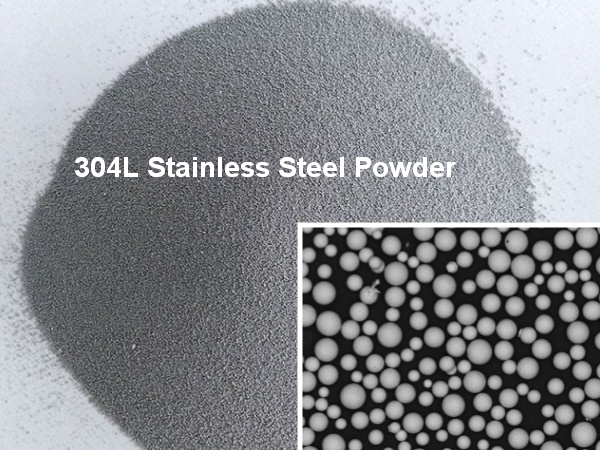
- Excellent processability in LPBF: Optimized particle size (D50 = 30–40 μm), high sphericity (≥0.9), and low oxygen content (≤0.08%) ensure stable powder flow, uniform layer deposition, and dense (>99.5% relative density) printed parts.
- Broad regulatory acceptance: Compliant with ASTM A240/A484 and ISO 15510 standards; widely used in food, medical, and aerospace sectors where hygiene and reliability are paramount.
3. Application in Additive Manufacturing
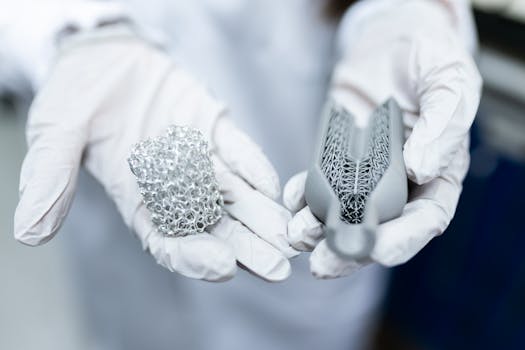
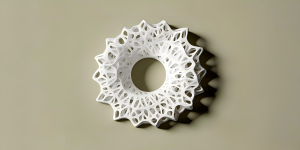
Designed specifically for Laser Powder Bed Fusion (LPBF), this 304L powder enables the fabrication of complex, high-performance components with minimal post-processing. Its narrow particle size distribution (D10 ≥15 μm, D50 30–40 μm, D90 ≤60 μm) ensures consistent recoating and reduced balling effects, while high sphericity (≥0.9) and excellent flowability (≤20 s/50g) support reliable automated handling. The resulting parts exhibit high density, good surface finish, and mechanical properties matching wrought 304L after solution annealing—making it ideal for lightweight aerospace brackets, engine housings, fluid manifolds, and custom medical/food-grade fixtures requiring corrosion resistance, biocompatibility, and structural integrity.
4. What is 304L Stainless Steel Powder?
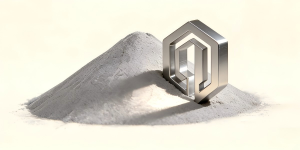
304L Stainless Steel Powder is an austenitic stainless steel powder with ultra-low carbon content, specifically designed for advanced manufacturing processes such as metal 3D printing (SLM/DMLS), metal injection molding (MIM), and powder metallurgy. The “L” designation stands for “Low Carbon,” which distinguishes it from standard 304 stainless steel and provides superior weldability and corrosion resistance in welded structures.
Core Characteristics
- Ultra-Low Carbon Content: Carbon content ≤0.03%, significantly reducing the risk of chromium carbide precipitation during welding and preventing intergranular corrosion.
- Excellent Corrosion Resistance: High chromium (18-20%) and nickel (8-12%) content provide outstanding resistance to atmospheric corrosion, weak acids, alkalis, and various chemical environments.
- Superior Weldability: The low carbon content makes it ideal for applications requiring extensive welding without post-weld heat treatment.
- Good Formability and Ductility: Excellent elongation (≥40%) and toughness, suitable for complex shape manufacturing.
- Non-Magnetic Properties: Austenitic structure ensures non-magnetic characteristics in annealed condition, beneficial for specific applications.
Typical Chemical Composition (wt.%)
| Element | Content Range (%) | Function |
|---|---|---|
| Chromium (Cr) | 18.0 – 20.0 | Forms protective passive film, provides corrosion resistance |
| Nickel (Ni) | 8.0 – 12.0 | Stabilizes austenitic structure, enhances ductility and corrosion resistance |
| Carbon (C) | ≤ 0.03 | Ultra-low carbon prevents sensitization and intergranular corrosion |
| Manganese (Mn) | ≤ 2.0 | Austenite stabilizer, improves hot workability |
| Silicon (Si) | ≤ 1.0 | Deoxidizer, enhances high-temperature oxidation resistance |
| Phosphorus (P) | ≤ 0.045 | Impurity, requires strict control |
| Sulfur (S) | ≤ 0.030 | Impurity, requires strict control |
| Iron (Fe) | Balance | Base element |
Mechanical Properties
| Property | Typical Value | Standard |
|---|---|---|
| Tensile Strength | ≥ 520 MPa | ASTM A240 |
| Yield Strength | ≥ 205 MPa | ASTM A240 |
| Elongation | ≥ 40% | ASTM A240 |
| Hardness | ≤ 201 HB | ASTM E10 |
Major Application Fields
- Chemical Processing Equipment: Reactors, storage tanks, pipelines handling corrosive chemicals.
- Food and Beverage Industry: Processing equipment, storage containers, brewing equipment requiring high hygiene standards.
- Medical Devices: Surgical instruments, medical equipment components, pharmaceutical processing equipment.
- Architectural Applications: Building facades, decorative elements, structural components in corrosive environments.
- Marine Applications: Boat fittings, offshore equipment, coastal structures.
- Additive Manufacturing: Complex fluid channels, heat exchangers, custom medical implants, lightweight structural components.
304L vs 304 vs 316L
| Feature | 304L | 304 | 316L |
|---|---|---|---|
| Carbon Content | ≤0.03% | ≤0.08% | ≤0.03% |
| Chromium | 18-20% | 18-20% | 16-18% |
| Nickel | 8-12% | 8-10.5% | 10-14% |
| Molybdenum | None | None | 2-3% |
| Corrosion Resistance | Excellent | Excellent | Superior (due to Mo) |
| Weldability | Excellent | Good | Excellent |
| Cost | Moderate | Lower | Higher |
| Best For | Welded structures, general corrosion | General purpose | Marine, chemical, high corrosion |
5. Customization Services by Forgecise
Forgecise provides comprehensive stainless steel powder customization solutions, covering the full range of products from standard grades to customer-specific formulations. We support mainstream grades such as 17-4PH, 15-5PH, 316L, 304L, 420, 440C, 13-8PH, and can adjust composition, particle size distribution, and sphericity according to your application requirements. Whether it’s small-batch samples for R&D (starting from 1kg) or ton-level orders for mass production, we ensure high purity, low oxygen content, and excellent flowability of our powders, meeting the requirements of various processes including SLM, EBM, MIM, and LMD.