




Written by Felix Lee, CEO at Forgecise
Expertise: Advanced Manufacturing | Industrial Automation | Metal Additive Manufacturing
Published: July 30, 2026
Last Updated: July 30, 2026
Table of Contents
Quick Answer
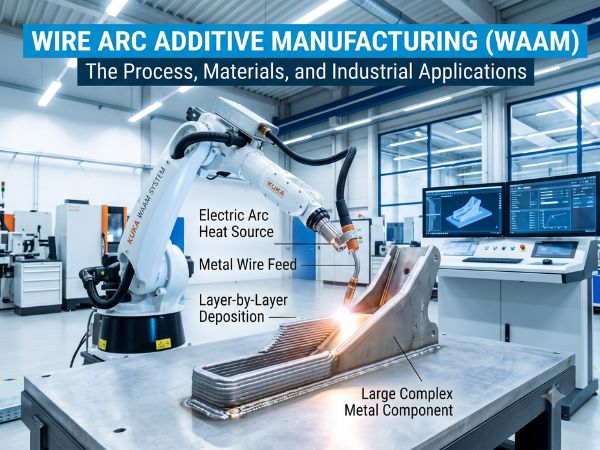
Wire Arc Additive Manufacturing (WAAM) is a metal 3D printing technology that uses an electric arc heat source to melt metal wire layer by layer, creating large and complex metal components. WAAM combines welding technology, robotics, sensors, and digital control to achieve high deposition rates for industries such as aerospace, shipbuilding, energy, and industrial tooling.
TL;DR: What You Need to Know About WAAM
- WAAM uses welding-based technology to create large metal parts through layer-by-layer deposition.
- Common WAAM materials include titanium alloys, aluminum alloys, steel, nickel-based alloys, and copper alloys.
- Its biggest advantages are high deposition speed, low material waste, and the ability to manufacture large structures.
- Major challenges include thermal accumulation, residual stress, porosity, cracking, and inconsistent material properties.
- The future of WAAM depends on AI monitoring, digital twins, closed-loop control, and smart manufacturing systems.
What Is Wire Arc Additive Manufacturing (WAAM)?
Wire Arc Additive Manufacturing (WAAM) is a large-scale metal additive manufacturing process that uses an electric arc as a heat source to melt metal wire feedstock. The molten material is deposited layer by layer until a near-net-shape metal component is created.
Unlike traditional machining, which removes material from a larger block, WAAM builds components by adding material only where it is needed.
This makes WAAM especially valuable for producing:
- Large aerospace structures
- Heavy industrial components
- Marine parts
- Energy equipment
- Complex metal prototypes
The basic WAAM process follows a simple path:
Metal wire → Wire feeding system → Arc heat source → Melt pool → Layer deposition → Finished component
The technology combines several fields:
- Welding engineering
- Robotics
- Materials science
- Process monitoring
- Digital manufacturing
This combination allows manufacturers to produce large metal components faster and with less material waste compared with many traditional manufacturing methods.
How Does the WAAM Manufacturing Process Work?
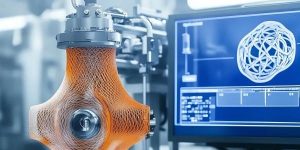
WAAM works by controlling a robotic welding system that deposits melted metal wire according to a digital design model.
A robotic arm moves the welding torch along a programmed path while controlling heat input, wire feeding speed, and travel speed.
The quality of the final component depends on how accurately the system manages the interaction between:
- Heat transfer
- Melt pool behavior
- Material flow
- Solidification
- Residual stress
This is why WAAM is not simply “automated welding.” It is a complex manufacturing system that requires precise control.
What Are the Main WAAM Process Routes?
Different arc technologies can be used in WAAM depending on the material, production goal, and required quality.
Gas Metal Arc Welding (GMAW WAAM)
Gas Metal Arc Welding (GMAW) is one of the most widely used WAAM methods.
Its main advantages include:
- High deposition rate
- Strong industrial maturity
- Ability to manufacture large structures
GMAW-based WAAM is commonly considered when production speed is a priority.
For example, large steel structures or aerospace components requiring significant material volume can benefit from its high productivity.
Gas Tungsten Arc Welding (GTAW WAAM)
Gas Tungsten Arc Welding (GTAW) provides better process control and higher precision.
Key benefits include:
- Stable arc behavior
- Improved surface quality
- Better control for sensitive materials
However, GTAW usually has a lower deposition rate compared with GMAW.
Plasma Arc Welding (PAW WAAM)
Plasma Arc Welding (PAW) uses a concentrated plasma arc to provide controlled energy delivery.
Advantages include:
- High arc stability
- Concentrated heat source
- Improved process consistency
PAW is often considered for applications where precision and quality are critical.
Cold Metal Transfer (CMT WAAM)
Cold Metal Transfer (CMT) is designed to reduce heat input during deposition.
Benefits include:
- Lower thermal distortion
- Reduced deformation
- Better control for thin structures
CMT is especially useful when manufacturers need improved surface quality and reduced heat-related problems.
Hybrid Heat Source WAAM
Advanced WAAM research is also exploring hybrid heat sources.
Examples include:
- Arc + laser systems
- Combined heating technologies
- Advanced energy control methods
These approaches aim to improve:
- Deposition stability
- Surface quality
- Mechanical performance
Why Is Multi-Physics Control Important in WAAM?
WAAM involves multiple physical processes happening at the same time.
Researchers use multi-physics models to understand the relationship between:
- Thermal fields
- Fluid flow
- Material transfer
- Stress development
Controlling these interactions is one of the biggest challenges in WAAM engineering.
Thermal Field Control
During WAAM, each deposited layer creates a new heating and cooling cycle.
The thermal field affects:
- Melt pool temperature
- Cooling rate
- Material structure
- Final mechanical properties
Excessive heat accumulation can cause:
- Distortion
- Poor layer formation
- Reduced consistency
Melt Pool and Fluid Flow Behavior
The melt pool is where the metal wire becomes liquid before solidifying.
Its behavior influences:
- Layer shape
- Surface quality
- Defect formation
Stable melt pool control is essential for reliable production.
Material Transfer and Solidification
During deposition, molten metal moves from the wire into the growing component.
The process affects:
- Alloy distribution
- Microstructure development
- Layer bonding
Stress Field and Residual Stress
Repeated heating and cooling create internal stress.
The process is:
Heating → Expansion → Cooling → Shrinkage → Residual stress
Residual stress can lead to:
- Warping
- Cracking
- Dimensional errors
How Does WAAM Control Quality During Manufacturing?
Modern WAAM systems use advanced sensors and control systems to improve reliability.
The goal is moving from manual parameter adjustment toward intelligent, closed-loop manufacturing.
What Parameters Control WAAM Performance?
| Parameter | Effect on Manufacturing |
|---|---|
| Heat input | Controls melting behavior and thermal effects |
| Inter-layer temperature | Influences microstructure and bonding |
| Wire feed speed | Controls deposition volume |
| Travel speed | Changes layer shape and quality |
Small changes in these parameters can significantly affect the final component.
How Does Online Monitoring Improve WAAM?
Advanced WAAM systems use real-time monitoring technologies, including:
Vision Monitoring
Cameras track:
- Melt pool appearance
- Layer formation
- Surface changes
Infrared Monitoring
Infrared sensors measure:
- Temperature distribution
- Thermal behavior
Optical Monitoring
Optical systems analyze:
- Arc characteristics
- Material behavior
Acoustic Monitoring
Sound signals can help identify:
- Process instability
- Abnormal conditions
Electrical Signal Monitoring
Electrical measurements provide information about:
- Arc stability
- Energy input
- Process consistency
What Materials Can Be Used in WAAM?
WAAM supports many engineering metals, making it suitable for different industries.
Titanium Alloys
Titanium is one of the most important WAAM materials.
Applications include:
- Aerospace structures
- Lightweight components
Advantages:
- High strength-to-weight ratio
- Corrosion resistance
Aluminum Alloys
Aluminum WAAM is valuable for lightweight manufacturing.
Applications:
- Transportation
- Aerospace components
- Large structures
Steel
Steel remains one of the most practical WAAM materials.
Applications include:
- Industrial equipment
- Marine structures
- Heavy manufacturing
Nickel-Based Alloys
Nickel alloys are used where high-temperature performance is required.
Applications:
- Aerospace engines
- Energy systems
Copper Alloys
Copper alloys provide excellent thermal and electrical properties.
Applications:
- Energy equipment
- Heat management systems
What Are the Main Challenges of WAAM?
Although WAAM offers major advantages, several technical challenges must be solved before wider industrial adoption.
Material Anisotropy
Because WAAM builds parts layer by layer, material properties may vary depending on direction.
This can affect:
- Strength
- Fatigue performance
- Reliability
Residual Stress
Large thermal cycles create internal stress.
Possible results:
- Component distortion
- Reduced accuracy
- Cracking risk
Porosity
Gas trapped inside the material can create pores.
Causes include:
- Unstable melt pools
- Material contamination
- Incorrect parameters
Porosity reduces mechanical performance.
Cracking
Cracks may occur because of:
- Thermal stress
- Material sensitivity
- Cooling conditions
Controlling temperature and material behavior is critical.
How Can WAAM Performance Be Improved?
Post-processing methods are commonly used to improve WAAM components.
Rolling
Rolling can:
- Reduce defects
- Improve material structure
- Increase consistency
Hammering
Mechanical hammering helps improve:
- Surface condition
- Material properties
Ultrasonic Impact Treatment
Ultrasonic impact methods can:
- Modify surface properties
- Reduce residual stress
Heat Treatment
Heat treatment helps:
- Adjust microstructure
- Improve mechanical performance
Where Is WAAM Used Today?
WAAM is especially valuable when manufacturers need large metal parts quickly.
Aerospace Manufacturing
Aerospace is one of the most important WAAM application areas.
Common uses:
- Titanium structures
- Large aircraft components
- Lightweight aerospace parts
Shipbuilding
WAAM helps create:
- Large marine structures
- Custom ship components
Energy Industry
Applications include:
- Wind energy equipment
- Oil and gas components
- Power generation systems
Industrial Tooling
WAAM can support:
- Large molds
- Repair manufacturing
- Customized tooling
What Is the Future of Wire Arc Additive Manufacturing?
The future of WAAM is moving toward intelligent and autonomous manufacturing.
The next generation of WAAM systems will combine:
- Artificial intelligence
- Digital twins
- Smart sensors
- Automated process control
The engineering development path includes five stages:
Stage 1: Equipment and Process Optimization
Focus:
- Better machines
- Stable parameters
Stage 2: Understanding Forming Mechanisms
Focus:
- Thermal behavior
- Material flow
- Process simulation
Stage 3: Smart Sensing and Control
Focus:
- Real-time monitoring
- Closed-loop adjustment
- Intelligent decision-making
Stage 4: Quality and Performance Evaluation
Focus:
- Microstructure control
- Defect reduction
- Mechanical testing
Stage 5: Industrial Application
Focus:
- Engineering validation
- Manufacturing standards
- Large-scale production
WAAM Opportunities and Challenges at a Glance
| Opportunities | Challenges |
|---|---|
| High deposition efficiency | Thermal accumulation |
| Large component manufacturing | Residual stress |
| Lower material waste | Defect control |
| Flexible design | Process consistency |
| Smart manufacturing integration | Standardization |
Frequently Asked Questions About WAAM
What is Wire Arc Additive Manufacturing?
Wire Arc Additive Manufacturing (WAAM) is a metal 3D printing method that uses an electric arc to melt metal wire and build components layer by layer. It is mainly used for large metal parts because it provides high deposition speed, lower waste, and flexible manufacturing compared with many traditional methods.
What materials can WAAM produce?
WAAM can manufacture titanium alloys, aluminum alloys, steel, nickel-based alloys, and copper alloys. These materials support applications in aerospace, marine engineering, energy systems, and industrial equipment.
What are the advantages of WAAM?
The main advantages of WAAM include high deposition rates, large-scale manufacturing capability, reduced material waste, and compatibility with robotic automation. These benefits make it attractive for industries producing large and complex metal components.
What are the biggest WAAM challenges?
The biggest challenges include thermal accumulation, residual stress, anisotropy, porosity, and cracking. Researchers are addressing these issues through improved monitoring, process control, simulation, and post-processing methods.
Is WAAM important for aerospace manufacturing?
Yes. WAAM is highly valuable for aerospace because it can produce large titanium structures with less material waste and shorter production cycles compared with traditional manufacturing methods.
Final Thoughts: WAAM as a Future Manufacturing Technology
Wire Arc Additive Manufacturing represents a bridge between traditional welding and next-generation metal additive manufacturing.
Its combination of:
- High deposition efficiency
- Large-scale production capability
- Robotic automation
- Smart monitoring
makes it a promising technology for future factories.
The biggest opportunity is not only printing metal faster, but creating a smarter manufacturing system where sensors, AI, and digital twins work together to produce reliable industrial components.
Author Bio
Felix Lee
CEO at Forgecise
Felix Lee focuses on advanced manufacturing technologies, industrial automation, and the future development of smart production systems. Through Forgecise, he explores how emerging manufacturing technologies such as metal additive manufacturing, robotics, and digital manufacturing can support more efficient industrial production.
Editorial Note:
This article is intended for educational and industry research purposes. Manufacturing processes should always be evaluated based on specific materials, standards, and engineering requirements.