



Release Date: 2026-04-10
Paul Li
CTO | Author18 years experience in the Research and Development of 3D printing equipment and additive manufacturing processes, empowering the efficient intelligent manufacturing of complex parts.
Introduction: The Perfect ConFrom Science Fiction to Reality: 3D Printing Enters Hospitals
You may have seen scenes like this in science fiction movies: a doctor presses a button, and a machine starts “growing” human organs. Although we haven’t reached that level yet, 3D printing technology is already making significant strides in the medical field! In particular, photopolymer resin 3D printing—a technology that sounds quite “high-tech”—is quietly changing the way we receive medical care.
Imagine this: in the past, dental restoration required you to bite down on unpleasant dental impression material and wait for several days. Now, you might get a perfectly fitted denture that matches your oral structure in just a few hours. Previously, complex surgeries required doctors to plan based on experience and imagination, but now they can first print an accurate model of the patient’s organ for “rehearsal.” All of this is thanks to photopolymer resin 3D printing technology.
What is Photopolymer Resin 3D Printing?
Before diving deeper into its applications, let’s first understand what this technology really is. Photopolymer resin 3D printing, simply put, is the process of “sculpting” liquid resin using ultraviolet light.
Imagine you have a bucket of special “magic liquid” that flows normally, but wherever it’s exposed to ultraviolet light, it instantly hardens. 3D printers utilize this principle to “draw” three-dimensional objects layer by layer. Each layer is extremely thin—perhaps only one-tenth the thickness of a human hair—so the printed items have very smooth surfaces and rich details.
The biggest characteristics of this technology are its high precision, ability to print extremely complex structures, and relatively fast speed. It’s precisely these features that have found it a place in the medical field.
Dentistry: Saying Goodbye to the Pain of “Biting Impressions”
When it comes to applications of photopolymer resin 3D printing in the medical field, dentistry is definitely the “star performer.” Many people have likely experienced this: visiting the dentist, being asked to bite down on a smelly and unpleasant material, and having to stay still for several minutes—it’s truly an uncomfortable experience.
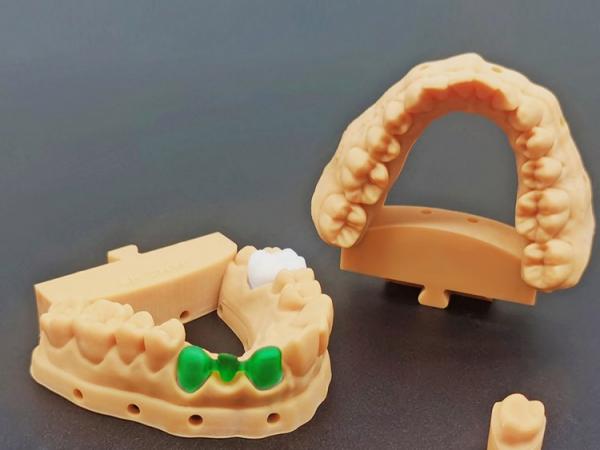
But now, many advanced dental clinics have bid farewell to this traditional method. Doctors use a scanner that looks like a small flashlight to scan around your mouth, and within seconds, they can obtain precise three-dimensional data of your teeth. This data is then sent to a 3D printer, and a few hours later, a crown, bridge, or orthodontic appliance that perfectly matches your oral structure is born.
This method not only avoids the discomfort of traditional impressions, but more importantly, it offers higher precision. Traditional dental impressions may have slight deformations during the manufacturing process, while 3D-printed restorations can achieve “millimeter-level” precise matching, making your dentures more comfortable and durable.
Surgical “Rehearsal”: Giving Doctors More Confidence
In the medical field, some surgeries are as challenging as “defusing a bomb”—the slightest mistake could lead to serious consequences. For example, heart surgery and brain surgery require doctors to operate carefully within extremely complex anatomical structures.
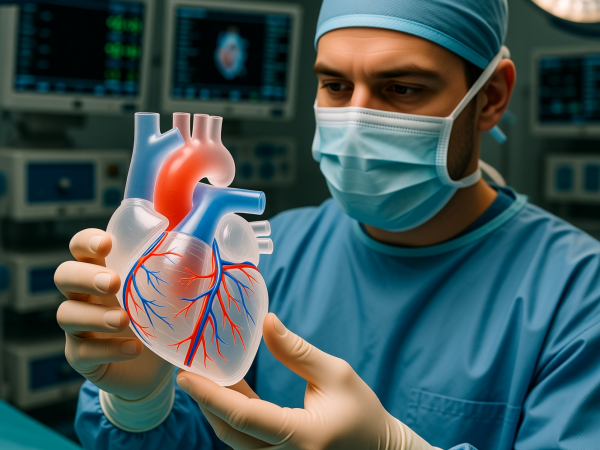
Photopolymer resin 3D printing provides a “secret weapon” for these high-difficulty surgeries. Doctors can first print an accurate model of the patient’s organ based on their CT or MRI data. This model is almost identical to the real organ, with clear visibility of blood vessel pathways and tumor locations.
With this “stand-in,” doctors can conduct thorough “rehearsals” before surgery. They can repeatedly practice surgical procedures on the model, determine the optimal surgical path, and even test different surgical plans. This is similar to how pilots train on simulators, greatly improving the success rate and safety of surgeries.
A cardiac surgeon once shared such an experience: before performing surgery on a child with complex congenital heart disease, they printed a 3D model of the child’s heart. Through repeated practice on the model, they discovered an important blood vessel that hadn’t been noticed in two-dimensional images, adjusted the surgical plan in time, and ultimately successfully completed the surgery.
Personalized Medicine: Tailor-Made Health Solutions
Every person’s body is unique, just as there are no two identical leaves in the world. Traditional medical products are often standardized and difficult to fully meet everyone’s special needs. However, photopolymer resin 3D printing technology makes “personalized medicine” possible.
In the rehabilitation field, this technology can create orthotics and braces that perfectly match patients’ physical characteristics. For example, for a patient with a wrist injury, traditional plaster fixation may not be comfortable enough, while a 3D-printed brace can be customized according to the specific shape of the patient’s wrist, ensuring both fixation effectiveness and comfort.
In prosthetic manufacturing, 3D printing technology truly shines. Traditional prosthetic production has long cycles and high costs, while 3D printing can produce lightweight, aesthetically pleasing, and fully functional prosthetics in a short time. Even more excitingly, these prosthetics can be personalized according to patients’ preferences, such as printing favorite patterns or even designing them to look like superhero costumes!
Medical Education: Making Learning More Intuitive
For medical students, learning human anatomical structures has always been a challenge. Traditional anatomy teaching mainly relies on two-dimensional images in textbooks and limited opportunities for cadaver dissection, which often makes it difficult for students to establish a three-dimensional spatial concept.
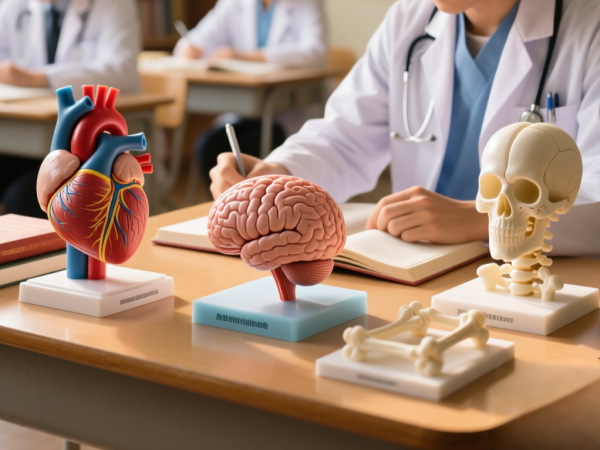
Photopolymer resin 3D printing technology has brought revolutionary changes to medical education. Medical schools can print precise models of various human organs, allowing students to touch, observe, and study them with their own hands. These models can be reused repeatedly and can even be made in different pathological states to help students better understand the progression of diseases.
For example, students can hold a model of a normal heart, then a model of a heart with congenital heart disease. Through comparative observation, they can more intuitively understand the essence of the disease. This “visible and tangible” learning method greatly improves the effectiveness of medical education.
The Future of Medicine: Infinite Possibilities
Although photopolymer resin 3D printing technology has already achieved remarkable success in the medical field, this is just the beginning. Scientists are exploring more exciting application directions.
In the field of tissue engineering, researchers are developing special photopolymer resins that can support cell growth. In the future, we may be able to print tissue scaffolds with biological activity to help damaged organs regenerate. Although printing complete human organs still has a long way to go, this direction has already shown tremendous potential.
In drug development, 3D printing technology can create drug release models to help scientists study the release patterns of drugs in the body. This will provide new possibilities for personalized drug therapy, allowing everyone to receive the most suitable medication regimen.
Challenges Behind the Technology
Of course, the application of any new technology faces challenges. The promotion of photopolymer resin 3D printing in the medical field also has some issues that need to be addressed.
First is the safety of materials. Medical products come into direct contact with the human body, so the requirements for material biocompatibility are extremely high. Although there are already many medical-grade photopolymer resins available, more long-term clinical data is still needed to verify their safety.
Second is the cost issue. Although 3D printing has advantages in small-batch customization, the costs of equipment and materials are still relatively high, which to some extent limits its popularity in grassroots medical institutions.
Finally, there’s the issue of technology standardization. The quality of medical products is directly related to patients’ lives and safety, so strict quality control standards and certification systems need to be established.
Conclusion: Technology Makes Healthcare Warmer
The application of photopolymer resin 3D printing technology in the medical field allows us to see the perfect combination of technology and humanistic care. It not only improves the efficiency and quality of medical services but, more importantly, makes healthcare more personalized and humanized.
From saying goodbye to the pain of “biting impressions” to providing “rehearsal” opportunities for complex surgeries; from creating personalized rehabilitation aids to changing the way medical education is conducted—photopolymer resin 3D printing is using its unique approach to make healthcare more precise and warmer.
In the future, with continuous technological advancement, we have every reason to believe that 3D printing will create even more miracles in the medical field and contribute greater strength to humanity’s health endeavors. Perhaps in the near future, when we walk into a hospital, we will find that 3D printing has become an indispensable part of medical services, just as commonplace as today’s X-ray machines and ultrasound equipment.
The development of technology knows no bounds, and its ultimate purpose has always been to make our lives better.vergence of Technology and Art
About Forgecise
Forgecise is an innovator in additive manufacturing technology, dedicated to providing high-performance metal 3D printing materials, equipment, and process solutions for the mold manufacturing, energy power, and other industrial sectors.