






A metal 3D printing quote depends on the delivered condition of the part. Powder and build time are only part of the price. Supports, heat treatment, machining and inspection can change the scope substantially. Compare quotations against the same drawing revision, quantity and acceptance requirements.
Table of contents
What belongs in a metal 3D printing cost breakdown?
| Cost item | What drives it | What to confirm |
|---|---|---|
| Engineering and preparation | Design review, orientation, supports and build setup | One-time charge or repeated for each batch |
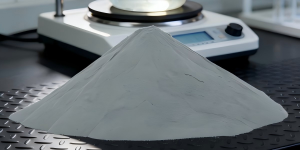
| Material | Alloy, part and support mass, powder handling and losses | Material condition and traceability included |
| Machine allocation | Build duration, layout and share of the build | Whether the rate includes ownership and operating expenses |
| Post-processing | Plate separation, support removal, heat treatment and finishing | Exact delivered surface and dimensional condition |
| Inspection | Measurement plan, sampling and required tests | Reports and acceptance criteria included |
| Delivery and commercial terms | Packaging, transport, taxes and supplier margin | Included and excluded charges |
An illustrative batch calculation
The following figures are invented planning inputs in USD. They are not Forgecise prices, market averages or a customer result. Assume a batch of 20 parts with the same material, finishing route and inspection scope.
| Batch item | Assumed cost |
|---|---|
| Engineering and build preparation | $240 |
| Powder consumption and handling allocation | $300 |
| Machine allocation: 12 hours at $80/hour | $960 |
| Plate separation and support removal | $260 |
| Heat treatment | $180 |
| Finish machining | $400 |
| Inspection | $160 |
| Total modeled manufacturing cost | $2,500 |
If all 20 parts pass inspection, the modeled cost is $2,500 / 20 = $125 per accepted part. If 18 pass and the same batch costs have been incurred, it becomes $2,500 / 18 = $138.89. Producing replacement parts adds further cost. Packaging, freight, taxes and supplier profit are excluded from this example.
Keep the denominator tied to accepted parts
For internal costing, divide the costs incurred for the defined batch by its accepted output. Include rework and replacement-build costs where they occur. For a supplier quote, ask who bears those costs and how the delivered quantity is guaranteed under the purchase terms. A quoted price and a modeled manufacturing cost serve different purposes.
Why two similar parts receive different quotes
A change in build orientation can alter support access and build height. A critical sealing face may require machining and a dedicated fixture. Internal passages may require additional cleaning and verification. Record these scope differences before comparing price. Review support removal methods and heat treatment planning with the supplier.
Batch size changes how preparation and fixtures are allocated, but a larger batch does not guarantee a lower accepted-part cost. Build layout, process repeatability and finishing capacity still matter. Request separate quotations for the quantities you expect to order.
Prepare an RFQ that suppliers can price consistently
Supply a CAD file and controlled drawing, alloy and final material condition, order quantity, critical dimensions, surface requirements and required inspection records. State the delivery destination and date. Ask the supplier to list exclusions, tooling charges, repeat-order assumptions and the price impact of drawing changes.
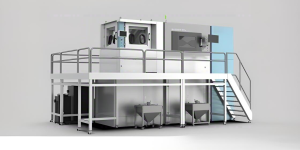
Use a separate model for buying a printer
A make-or-buy calculation also needs installed investment, staffing, utilization, maintenance and financing assumptions. Use comparable annual cost scopes. For a simplified annual model, break-even quantity equals annual fixed cost divided by the difference between outsourced unit price and in-house variable cost per accepted part. This calculation requires a positive difference and realistic capacity; it does not establish cash payback on its own.
There is no universal annual part count that justifies a printer. Geometry, alloy, quality requirements and demand determine the result. Avoid counting equipment depreciation twice if it is already included in the machine rate.
Request a quote for the finished part
For Forgecise parts manufacturing, send your CAD, drawing, alloy, quantity and acceptance requirements. Ask for the printing, finishing and inspection scope to be stated together so the price matches the component you need to receive.
Further reading: EOS on metal printing cost factors and NIST on additive manufacturing cost models. The NIST report provides cost-model background; its historical prices are not current quotations.
For equipment selection, use the metal 3D printer procurement checklist. If support removal consumes much of the finishing budget, compare the trial criteria and payback assumptions in the robotic support removal investment guide.
Updated: November 13, 2026. By Felix Lee.