






Table of Contents
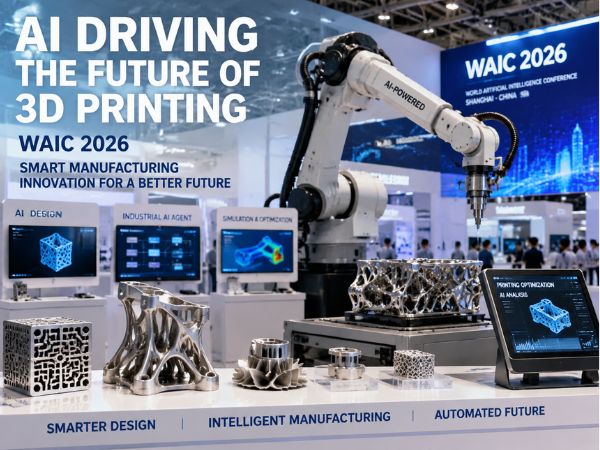
AI is changing 3D printing from a tool used mainly for prototyping into a smarter manufacturing system. WAIC 2026 showed how artificial intelligence is entering every stage of additive manufacturing, including 3D design, engineering simulation, printing process control, and factory automation. The next generation of 3D printing will combine AI models, industrial software, advanced computing, and robotics.
Quick Summary
- AI 3D models are making digital design faster and easier, allowing users to create printable models from text or images.
- New AI computing systems are helping engineers run complex simulations for metal 3D printing.
- AI agents are helping manufacturers improve printing parameters and reduce production mistakes.
- Robots and embodied AI may bring more automation into future 3D printing factories.
- 3D printing is also supporting AI industries through advanced cooling structures and lightweight robot parts.
Why Does WAIC 2026 Matter for the 3D Printing Industry?
WAIC 2026 showed that artificial intelligence is moving from software applications into real-world manufacturing.
The event was held in Shanghai from July 17 to 20, 2026. It covered more than 100,000 square meters and attracted more than 1,100 companies. Over 300 products were launched globally during the conference.
The exhibition covered the complete AI technology chain:
- AI computing infrastructure
- Large AI models
- Industrial AI agents
- Embodied intelligence and robots
For the 3D printing industry, this created a clear connection.
AI is no longer only helping people create digital content. It is beginning to influence how physical products are designed, tested, manufactured, and improved.
At Forgecise, we see this as an important change. The future of additive manufacturing will not only depend on better printers. It will depend on smarter systems that help people design and produce better parts.
How Are AI 3D Models Changing 3D Printing Design?
AI 3D model generation is lowering the barrier for creating printable objects. Instead of requiring every user to have advanced CAD skills, future workflows may allow people to create models through text instructions, images, or natural language conversations.
The basic idea is simple:
A better way to create models means more opportunities for 3D printing.
From Creating Objects to Creating Digital Worlds
Over the past few years, text-to-3D and image-to-3D tools mainly focused on generating individual models.
At WAIC 2026, several companies showed that AI 3D systems are moving toward:
- Higher resolution models
- Editable digital assets
- Interactive environments
- Complete 3D scenes
This change matters because the biggest challenge in 3D printing has always been content creation.
A printer can produce almost anything — but only when someone creates the right digital model first.
AI may reduce this limitation by helping more people create printable designs.
Hyper3D Rodin Gen-2.5: Faster High-Resolution 3D Generation
Shadow Technology presented its latest AI 3D model, Hyper3D Rodin Gen-2.5, at WAIC 2026.
The system uses a process similar to large language models, where it analyzes before generating the final result.
According to the exhibition information, the model can:
- Create million-face 3D models in about four seconds
- Generate tens of millions of polygon-level assets through Extreme-High mode
- Produce 12K native PBR textures
- Restore highly detailed surfaces similar to sculpture-level models
The technology has attracted customers including ByteDance, Unity, and NetEase.
Shadow Technology also identifies 3D printing as one of its important application areas.
For the additive manufacturing industry, this could open new possibilities in:
- Custom products
- Digital collectibles
- Creative manufacturing
- Rapid product development
V2Fun: Building an AI 3D Production Workflow
V2Fun (Jiding Digital Creation) demonstrated a complete AI 3D content workflow at WAIC 2026.
The company introduced:
- 8K native PBR texture generation
- Multi-person AI motion capture
Its workflow connects:
AI image creation → AI modeling → AI texture generation → AI rigging → AI animation
During the exhibition, CEO Ji Pan demonstrated a process from image generation to a complete 3D model that could be prepared for 3D printing.
This shows that AI is not only creating individual models.
It is building a complete digital production pipeline.
Tripo AI Project Eden: Moving From Models to 3D Worlds
VAST (Tripo AI) presented Project Eden at WAIC 2026.
The project represents a move from generating single objects toward creating interactive 3D environments.
The system supports:
- Multiple users entering the same scene
- Object movement and changes
- Recording and recreating changes over time
This represents a shift:
From creating a 3D object
to creating a complete digital world.
Although the system is not limited to 3D printing, these AI-generated environments may become a future source of physical products.
Suochen Technology: AI Design Agents Connecting Ideas and Manufacturing
Suochen Technology focused on industrial applications.
The company demonstrated an end-to-end design intelligent agent using a body-shaping device as an example.
The workflow included:
- Human 3D scanning
- Natural language design requests
- AI-generated optimized structures
- Additive manufacturing model output
- Connection with 3D printing equipment
- Physical testing
The solution targets industries where design accuracy and manufacturing quality are critical:
- Aerospace
- Medical devices
- Advanced equipment
This shows an important direction:
AI is moving from generating images and models into engineering workflows.
MuXi AI Creative Workstation: AI Content Meets Consumer 3D Printing
MuXi also demonstrated a consumer-focused application.
At the exhibition, visitors could enter prompts and experience:
AI image generation → 3D creation → 3D printing
The system produced customized WAIC limited-edition creative products.
This example shows how AI could connect digital creativity with physical manufacturing for everyday users.
How Will AI Computing Power Improve Industrial 3D Printing?
Industrial 3D printing requires advanced computing because many manufacturing decisions depend on simulation.
Metal 3D printing often requires:
- Stress analysis
- Thermal deformation simulation
- Material optimization
A single part may require long simulation times.
New AI computing systems could help reduce this process and allow engineers to test more design options.
Sugon Dawning 8000: Supporting AI and Industrial Simulation
One of the major technology displays at WAIC 2026 was Sugon Dawning 8000.
The system is a domestic 100,000-card AI supercluster.
It combines:
- Scientific computing
- AI computing
- Large model training
- Industrial simulation
The system supports FP64 to INT8 computing precision.
It has also connected with the national supercomputing internet and completed more than 300 application optimizations across fields including:
- AI models
- Robotics
- New materials
- Astronomy
- Weather science
For 3D printing, stronger computing infrastructure can support faster simulation and optimization.
Huawei Ascend 950 SuperPod: Large-Scale AI Infrastructure
Huawei presented the Ascend 950 SuperPod system at WAIC 2026.
The system provides:
- 1 EFLOPS FP8 computing capability
- Up to 1,024-card scale
- Lingqu interconnection technology
Huawei also reported that Ascend 384 SuperPod systems had been deployed in more than 750 commercial installations.
Applications include:
- Internet services
- Telecommunications
- Finance
- Education
- Healthcare
- Transportation
- Manufacturing
For additive manufacturing, this type of computing power creates new possibilities for industrial AI applications.
How Are AI Agents Improving 3D Printing Manufacturing?
AI agents are becoming an important tool for industrial companies.
Unlike simple software tools, AI agents can analyze information, support decisions, and help complete manufacturing tasks.
For 3D printing, this is important because many production decisions still depend on experienced engineers.
Raycus Laser and AI Agents for Metal 3D Printing
Raycus Laser showed how AI agents can support industrial manufacturing.
According to industry reports, Raycus Laser has worked with Alibaba Qwen AI to develop 13 AI agents covering:
- Research and development
- Manufacturing
- Supply chain
- Customer service
- Smart office
- Data applications
Raycus Laser is also known for high-power single-mode fiber laser technology used in metal 3D printing systems.
Its laser technology has been integrated into equipment using:
- Six-laser systems
- Eight-laser systems
AI agents may help optimize:
- Laser power
- Printing speed
- Scanning strategies
- Process consistency
The future factory may rely less on individual experience and more on shared manufacturing intelligence.
Can Robots Build Future 3D Printing Factories?
WAIC 2026 showed strong interest in embodied AI and humanoid robots.
The exhibition included more than 200 companies and over 300 humanoid robots.
The industry believes 2026 could become an important year for robots entering real working environments.
However, fully automated 3D printing factories still need more development.
MATRIX-3 and Physical AI
Matrix Super Intelligence presented its third-generation humanoid robot MATRIX-3.
The robot uses a WAVE physical world foundation model and a “brain–cerebellum” structure.
The system separates:
Brain
- Understanding environments
- Planning tasks
Cerebellum
- Controlling movement
- Managing physical actions
MATRIX-3 includes:
- 1.70-meter height
- 65-kilogram weight
- 27-degree-of-freedom tendon-driven hands
- Four-hour operation time
Demonstrations included:
- Coffee preparation
- Object sorting
- Human-like handshake actions
The listed starting price was RMB 580,000.
Zhiyuan Robotics and Industrial Applications
Zhiyuan Robotics announced its 15,000th industrial humanoid robot production milestone.
The company reported stable operation in 3C precision manufacturing inspection, with a stability rate of 99.99%.
For 3D printing factories, robots could eventually support:
- Machine loading
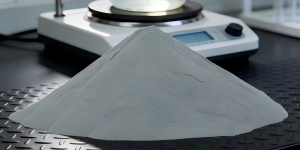
- Powder cleaning
- Post-processing
- Quality inspection
However, challenges remain.
3D printing environments can include:
- Fine powders
- Dust control requirements
- Complex cleaning tasks
Robots still need better protection systems and specialized tools.
How Does 3D Printing Support AI Development?
The relationship between AI and 3D printing works both ways.
AI improves 3D printing.
But 3D printing also helps AI industries.
Advanced Cooling for AI Chips
AI servers require powerful cooling systems.
Traditional manufacturing methods often cannot create complex internal channels.
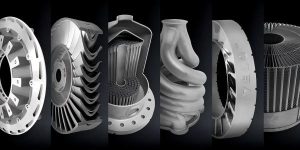
Metal 3D printing, especially copper alloy printing, can create:
- Internal cooling channels
- Complex fluid structures
- Integrated heat management designs
Lightweight Structures for Robots
Humanoid robots need strong but lightweight parts.
Titanium lattice structures made through 3D printing can reduce weight while maintaining strength.
This can improve:
- Energy efficiency
- Battery life
- Robot performance
What Are the Three Major AI and 3D Printing Trends After WAIC 2026?
1. AI Will Change 3D Design Creation
AI will reduce the difficulty of creating printable models.
Future workflow:
Idea → AI generation → Optimization → Printing
2. 3D Printing Will Become Data-Driven
Manufacturing will move from:
Experience-based decisions
to:
AI-supported optimization.
3. Smart Factories Will Combine AI and Robots
Future factories may combine:
- AI models
- Industrial robots
- 3D printing systems
The path toward automated manufacturing is becoming clearer.
What Challenges Still Limit AI in 3D Printing?
Limited Training Data
High-quality industrial AI models need large datasets.
Many metal materials and special alloys still lack enough process data.
Lack of Industry Standards
Different equipment manufacturers use different systems.
Data sharing between machines remains difficult.
Robot Reliability
Humanoid robots still need more testing in real manufacturing environments.
Limited Large-Scale Cooperation
Many AI and 3D printing projects remain in testing stages.
Large commercial partnerships are still developing.
Final Thoughts
WAIC 2026 shows that AI and 3D printing are moving closer together.
The future will not simply be about faster printers.
It will be about smarter manufacturing.
AI 3D models can improve design.
AI computing can speed up simulation.
AI agents can support production decisions.
Robots can bring more automation into factories.
At the same time, 3D printing can help AI industries build better cooling systems and lighter robotic structures.
For the next generation of manufacturing, the winners will likely be companies that combine:
AI intelligence + advanced manufacturing + physical automation.
Frequently Asked Questions
How is AI used in 3D printing?
Short answer: AI helps 3D printing companies create models faster, improve manufacturing settings, predict problems, and automate production.
AI is used in design generation, engineering simulation, printing parameter optimization, quality control, and factory automation. New AI systems can connect digital design with physical production.
Can AI create models for 3D printing?
Short answer: Yes. AI can generate detailed 3D models from text prompts, images, and design requirements.
New AI 3D systems can create high-resolution assets with millions of polygons. These tools may help designers and manufacturers produce printable models faster.
Will AI replace 3D printing engineers?
Short answer: No. AI will mainly support engineers by reducing repetitive work.
Engineering knowledge, material understanding, and manufacturing experience remain important. AI can help analyze information and recommend solutions, but human decisions are still needed.
What is the future of AI in additive manufacturing?
Short answer: The future includes smarter design, better simulation, AI-controlled processes, and automated factories.
AI will likely become a key technology connecting digital design, manufacturing equipment, and industrial robots.
What are the biggest challenges for AI-powered 3D printing?
Short answer: The biggest challenges are data quality, equipment standards, material complexity, and factory reliability.
Companies still need more industrial datasets, better software connections, and more real-world testing before full AI-driven manufacturing becomes common.
About the Author
Felix Lee
CEO at Forgecise
Felix Lee focuses on additive manufacturing, digital production systems, and AI-driven industrial technologies. Through Forgecise, he works on understanding how emerging technologies can improve product development, manufacturing workflows, and future industrial systems.
Editorial Review:
Reviewed by Forgecise Industrial Technology Team.
Source Note:
This article is based on WAIC 2026 public exhibition information, participating company announcements, and industry analysis. Future technology applications represent industry observations and should not be considered guaranteed commercial outcomes.