




| Category | Parameter | Specification |
|---|---|---|
| Chemical Composition (wt.%) | Ti | Balance |
| Fe | ≤ 0.25 | |
| C | ≤ 0.10 | |
| O | ≤ 0.15 | |
| N | ≤ 0.03 | |
| H | ≤ 0.015 | |
| — | — | |
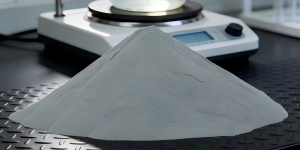
| Physical Properties | Particle Size Distribution (μm) | D10 ≥ 15, D50 = 30–40, D90 ≤ 63 |
| Sphericity | ≥ 0.9 | |
| Apparent Density (g/cm³) | ≥ 2.4 | |
| Tap Density (g/cm³) | ≥ 2.8 | |
| Flowability (s/50g) | ≤ 35 | |
| Mechanical Properties | Test Temperature | Room Temp. |
| Tensile Strength (MPa) | ≥ 350 | |
| Yield Strength (MPa) | ≥ 250 | |
| Elongation (%) | ≥ 30.0 | |
| Heat Treatment Condition | As-built / Annealed |
> Please note: Specifications are subject to change without notice. Contact a Forgecise representative for the most current technical data.
1. Standard Compliance & Performance Advantages
This TA1 pure titanium powder fully complies with or exceeds the requirements of major international standards:
- GB/T 3620.1–2016 (China): Matches TA1 grade (O ≤ 0.20%, Fe ≤ 0.20%); our O ≤ 0.15% and Fe ≤ 0.25% (tighter control in practice due to powder processing).
- ASTM B265 / F67 (USA): Meets Grade 1 specifications (O ≤ 0.18%, Fe ≤ 0.20%, tensile ≥ 240 MPa, elongation ≥ 24%). Our powder shows superior strength (≥350 MPa) and ductility (≥30%), indicating excellent post-processing performance.
- ISO 5832-2: Fully aligned with ISO Grade 1 for biomedical use (low interstitials, high purity).
- JIS H4600 TR270C: Compatible with Japanese industrial standard (min. UTS 270 MPa; our ≥350 MPa far exceeds this).
Key Advantages of This Powder:
- Ultra-low oxygen content (≤0.15 wt.%) → enhances ductility, reduces brittleness, improves fatigue resistance—critical for AM parts requiring high reliability.
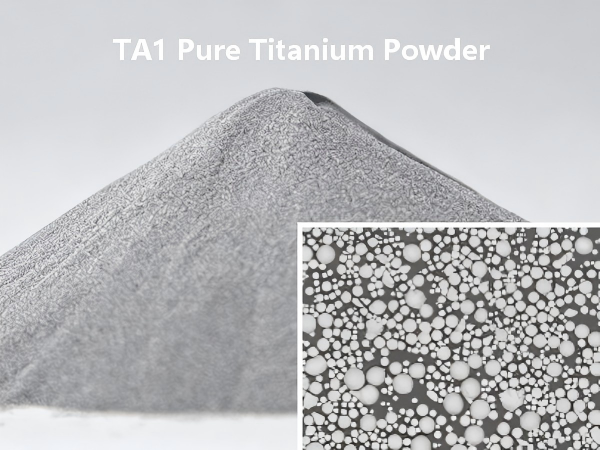
- Narrow particle size distribution (D50 = 30–40 μm) → ensures excellent flowability (<35 s/50g) and packing density, minimizing porosity in SLM/EBM builds.
- High sphericity (≥0.9) → enables stable powder spreading, consistent melt pool behavior, and reduced balling defects.
- Superior mechanical properties (UTS ≥350 MPa, Elongation ≥30%) — outperforming many commercial GR1 powders, reducing need for post-processing.
- Low hydrogen (<0.015%) and nitrogen (<0.03%) → minimizes risk of embrittlement and ensures long-term stability in corrosive environments.
In summary, this is a high-purity, high-performance TA1 powder optimized for additive manufacturing, balancing processability, part integrity, and final mechanical performance.
2. What Are the Parameter Differences Between TA1 and ASTM GR1 Pure Titanium?
Although TA1 (Chinese National Standard GB/T) and GR1 (American Standard ASTM) are generally regarded as directly interchangeable equivalent materials in the industry, there are indeed some subtle differences in their specific parameter standards.
Below is a detailed comparison of their chemical composition, mechanical properties, and governing standards:
| Comparison Dimension | Core Parameter | TA1 (Chinese GB/T Standard) | GR1 (American ASTM Standard) |
|---|---|---|---|
| Chemical Composition | Oxygen (O) | ≤ 0.20% | ≤ 0.18% |
| Iron (Fe) | ≤ 0.20% | ≤ 0.20% | |
| Titanium Purity (Ti) | ≥ 99.8% | ≥ 99.5% | |
| Mechanical Properties | Tensile Strength (MPa) | ≥ 345 | 240 – 370 |
| Yield Strength (MPa) | ≥ 275 | 170 – 310 | |
| Elongation (%) | ≥ 20 | ≥ 24 | |
| Governing Standards | Product Standards | GB/T 3620.1 (Chemical), GB/T 3625 (Seamless Tubes) | ASTM B265 (Sheet/Strip), ASTM B348 (Bar/Wire) |
3. Detailed Interpretation of Parameter Differences
Chemical Composition (Oxygen Content is Key)
Oxygen is the primary strengthening element in titanium. The lower the oxygen content, the better the material’s ductility. The American standard GR1 has a stricter upper limit requirement for oxygen content (≤0.18%) compared to the Chinese standard TA1 (≤0.20%). This means that GR1 compliant with the American standard theoretically possesses more superior plasticity and cold working performance.
Mechanical Properties (Different Emphasis in Standard Requirements)
As shown in the table, the Chinese standard TA1 sets higher minimum threshold values for tensile and yield strength (e.g., tensile strength requirement ≥345 MPa), while the American standard GR1 has a wider strength range (240-370 MPa) but sets a higher minimum requirement for elongation (≥24%) compared to the Chinese standard (≥20%). This reflects that the American standard places greater emphasis on the material’s plastic performance under extreme conditions, while the Chinese standard has more explicit high requirements for strength lower limits in certain specific product standards such as tubing.
Governing Standard Systems
TA1 follows Chinese national standards, such as GB/T 3620.1 (Chemical Composition), GB/T 3625 (Seamless Tubes), etc.
GR1 follows American Society for Testing and Materials standards, most commonly ASTM B265 (Sheet/Strip) and ASTM B348 (Bar/Wire).
4. Application Fields of TA1 Pure Titanium
TA1 (commercially pure titanium, Grade 1) is prized for its exceptional corrosion resistance, biocompatibility, and formability. Key application areas include:
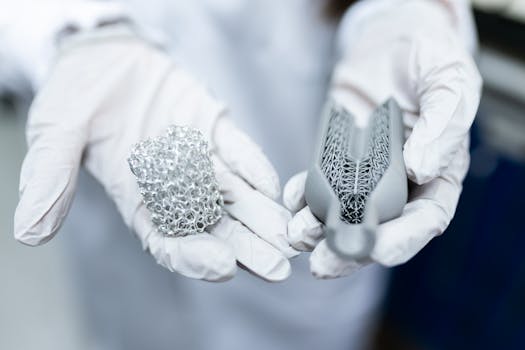
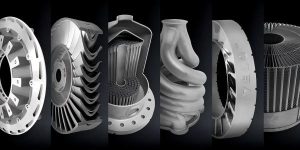
- Additive Manufacturing (3D Printing):
- Medical implants (e.g., cranial plates, dental frameworks, custom orthopedic guides)
- Aerospace components (non-load-bearing brackets, ducts, housings)
- Industrial tooling (jigs, fixtures, conformal cooling channels)
- Medical & Dental Devices:
- Surgical instruments, bone screws (where high ductility is required)
- Implantable devices (due to ISO 10993-compliant biocompatibility)
- Chemical & Petrochemical Industry:
- Heat exchangers, reactors, piping systems exposed to chlorides, acids, or seawater
- Consumer Electronics & Automotive:
- Lightweight enclosures, connectors, and decorative components requiring corrosion resistance and aesthetics
- Energy Sector:
- Electrodes for fuel cells, bipolar plates, and desalination equipment
TA1’s low strength but high toughness makes it ideal where corrosion resistance, weldability, and ductility outweigh the need for ultra-high strength.
5. Forgecise – Custom Titanium & Titanium Alloy Powders
At Forgecise, we specialize in tailored titanium and titanium alloy powders for advanced manufacturing—including additive manufacturing, MIM, and laser cladding. Whether you need high-ductility TA1 for medical AM, high-strength TC4 for aerospace, or a custom β-titanium for next-gen implants, Forgecise delivers powder engineered for your process and your performance targets.