






Felix Lee

Ultimate Guide How to Use a 3D Printer for Industrial and B2B Production

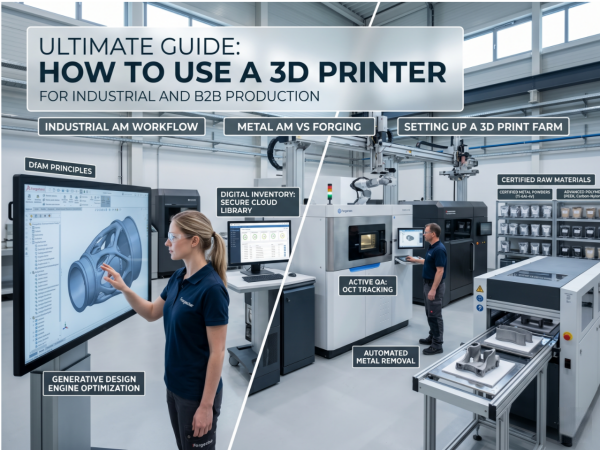
Ultimate Guide: How to Use a 3D Printer for Industrial and B2B Production

Using a 3D printer for industrial production starts with a qualified part requirement: material, geometry, tolerances, expected loads, and acceptance tests. Select the process, prepare and validate the build, complete post-processing, and release the part only after inspection against those requirements. For metal production, start with our metal additive manufacturing process guide and feedstock quality

Ultimate Guide: How to Use a 3D Printer for Industrial and B2B Production Read More »
Why 3D Printers Cannot Have Floating Layers Physics, B2B Challenges, and Algorithmic Solutions

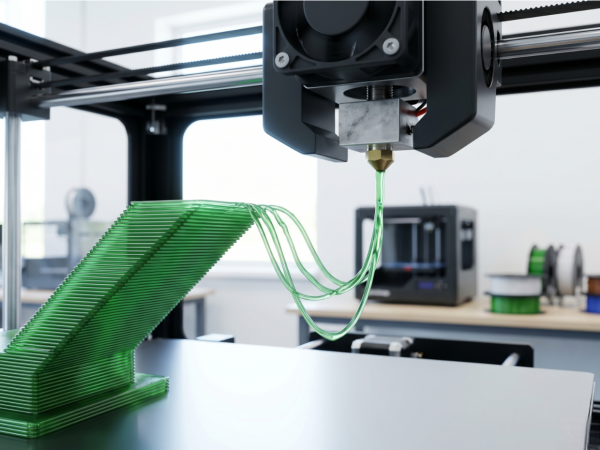
Why 3D Printers Cannot Have Floating Layers: Physics, B2B Challenges, and Algorithmic Solutions

A conventional layer-based 3D printer needs a way to support each newly formed region. An isolated feature that begins above the build surface with no connection to an earlier layer is often called an island or floating layer. The solution depends on the printing process and geometry; not every overhang requires the same support strategy.

Why 3D Printers Cannot Have Floating Layers: Physics, B2B Challenges, and Algorithmic Solutions Read More »

Is 3D Printer Resin Toxic The Ultimate B2B Guide to Photopolymer Safety & Compliance

Is 3D Printer Resin Toxic? The Ultimate B2B Guide to Photopolymer Safety & Compliance

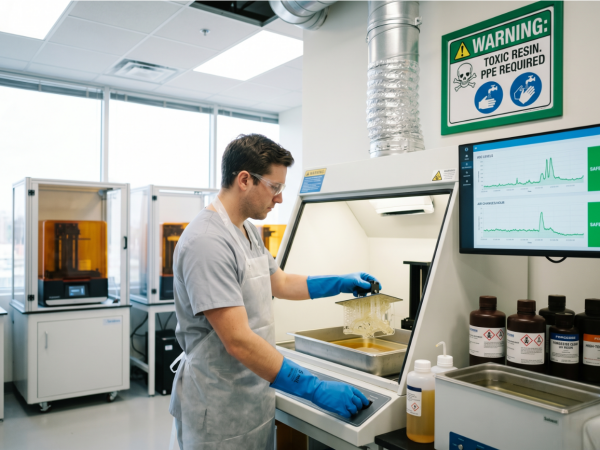
Executive Summary & Key Takeaways Is 3D printer resin toxic? Yes. In its liquid, unpolymerized state, photopolymer resin is highly toxic. It poses severe acute and chronic occupational risks, including cumulative skin sensitization (contact dermatitis), respiratory hazards from Volatile Organic Compounds (VOCs) and Ultrafine Particles (UFPs), and severe chemical burns. To mitigate these liabilities, commercial

Is 3D Printer Resin Toxic? The Ultimate B2B Guide to Photopolymer Safety & Compliance Read More »

How to Clean Up Resin Printer The Complete B2B Operations Guide

How to Clean Up Resin Printer: The Complete B2B Operations Guide

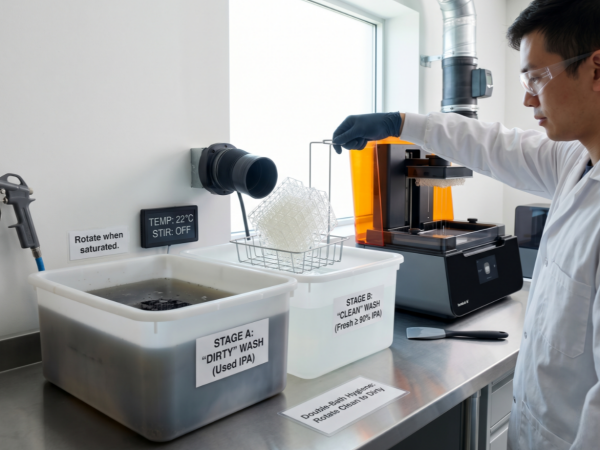
About the Author Felix Lee is the CEO of Forgecise, an enterprise additive manufacturing consultancy. With over fifteen years of hands-on experience running industrial 3D printing labs, Felix works with global manufacturers to scale Stereolithography (SLA) workflows, manage chemical safety, and build closed-loop solvent recycling systems. The Post-Processing Bottleneck in B2B Additive Manufacturing In B2B

How to Clean Up Resin Printer: The Complete B2B Operations Guide Read More »

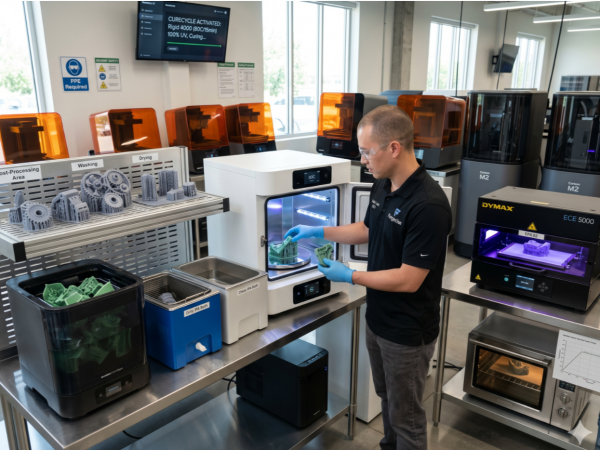
Do You Cut Resin Print Supports Before or After Curing An Enterprise Guide to SLA Post-Processing

Do You Cut Resin Print Supports Before or After Curing? An Enterprise Guide to SLA Post-Processing

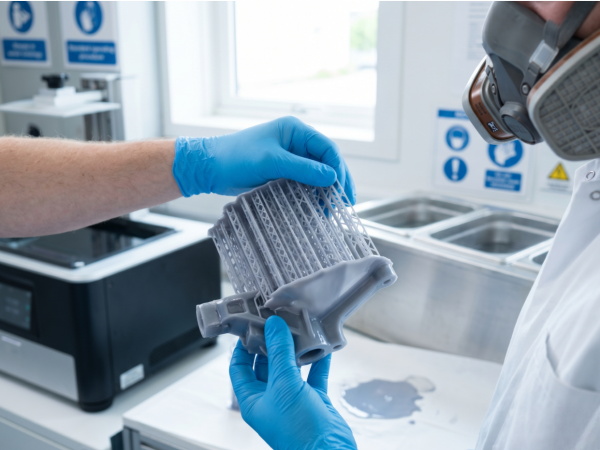
1. Introduction: The Post-Processing Bottleneck in B2B Operations In industrial stereolithography (SLA) and digital light processing (DLP) additive manufacturing, the spotlight is often shone on print speed and layer resolution. However, the true bottleneck to scaling production lies in post-processing. For enterprise-level manufacturers, medical device laboratories, and aerospace engineering service bureaus, post-printing operations account for

Do You Cut Resin Print Supports Before or After Curing? An Enterprise Guide to SLA Post-Processing Read More »

The Ultimate Guide to the Strongest Resin for 3D Printing B2B Engineering Materials, Hardware, and Case Studies

The Ultimate Guide to the Strongest Resin for 3D Printing: B2B Engineering Materials, Hardware, and Case Studies

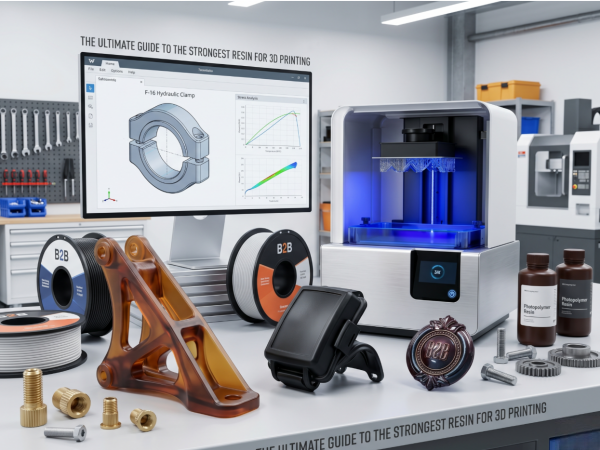
There is no single strongest resin for every 3D-printed part. High tensile strength, high stiffness, impact resistance, elongation and heat resistance describe different requirements. Start with the failure mode you need to prevent, then compare material data under equivalent test and processing conditions. Define what strength means for your part A stiff resin can resist

The Ultimate Guide to the Strongest Resin for 3D Printing: B2B Engineering Materials, Hardware, and Case Studies Read More »

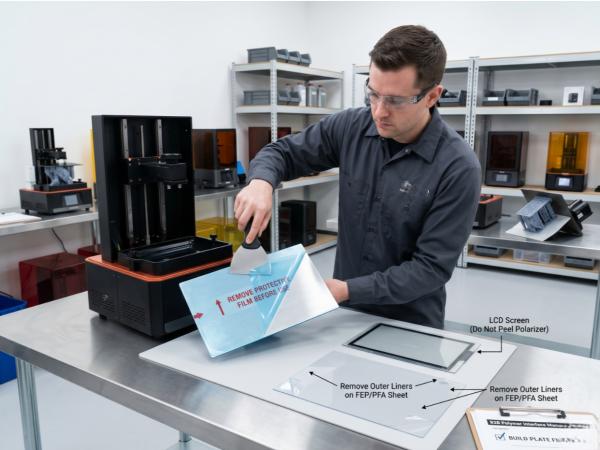
Do You Take Film Off of Resin 3D Printer Plate The B2B Guide to Polymer Interface Management

Do You Take Film Off of Resin 3D Printer Plate? The B2B Guide to Polymer Interface Management

A resin-printer maintenance procedure should distinguish removable shipping liners from working release films, optical windows and screen protectors. This guide covers routine inspection and replacement records after setup. For first-use identification, see our unboxing film checklist. Inspect the working surfaces At the frequency specified by the manufacturer, inspect the vat and accessible optical surfaces for

Do You Take Film Off of Resin 3D Printer Plate? The B2B Guide to Polymer Interface Management Read More »

How Long to Cure Resin Prints The Ultimate Guide for Industrial and Professional 3D Printing

How Long to Cure Resin Prints: The Ultimate Guide for Industrial and Professional 3D Printing

By Felix Lee, CEO at Forgecise Published: May 25, 2026 Author Bio: Felix Lee is the CEO at Forgecise, specializing in additive manufacturing workflows, B2B process optimization, and industrial post-processing standards for engineering-grade photopolymers. If you walk onto any professional additive manufacturing floor today, you will notice that vat photopolymerization technologies—like Stereolithography (SLA), Digital Light

How Long to Cure Resin Prints: The Ultimate Guide for Industrial and Professional 3D Printing Read More »

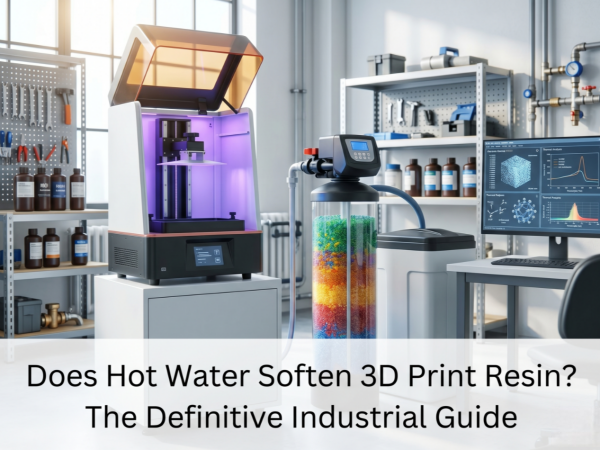
Does Hot Water Softener 3D Print Resin? The Definitive Industrial Guide

Does Hot Water Softener 3D Print Resin? The Definitive Industrial Guide

Hot water can soften or distort some 3D-printed resins, but the response depends on the exact material, cure state, temperature, exposure time and load. There is no universal warm-water temperature that safely removes supports from every resin print. Follow the material and printer manufacturer’s processing instructions. Do not confuse printing resin with water-softener media The

Does Hot Water Softener 3D Print Resin? The Definitive Industrial Guide Read More »

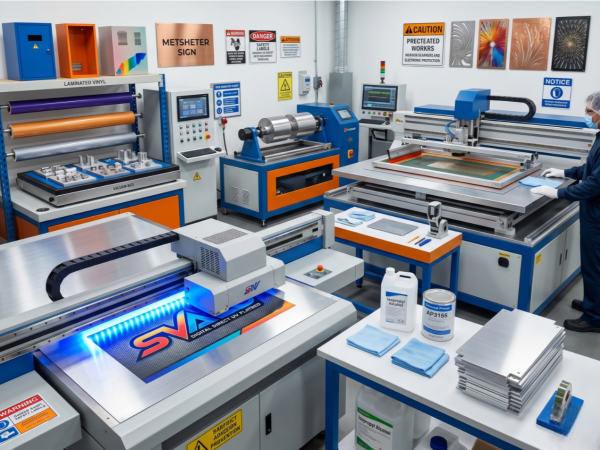
How to Print on Metal Technologies, Workflows, and Troubleshooting

How to Print on Metal: Technologies, Workflows, and Troubleshooting

In modern B2B manufacturing and high-end sign fabrication, knowing exactly how to print on metal is a major competitive advantage. Whether you make rugged safety labels for heavy machinery, brand custom aluminum equipment enclosures, or print fine art on brushed copper, your work must be precise and last for years. But printing on metal is

How to Print on Metal: Technologies, Workflows, and Troubleshooting Read More »