


Felix Lee

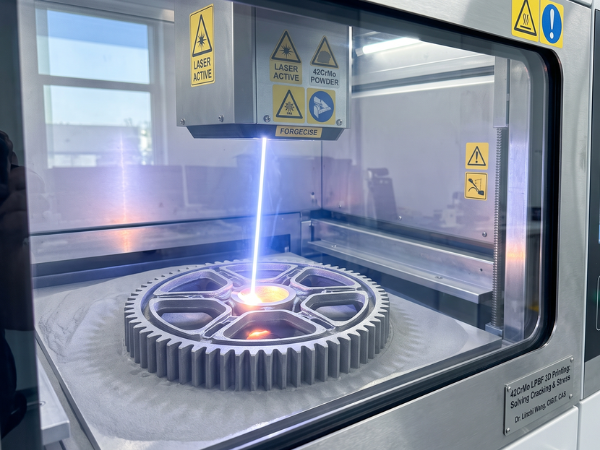
Laser Powder Bed Fusion (LPBF) 3D printing machine fabricating a large 42CrMo steel gear with a blue laser beam.

Laser Additive Manufacturing of 42CrMo Steel: Overcoming Cracking and Stress for High-Strength Applications

How to use this guide: Separate alloy-development results from the acceptance requirements for your own part. The reported properties below apply to the material and processing conditions described; they are not guaranteed values for every 42CrMo build. Review feedstock controls in our metal 3D printing raw-materials guide, and use our metal additive manufacturing overview to
Laser Additive Manufacturing of 42CrMo Steel: Overcoming Cracking and Stress for High-Strength Applications Read More »

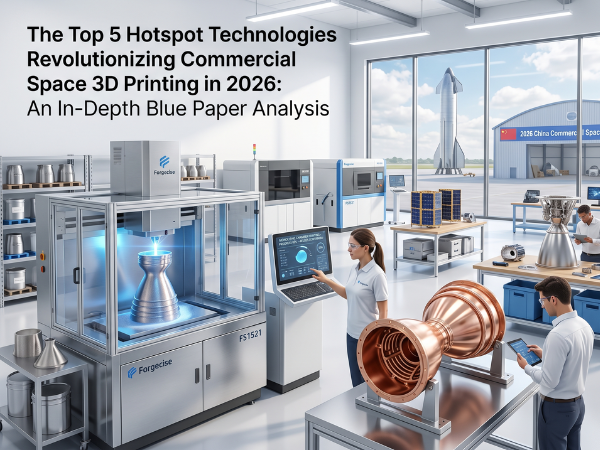
A bright, futuristic 3D printing facility. In the foreground, an FS1521 SLM 3D printer creates a metal rocket nozzle. Engineers stand nearby, reviewing data on screens. Large windows show a SpaceX Starship on a launchpad in the background. Text on the wall refers to a 2026 Blue Paper analysis of commercial space technologies.

The Top 5 Hotspot Technologies Revolutionizing Commercial Space 3D Printing in 2026: An In-Depth Blue Paper Analysis

Executive Summary 1. Introduction: The Strategic Pivot from Validation to Scale The commercial space industry is undergoing an unprecedented paradigm shift. For decades, metal 3D printing was confined to low-volume prototype validation and specialized test articles. In 2026, driven by the commercial urgency of mega-constellation deployments (such as low-Earth orbit satellite networks) and multi-use heavy-lift

The Top 5 Hotspot Technologies Revolutionizing Commercial Space 3D Printing in 2026: An In-Depth Blue Paper Analysis Read More »

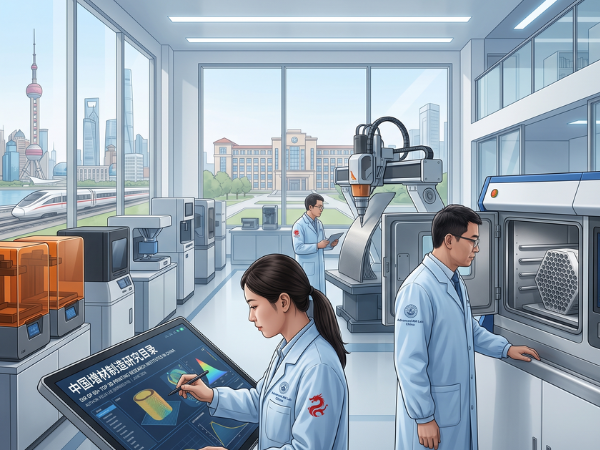
Alt Text: A bright and modern 3D printing research laboratory in China, showing researchers using advanced industrial additive manufacturing equipment and an interactive display map highlighting research hubs across the country.

Directory of 60+ Top 3D Printing / Additive Manufacturing Research Institutes and Labs in China

Author: Felix Lee (CEO at Forgecise) Published: June 28, 2026 Last Updated: July 23, 2026 Source Credit: Nanjixiong 3D Printing Executive Summary China’s additive manufacturing (AM) research network spans four main tiers: National-level platforms, Provincial and Ministerial key labs, University research institutes, and Chinese Academy of Sciences (CAS) centers. Following the publication of List of

Directory of 60+ Top 3D Printing / Additive Manufacturing Research Institutes and Labs in China Read More »

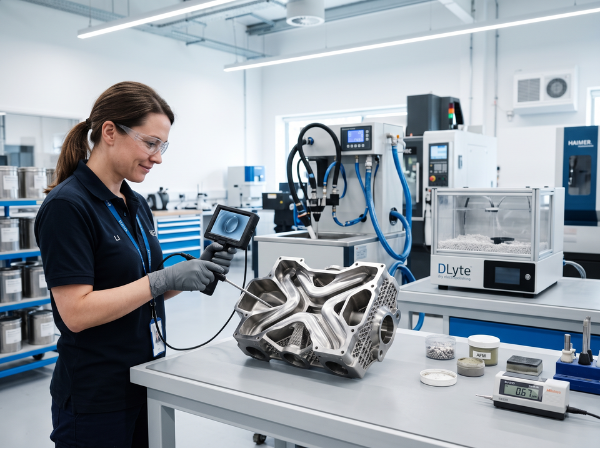
Female technician in a modern workshop uses a borescope to inspect a complex 3D printed metal aerospace component.

The Ultimate 2026 Guide to 3D Metal Printing Surface Finish & Post-Processing

Author’s Note As the CEO of Forgecise, where we continuously push the boundaries of high-precision manufacturing, metal styling, and cosmetic metal-shaping tooling, I have witnessed firsthand the rapid evolution of digital factories. In 2026, the discussion around metal additive manufacturing (AM) has shifted. We are no longer asking if we can print a metal part;

The Ultimate 2026 Guide to 3D Metal Printing Surface Finish & Post-Processing Read More »

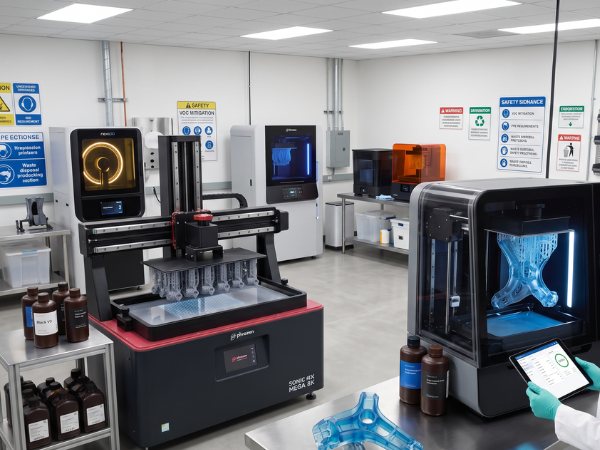
A laboratory supervisor in a lab coat and gloves monitors large-format resin 3D printers, including Nexa3D and Phrozen models, while holding a tablet in a bright industrial 3D printing workshop.

Industrial Resilience and Workflow Integration: A Strategic B2B Analysis of Large Format Resin 3D PrintER

A large-format resin 3D printer should be selected for the complete part and workflow, not build volume alone. Confirm the usable geometry, material compatibility, repeatability, handling space and post-processing capacity using representative parts before purchase. Confirm the actual usable build Compare the part envelope with orientation, supports and any required clearance. Evaluate large flat areas,

Industrial Resilience and Workflow Integration: A Strategic B2B Analysis of Large Format Resin 3D PrintER Read More »

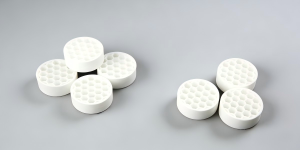
Forgecise ceramic 3d printing

Master Class: The Complete B2B Guide to Castable Resin 3D Printers in Precision Investment Casting

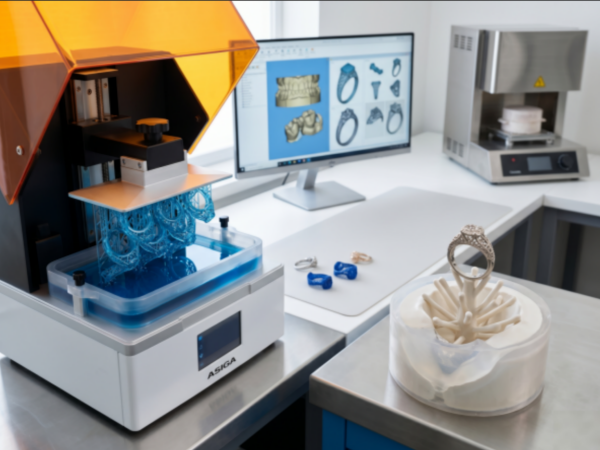
A castable resin 3D printer produces sacrificial patterns for investment casting. The printed pattern is invested, removed during a controlled burnout process, and replaced by molten metal. The printer, resin, investment and foundry cycle must work as a qualified system. A castable label does not guarantee an ash-free result in every casting process. Select a

Master Class: The Complete B2B Guide to Castable Resin 3D Printers in Precision Investment Casting Read More »

How Does Resin 3D Printing Work The Enterprise & Technical Guide to Vat Polymerization

How Does Resin 3D Printing Work? The Enterprise & Technical Guide to Vat Polymerization

Resin 3D printing uses light to selectively solidify a liquid photopolymer into a part. Common vat-photopolymerization systems include laser SLA, DLP and masked LCD systems. Printing is only one stage: support removal, cleaning, any required post-curing and inspection determine whether the finished part meets its requirements. From CAD to a supported build Prepare a watertight

How Does Resin 3D Printing Work? The Enterprise & Technical Guide to Vat Polymerization Read More »

3D Print Resin vs Filament The Ultimate B2B Guide to Additive Manufacturing Decisions

3D Print Resin vs Filament: The Ultimate B2B Guide to Additive Manufacturing Decisions

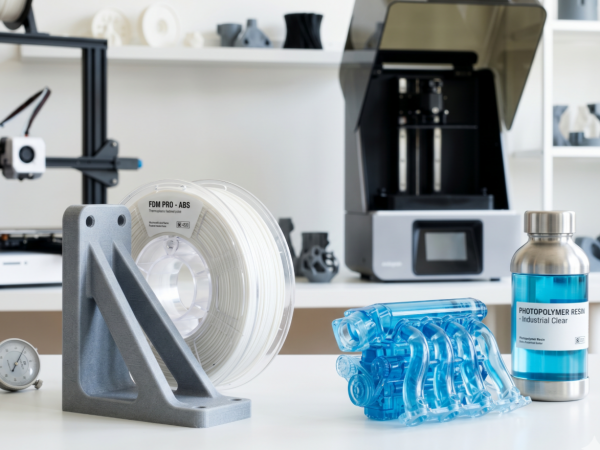
Choose resin or filament printing from the part requirements and complete production workflow. Resin systems selectively cure a photopolymer; filament systems deposit extruded thermoplastic. Neither process is universally stronger, cheaper or more accurate. Compare the exact material, machine, orientation and post-processing route. Surface detail and dimensions Resin printing is often considered for fine visual detail

3D Print Resin vs Filament: The Ultimate B2B Guide to Additive Manufacturing Decisions Read More »

How Thin Can a 3D Printer Print Industrial Limits of Micro-AM & Thin-Wall Fabrication

How Thin Can a 3D Printer Print? Industrial Limits of Micro-AM & Thin-Wall Fabrication

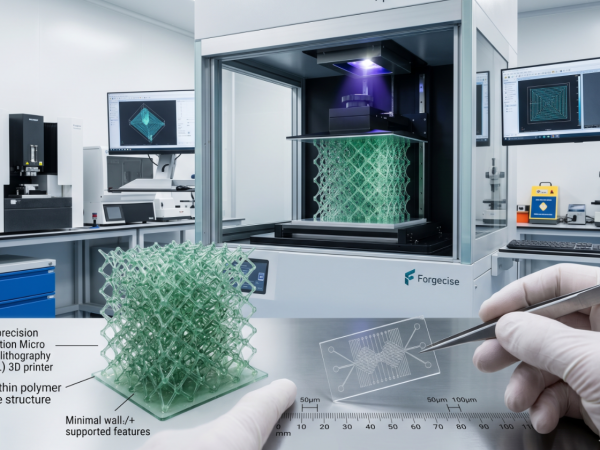
How thin a 3D printer can print depends on the process, material, geometry and definition of “thin.” Layer height, optical pixel size, minimum wall thickness and dimensional accuracy describe different things. A small layer or voxel does not establish the thickness of a stable, usable wall. Define the feature before comparing machines Specify whether the

How Thin Can a 3D Printer Print? Industrial Limits of Micro-AM & Thin-Wall Fabrication Read More »

How Long to Cure Resin Prints The Industrial Guide to Post-Curing Optimization, Polymerization Kinetics, and B2B Quality Control

How Long to Cure Resin Prints? The Industrial Guide to Post-Curing Optimization, Polymerization Kinetics, and B2B Quality Control

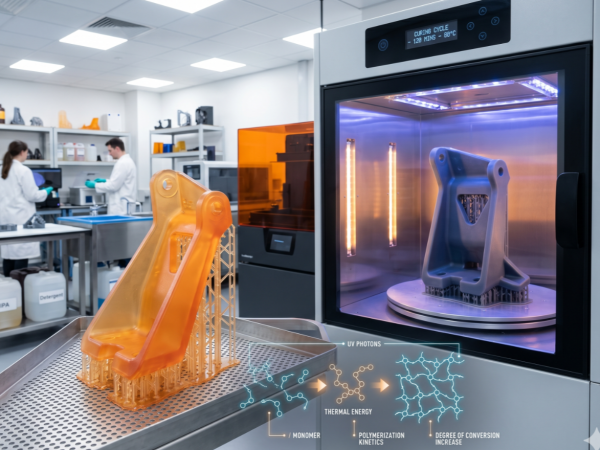
Resin post-curing time depends on the exact formulation, printer settings and curing unit. Use the current material instructions for wavelength, temperature, duration and part restrictions. Do not transfer a cycle from another resin or calculate a substitute time from lamp power alone. What post-curing changes A green printed part may need further curing to reach

How Long to Cure Resin Prints? The Industrial Guide to Post-Curing Optimization, Polymerization Kinetics, and B2B Quality Control Read More »