






Felix Lee

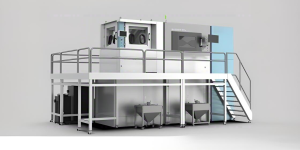
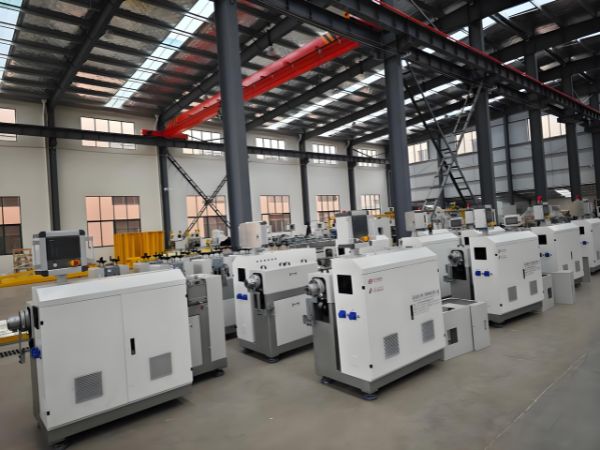
Rows of industrial metal manufacturing machines lined up inside a modern production facility floor.

Metal 3D Printing Pre-Processing: 10 Steps to SLM Success

Back to Parts Manufacturing What is SLM Pre-Processing? SLM pre-processing covers all digital and machine steps you take before firing the laser in metal 3D printing. It includes repairing CAD files, setting part angles, designing support structures, setting laser energy values, and checking the machine bed. Proper preparation stops print failures, cuts material waste, and

Metal 3D Printing Pre-Processing: 10 Steps to SLM Success Read More »
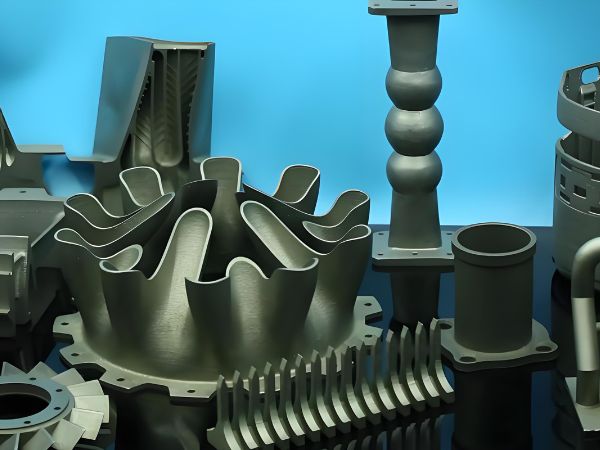
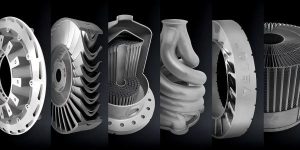
Array of complex metal 3D printed industrial components including a multi-flanged aero-engine nozzle, turbine impeller, and thin-walled structural parts.

Metal 3D Printing Raw Materials: Powder Selection, Quality Control, and Recycling

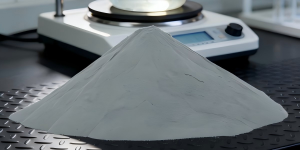
Back to Parts Manufacturing Raw material is the first gatekeeper in the metal additive manufacturing quality chain. Powder shape, particle size, oxygen levels, and flow performance directly determine part density, strength, and batch stability. This guide walks through how metal raw materials are made, tested, selected, and recycled. Start with the qualified alloy and feedstock

Metal 3D Printing Raw Materials: Powder Selection, Quality Control, and Recycling Read More »

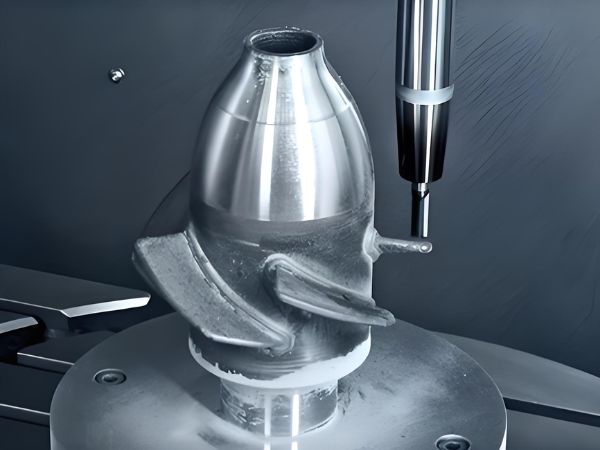
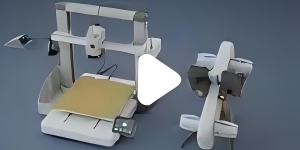
Multi-axis metal 3D printing tool head positioning near a printed curved turbine component on a rotary platform.

Wire Arc Additive Manufacturing (WAAM): Process Parameters, Path Planning, and Closed-Loop Control

Section 1: Introduction to WAAM and Thermal Management What is Wire Arc Additive Manufacturing (WAAM)? Wire Arc Additive Manufacturing (WAAM) is a metal 3D printing process that combines standard gas metal arc welding (GMAW) equipment with multi-axis industrial robot arms. Instead of melting expensive metal powders with lasers, WAAM feeds commercial metal wire into an

Wire Arc Additive Manufacturing (WAAM): Process Parameters, Path Planning, and Closed-Loop Control Read More »

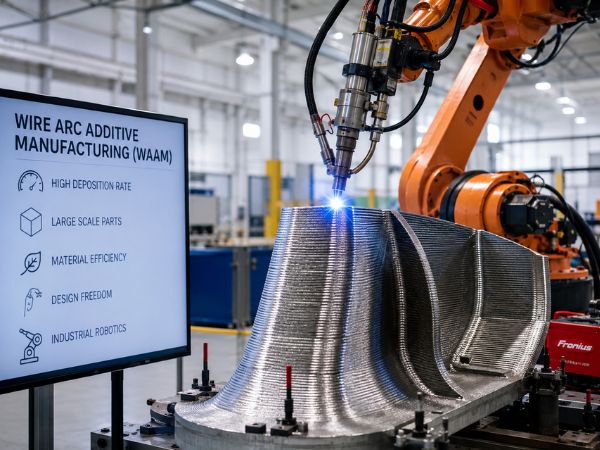
Alt Text: Industrial robotic arm using Wire Arc Additive Manufacturing to deposit metal layer by layer onto a large curved component in a bright modern factory.

Wire Arc Additive Manufacturing: WAAM Processes, Equipment, and System Architecture

Written by Felix Lee, CEO at ForgecisePublished: July 31, 2026Last updated: July 31, 2026Expertise: Metal Additive Manufacturing | Robotic Welding | Industrial Automation Quick Answer Wire Arc Additive Manufacturing, or WAAM, is a directed energy deposition process that uses an electric arc to melt metal wire and build near-net-shape components layer by layer. It is

Wire Arc Additive Manufacturing: WAAM Processes, Equipment, and System Architecture Read More »

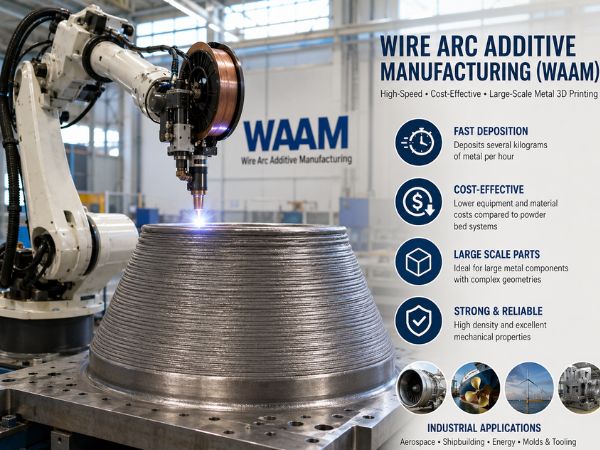
Robotic arm using Wire Arc Additive Manufacturing to build a large layered metal component with an electric arc in a bright industrial workshop.

Wire Arc Additive Manufacturing (WAAM): A Clear Guide

Choosing between WAAM and a powder-based process starts with part size, minimum feature size, machining access, and qualification requirements. Compare the wider process options in our metal additive manufacturing guide. For fine internal channels and intricate features, review LPBF / SLM systems alongside the WAAM routes below. 1. What is Wire Arc Additive Manufacturing? Building

Wire Arc Additive Manufacturing (WAAM): A Clear Guide Read More »

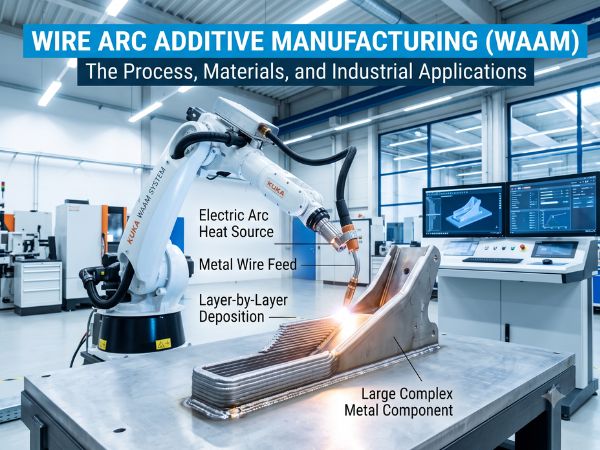
A industrial robot arm using Wire Arc Additive Manufacturing (WAAM) technology to 3D print a large metal component in a modern workshop with data screens.

Wire Arc Additive Manufacturing (WAAM): Process, Materials, Challenges, and Industrial Applications

Written by Felix Lee, CEO at Forgecise Expertise: Advanced Manufacturing | Industrial Automation | Metal Additive Manufacturing Published: July 30, 2026Last Updated: July 30, 2026 Quick Answer Wire Arc Additive Manufacturing (WAAM) is a metal 3D printing technology that uses an electric arc heat source to melt metal wire layer by layer, creating large and

Wire Arc Additive Manufacturing (WAAM): Process, Materials, Challenges, and Industrial Applications Read More »

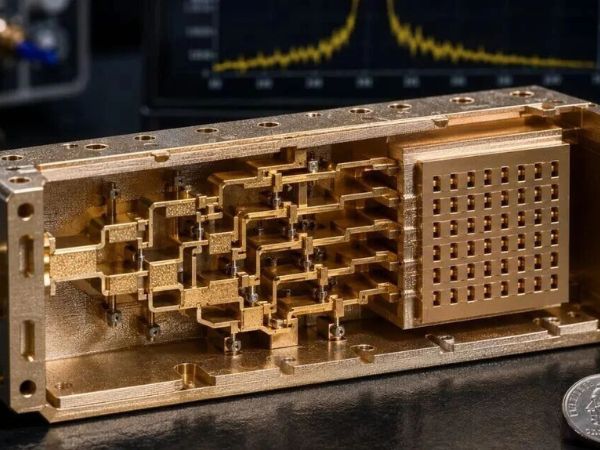
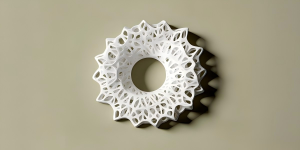
3D printed metal antenna prototype for 6G wireless communication technology operating at 220GHz millimeter-wave frequencies, showing precision waveguide structures and advanced RF components.

3D Printed 6G Antennas: How 220GHz Technology Could Shape Future Wireless Communication

Written by Felix Lee, CEO at ForgecisePublished: July 2026Last Updated: July 2026 Quick Answer A 3D printed 6G antenna uses metal additive manufacturing to create complex high-frequency structures that are difficult to build with traditional machining. A 220GHz antenna design combines signal filtering, power distribution, and radiation in one metal structure, producing 16 signal outputs

3D Printed 6G Antennas: How 220GHz Technology Could Shape Future Wireless Communication Read More »

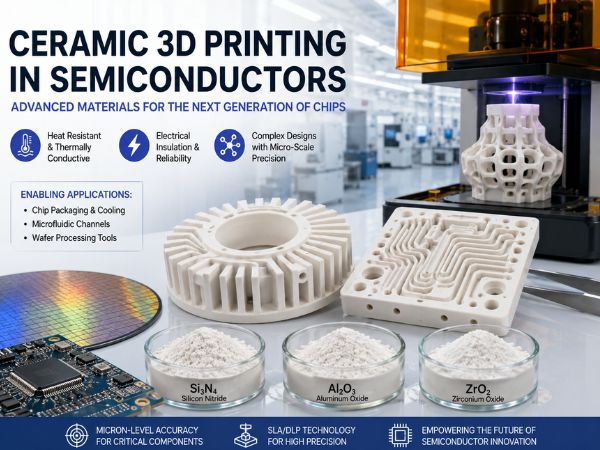
Ceramic 3D printing for semiconductor applications, showing a high-precision ceramic printer, silicon wafer, microchip, ceramic cooling parts, microfluidic components, and Si3N4, Al2O3, and ZrO2 materials.

Ceramic 3D Printing in Semi-conductor Industry

By Felix Lee | CEO at Forgecise Published on June 12, 2026 • Reading Time: 8 min (~1,700 words) Reviewed by: Additive Manufacturing & Microelectronics Editorial Team Fast Answer Box What is ceramic 3D printing in the semiconductor industry? > It is an additive manufacturing process—mainly using SLA and DLP light techniques—that builds high-precision ceramic

Ceramic 3D Printing in Semi-conductor Industry Read More »

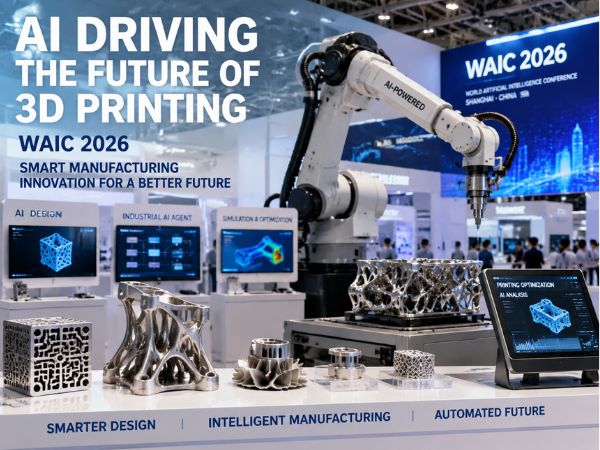
AI-powered 3D printing technology showcased at WAIC 2026, featuring an industrial robot, smart manufacturing systems, AI simulation displays, and advanced metal 3D printed components.

AI in 3D Printing: WAIC 2026 Shows the Future of Smart Manufacturing

AI is changing 3D printing from a tool used mainly for prototyping into a smarter manufacturing system. WAIC 2026 showed how artificial intelligence is entering every stage of additive manufacturing, including 3D design, engineering simulation, printing process control, and factory automation. The next generation of 3D printing will combine AI models, industrial software, advanced computing,

AI in 3D Printing: WAIC 2026 Shows the Future of Smart Manufacturing Read More »